



The letter by Andreas Peltzer, published in The Namibian last Friday (5 December 2025) under the headline ‘Genocide: What about other groups? A rejoinder’, was in bad taste and struck a raw nerve, given the sensitivity of the matter.
Most of Peltzer’s statements were sweeping, thus rendering his opinion piece a very poor piece of scholarship.
It is obvious Peltzer was targeting Ovaherero and Nama Genocide memory activists in his unprovoked criticism, although he did not mention the two groups by name. The letter carried a divisive tone that could drive a wedge between Ovaherero and Nama people on the one hand, and the rest of the other ethnic groups on the other – especially those who used to live in central Namibia during the time of German colonial conquest.
For the sake of clinical scholarship, some paragraphs in Peltzer’s letter need to be unpacked. For example, he asserts that “certain ethnic groups cross a line when they declare their narratives as Namibian history”.
This is a sweeping statement. What exactly is meant by that? Are these ethnic groups not Namibian, and if they are Namibian, how could we divorce their narratives from Namibian history?
If the assertion is that their narratives are either false or exaggerated, then that needs to be qualified. The author goes on to say: “This gets worse if media articles mix historical reports with moral judgement.”
Again, this particular sentence is left hanging in the air without any explanation. He further argues that “a focus on the last few years of the German rule leaves out relevant developments”.
The question is, which are those relevant developments that are left out and how can they be divorced from the rest of German brutal colonial rule in Namibia? The assertion that media houses always give preference to opinion pieces written by members of certain ethnic groups is not backed by any scientific evidence either.
The right reverend further argues that: “Monopolising Namibia’s history does not do justice to the past or the present.” This is a dangerous sweeping statement. Who is monopolising Namibia’s history and how are they doing that?
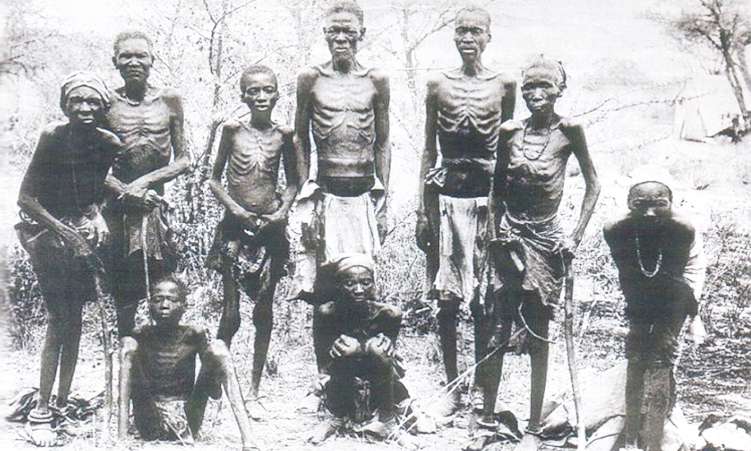
The Ovaherero and Nama’s grand narrative is: The Genocide was a targeted decree against the two groups. However, by telling their side of the story, they do not deny that other groups were also brutally killed, nor do they, in any way, try to silence the voices of those other groups from telling their side of the story.
Again, for the author to say “. . . judging the past by present standards is not acceptable” is another unqualified statement that is not helpful at all. This reminds me of the argument of the German government that says that when the 1904 to 1908 Genocide was committed, the 1948 United Nations Genocide Convention was not in place, and therefore Germany cannot be held liable in terms of that convention.
I did not have to learn from textbooks about what the Germans had done to our people.
I grew up at a village called Okei in the Otjinene constituency, about 20km south of Ozombu zo Vitimba, where Lothar von Trotha had given the extermination order against Ovaherero people on 2 October 1904.
As children, we used to play with spent cartridges from the German bullets used against our people.
I learned about that dark history at the feet of my mother and other elders, around an evening African fireplace.
My mother was a first-generation German descendant, born to an Omuherero mother and a German father. When she was born, her German father was planning to kill her because of “embarrassment”.
My grandmother had to flee under cover of darkness to save the baby. My own father was an Omuherero from Botswana whose parents had fled Namibia because of the 1904 to 1908 Genocide.
Last year, we discovered close relatives in Botswana, for the first time, whom we had known existed. They are descendants of the Genocide victims, and most of them do not even speak Otjiherero – that is called cultural genocide.
When we tell these stories, we are not trying to monopolise history, nor are we trying to prevent anyone else from telling their story.
The legendary reggae singer, Bob Marley, whose songs are mainly about the transatlantic slave trade, sang in his song ‘Babylon System’: “Tell the children the truth.”
– Uaripi Tjihenuna
In an age of information overload, Sunrise is The Namibian’s morning briefing, delivered at 6h00 from Monday to Friday. It offers a curated rundown of the most important stories from the past 24 hours – occasionally with a light, witty touch. It’s an essential way to stay informed. Subscribe and join our newsletter community.

The Namibian uses AI tools to assist with improved quality, accuracy and efficiency, while maintaining editorial oversight and journalistic integrity.
Stay informed with The Namibian – your source for credible journalism. Get in-depth reporting and opinions for
only N$85 a month. Invest in journalism, invest in democracy –
Subscribe Now!