


DINO ESTEVAO and LENNART BOLLIGER
BY 1995, I had settled at Potchefstroom and was working as a police officer.
Once in a while, I would visit Pomfret, where a strong community bond had been forged. It was this bond that made me return for the funeral of tatekulu Filipe Shapota.
The elderly man came from Ohongo, the home of my maternal grandfather, and so I was his nephew. In early 1980, Shapota was captured by the South African Defence Force’s 32 Battalion as a suspected Swapo guerrilla somewhere between Chiede and Namacunde. After several days of interrogation by the security forces, he briefly returned home to his wife and children before they were brought to 32 Battalion’s military base at Buffalo.
Tatekulu Shapota’s passing brought together many people from as far as Oshikango in northern Namibia. People who had once been on opposite sides in the so-called ‘Border War’ were now together, paying tribute to tatekulu Shapota in a small, abandoned mining town far away from where the war had been fought.
It was at Pomfret as family and friends mourned his death that I was introduced to his younger brother, John Shapota. I told him about my family history, and after the funeral I returned to Potchefstroom.
One day in early December 1995, I received a phone call from tatekulu Filipe Shapota’s eldest daughter, who told me: “Dino, there is someone who is going to call you.” She went on: “Do you remember tatekulu John, my father’s brother who was at the funeral? He was with your father at Oshikango. Your father and mother are alive and well.”
For years I had wanted to hear these words. I had wanted to be a child with a mother and father. Although I was no longer a child, I still wanted to belong to a place and a family to give meaning to my life. The war had stolen that meaning from me and this phone call ignited the possibility I had dreamed of for 15 years – I was no longer an orphan.
My mind was spinning, and overwhelming emotions were flowing through me to the point that I almost forgot about the woman on the other side of the line. She said I should call tatekulu John Shapota for more details.
After jotting down the number, I hung up and immediately dialled the number in Namibia. After exchanging some common pleasantries, he told me that he had met my father, Pedro Estafanus. The phone connection was not clear and my command of Oshikwanyama had become rusty after not communicating in my mother tongue for 15 years. We managed to exchange the necessary details and after the call I walked through my house without any particular direction.
With snippets of information and warm memories of life before the war, I decided to visit Chiede. After talking to tatekulu John Shapota, the chances of going home and being part of a family became real.
It was early December and I thought that travelling to meet my parents would make for the best Christmas for all of us. I started making travel plans and ended up driving with a friend and his family as they were going to Namibia for the December holidays.
My return to Chiede, the place I once called home, and the reunion with my family were finally about to happen. I had mixed feelings, the fear of the unknown and the painful reality of what had taken place.
Now, 15 years later, I was staying at tatekulu John Shapota’s house at Oshikango and impatiently waiting for my father to arrive and bring me to my mother and the rest of the family who were waiting for me at home in Chiede.
I was talking to some people and getting frustrated because I had waited all day for my father to arrive and it was already getting late when an old man and two young women walked into the house. The old man greeted me and asked my name. I told him that I was Dino ya Pedro.
“Pedro ya Ihe?”, the man enquired further. “Pedro ya Stefa,” I replied. The people around us became very quiet as everyone was following the conversation. The old man then asked if I knew Pedro ya Stefa. It was an awkward moment as I searched for the answer.
My father was a strong man with authority; the man before me was old and years of war and hardship had taken their toll on him. When you are small, people and things around you tend to be bigger and after years of absence I suddenly came face to face with reality: I had not realised that the old man was my father and that one of the two young women was my sister, who had been a baby when I left.
After the initial shock, the excitement and joy of standing so close to them brought an intense euphoria and the sense of belonging that I had longed for all these years.
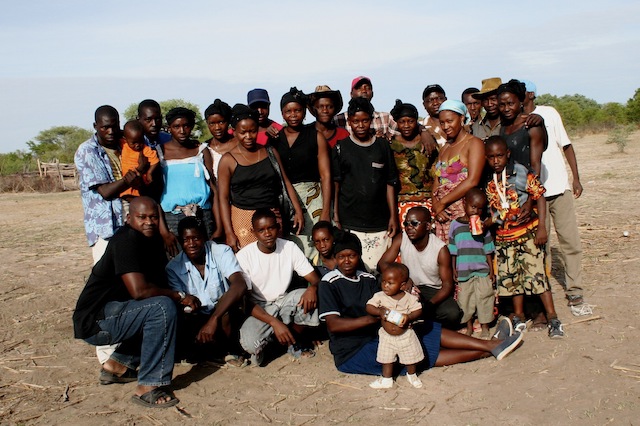
The next day, we crossed the border into Angola. At Chiede, I finally met my mother and the rest of my family. Many people came from afar to greet me and to congratulate my parents. It was a moment of triumph and jubilation that gave hope to many families whose loved ones had disappeared.
The war, however, had robbed me of a home. At the age of nine, it destroyed my innocence and left me with only faint memories of a distant place and its people. I clung to these memories in the hope that I would one day return. And now at the age of 25, I was picking up the pieces, sewing them together to make sense of the whole picture.
I was fortunate to have survived and lived through the war. Many others whom I met on my journey, however, were swept deeper into the war machine and perished into the darkness where they can never be traced and remembered.
In an age of information overload, Sunrise is The Namibian’s morning briefing, delivered at 6h00 from Monday to Friday. It offers a curated rundown of the most important stories from the past 24 hours – occasionally with a light, witty touch. It’s an essential way to stay informed. Subscribe and join our newsletter community.

The Namibian uses AI tools to assist with improved quality, accuracy and efficiency, while maintaining editorial oversight and journalistic integrity.
Stay informed with The Namibian – your source for credible journalism. Get in-depth reporting and opinions for
only N$85 a month. Invest in journalism, invest in democracy –
Subscribe Now!