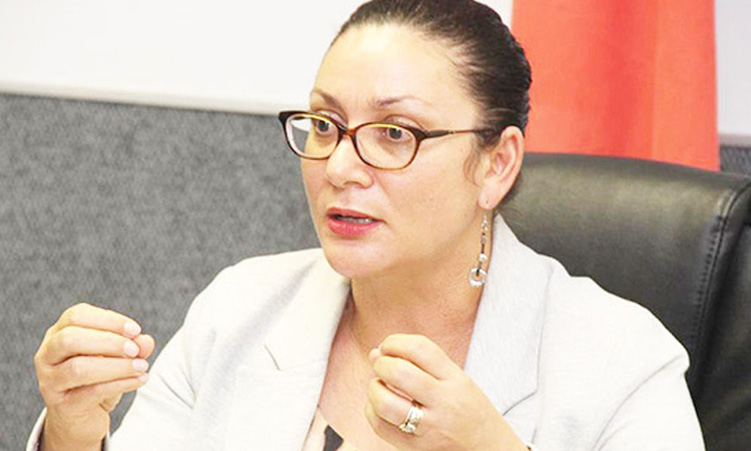
Namibia’s first woman president will face a baptism of fire when she assumes office.
She will be confronted by Namibia’s long-standing structural crises of massive unemployment, widespread starvation wages, inequality, poverty and the devastating effects of climate change.
Having been part of the government since independence, Netumbo Nandi-Ndaitwah (NNN) has deep insights into the workings of the executive and its shortcomings that contributed to the perpetuation of multiple crises.
Our president-elect is also aware that significant and visible changes are needed to stop the loss of electoral support for Swapo from 80% in 2014 to just 53% in 2024.
In the last days of her recent election campaign, NNN promised to create 500 000 jobs, but she will have to demonstrate how this would be done.
Political promises like the eradication of poverty and the elimination of shacks by previous presidents have turned out to be nothing more than lofty statements of intent as they lacked a coherent strategy for implementation.
Shortly after her election, NNN announced that Namibia would not return to business as usual once she takes over the Presidency.
However, it would be naive to expect the incoming president to differ radically from her predecessors, as Swapo’s whole election campaign was based on the promise of continuity.
Also, a conservative approach to the budget and economic policy is deeply entrenched within government and a shift towards more interventionist and redistributive policies by the state are virtually impossible to implement within the framework of austerity (euphemistically called ‘fiscal consolidation’).
A significant shift in the government’s approach to social and economic development would be unavoidable if NNN is to succeed.
From a social justice point of view, several interventions are essential.
These include the large-scale creation of decent jobs through local manufacturing, for example, through agriculture-based industries, the mandatory processing of local raw materials and the establishment of local value chains around housing construction.
Secondly, Namibia needs to ensure decent work and move away from starvation wages which keep the vast majority of Namibian workers locked in poverty.
A deliberate move towards a living wage as a human right is sorely missing in Namibia.
NNN’s government will have to consider redistributive measures that directly enhance people’s livelihoods and guarantee a basic standard of living for all. There should be a departure from trickle-down economics that mainly benefit elites.
Redistributive measures that address high levels of inequality should be funded through tax on the enormous wealth of a small elite (for example, through inheritance tax and capital gains tax), alongside the introduction of a universal basic income grant (UBIG) which is the most effective anti-poverty measure that also provides an economic stimulus for basic consumer goods.
There are still untapped revenue sources to fund redistributive and anti-poverty programmes, for example increasing the proceeds from Namibia’s natural resources and stemming illicit financial outflows that deprive the fiscus of billions in tax revenue.
These measures will make a visible difference in most Namibian households and our economy.
Land redistribution should be based on a redistributive and productive agenda and therefore benefit disadvantaged full-time farmers instead of members of the elite who have become privileged part-time farmers, often on land purchased by the state.
The redistributive criteria should also apply to other natural endowments like marine resources which currently benefit prominent local elites and foreign fishing companies.
No doubt, to effect such changes NNN will face resistance from those with vested interests in the current status quo. She will therefore have to build a team of like-minded cadres who are committed to a social justice agenda.
She will need to build a competent developmental state instead of fueling networks of patronage and incompetence.
To achieve success, our president-elect will need to reorientate a state bureaucracy that currently seems satisfied with maintaining the status quo. There must be a clear focus on delivery across all ministries with competent ministers to steer the process.
Unless NNN can achieve that, it will be hard to translate the promises of jobs and better livelihoods into a lived reality.
She has her work cut out and she knows she will be judged by the outcomes of her actions on the lives of ordinary Namibians.
– Herbert Jauch is the chairperson of the Economic and Social Justice Trust.
In an age of information overload, Sunrise is The Namibian’s morning briefing, delivered at 6h00 from Monday to Friday. It offers a curated rundown of the most important stories from the past 24 hours – occasionally with a light, witty touch. It’s an essential way to stay informed. Subscribe and join our newsletter community.

The Namibian uses AI tools to assist with improved quality, accuracy and efficiency, while maintaining editorial oversight and journalistic integrity.
Stay informed with The Namibian – your source for credible journalism. Get in-depth reporting and opinions for
only N$85 a month. Invest in journalism, invest in democracy –
Subscribe Now!