



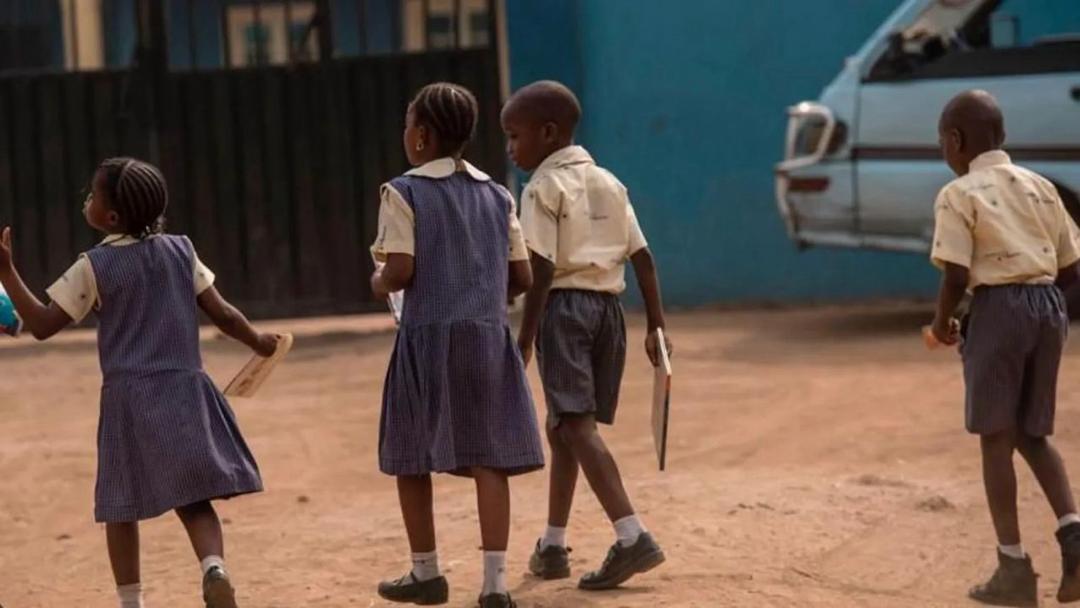
The Nigerian government has announced it is cancelling a controversial policy that mandated the use of indigenous languages for teaching in the earliest years of schooling instead of English.
Education minister Tunji Alausa says the programme, introduced just three years ago, had failed to deliver and was being scrapped with immediate effect.
Instead, English will be reinstated as the medium of instruction from pre-primary levels through to university.
The now-defunct programme was launched by former education minister Adamu Adamu, who had argued that children learnt more effectively in their mother tongue.
At the time, Adamu argued that pupils grasped concepts more readily when taught in “their own mother tongue” – a view supported by numerous United Nations (UN) studies on early childhood education.
Nigeria’s education system is facing serious problems, such as poor-quality teaching, inadequate materials, low pay for teachers and numerous strikes.
Although 85% of children go to primary school, less than half complete their secondary education.
Some 10 million children are out of school in Nigeria, more than in any other country, according to the UN.
Announcing the reversal of the language policy in the capital, Abuja, Alausa pointed to poor academic results from those areas which had adopted mother-tongue teaching.
He cited data from the West African Examinations Council (WAEC), the National Examinations Council (Neco), and the Joint Admissions and Matriculation Board (Jamb).
“We have seen a mass failure rate in WAEC, Neco, and Jamb in certain geo-political zones of the country, and those are the ones that adopted this mother tongue in an over-subscribed manner,” the minister states.
The abrupt cancellation of the policy has drawn a mixed response from education specialists, analysts and parents.
Some have hailed the government’s decision, agreeing that the implementation was problematic and contributed to falling standards.
Others, however, believe the policy was abandoned prematurely. They argue that such a significant shift requires substantial investment in teacher training, the development of textbooks and learning materials, and a longer timeframe before it can be fairly judged and begin to bear fruit.
Education expert Aliyu Tilde praised the reversal, saying Nigeria isn’t ready for such a move.
“Does Nigeria have trained teachers to teach in the dozens of indigenous languages in the country? The answer is no. Also the major exams like WAEC, Jamb are all in English and not in those mother tongue languages.
“I think what’s needed to improve the quality of our schools is bringing in qualified teachers,” he told the BBC.
A mother who has two children in early education schools, Hajara Musa, says she supported the reversal as it would help young children to learn English at an early age.
“English is a global language that is used everywhere and I feel it’s better these kids start using it from the start of their schooling instead of waiting for when they are older,” she told the BBC.
However, social affairs analyst Habu Dauda disagrees.
“I think it was scrapped prematurely instead of giving it more time. Three years is too little to judge a big shift such as this – the government ought to have added more investment,” he says.
The debate highlights the ongoing challenge in Nigeria of balancing the promotion of its rich linguistic heritage with the practical demands of a national curriculum and a globalised economy where English proficiency is dominant.
– BBC
In an age of information overload, Sunrise is The Namibian’s morning briefing, delivered at 6h00 from Monday to Friday. It offers a curated rundown of the most important stories from the past 24 hours – occasionally with a light, witty touch. It’s an essential way to stay informed. Subscribe and join our newsletter community.

The Namibian uses AI tools to assist with improved quality, accuracy and efficiency, while maintaining editorial oversight and journalistic integrity.
Stay informed with The Namibian – your source for credible journalism. Get in-depth reporting and opinions for
only N$85 a month. Invest in journalism, invest in democracy –
Subscribe Now!