






Zimbabwe’s president is revered on the continent for his liberation-credentials, but new revelations could take some shine off.• Mail Guardian Africa Reporter
The Australians usually cause headaches for Zimbabwe in rugby and cricket. Now, though, recently declassified Australian diplomatic documents are resurrecting ghosts President Robert Mugabe’s government would have preferred to remain locked away.
It all goes back nearly 32 years.
On 3 February 1983 in southern Matabeleland two young pregnant girls were shot dead, and their wombs split open. Months before the girls had been raped for several days by members of the Zimbabwe National Army (ZNA), who then left the Neshango village area by helicopter.
It was an atrocity that would shock even those most hardened to the depths of cruelty humans are capable of, but it was only one in a line of similar horrors enacted in western Zimbabwe and parts of the more central Midlands.
Villagers were forced to dig their own graves and then shot into them; others burned to death in dwellings as they pleaded desperately for their lives, an old lady raped in her hut then set alight with a plastic bag, the agony of which killed her three weeks later.
A year-old child was kicked by soldiers’ boots, breaking his back, a man savagely beaten breaking his every bone until he was “like a cloth”, a four-month infant axed three times, a mother forced to eat the flesh of her own child.
These were just some of the horrors recorded in the western region of Matabeleland in 1983-84 by the Catholic Commission for Justice and Peace and compiled in 1997 (see http://ia700409.us.archive.org/9/items/BreakingTheSilenceBuildingTruePeace/MatabelelandReport.pdf), and now being directly linked to President Robert Mugabe.
The brutality, which also included the deliberate starving of the population, was largely carried out by the feared North Korean trained 5 Brigade (or Fifth Brigade), the deal for its formation having been signed in October 1980 by Robert Mugabe, who had just become premier.
The 5 Brigade “passed out” in December 1982, and was first deployed the following January in Matabeleland North, the heartland of the opposition Zimbabwe African People’s Union (Zapu). Supported by intelligence operatives and the army, it would go on to unleash deep terror, even going back for retraining at intervals.
Zapu had in April 1980 lost the first post-independence elections to the splinter Zanu PF, led by Mugabe. But a sustained spate of resulting violence, including assassination attempts on the new premier, was perceived by the new government as the poll loser seeking to gain power by unconstitutional means.
A lot of the justifications for the resulting crackdown – which was blamed on Zapu’s activities – were later found to be the handiwork of South African agents, including the defining discovery of arms caches in Matabeleland.
Few absolve the horrors meted out on locals by dissidents who were claimed to be backed by the opposition, but they enjoyed little local support, and were largely former combatants cut adrift by Zapu and thus looking to preserve themselves, following a failed demobilisation and integration into the army.
The CCJP, one of the few rights groups active in Zimbabwe, found that two conflicts essentially existed: one between the dissidents and government forces, and another between agencies and regions seen as supportive to the opposition.
The Harare regime was successful in meshing the two, such that the dissidents were seen as backed by Zapu, whose bedrock of support was in Matabeleland.
The 5 Brigade, which reported specifically to the government, was part of the response in crushing all opposition to the ruling Zanu-PF.
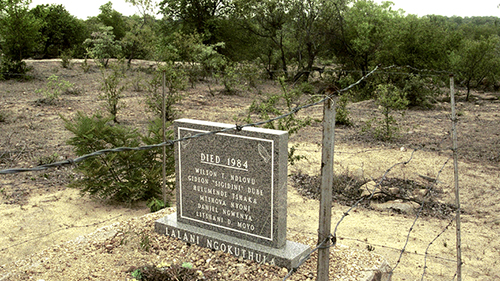
By the time a deal was signed in 1987 between Mugabe and Zapu leader Joshua Nkomo, the CCJP confirmed at least 3 000 undoubtedly dead and nearly 5 000 tortured, in what are referred to as the Gukurahundi massacres, which means ‘the rain which washes away the chaff before the spring rains’ in the Shona language spoken by Mugabe.
This is only those who can be reliably accounted for, the often-mentioned number is in the region of 20 000 Ndebeles, who are the majority occupants of Matabeleland.
It remains an emotive near-taboo issue rarely talked about in the southern Africa country of about 14 million; a stifling web of silence woven around the events of those five years, but once the surface is scratched, the pain runs deep.
Nearly half of those killed were breadwinners, scores simply disappeared with their families left with not even the consolation of a body to bury, thousands were maimed for life, the psychological trauma immeasurable.
The Mugabe government has long denied any role, with several senior figures queuing up to absolve the regime of any involvement. In September 1983 a commission of inquiry was constituted to probe the atrocities; more than 30 years later its findings are yet to be made public.
Mugabe’s only reference to the killings, made at the 1999 burial of arch-rival Nkomo, were that they were a “moment of madness”.
In 1992, Zimbabwe defence minister Moven Mahachi wrote in a Zimbabwean daily that “events during that period are regretted and should not be repeated by anybody, any group of people or institution in this country”.
But recent official comment has been harder to come by, until Phelekezela Mphoko, the less senior of two vice presidents, in February claimed the massacres were a “Western conspiracy”. There is also very little published academic research on the events in Matabeleland.
But new information about the those dark days is trickling into the public domain. It could provide an unwelcome headache for Mugabe (91), who has been fighting to put down an internal ruling party succession struggle.