The turmoil former 200m and 400m sprinter Estomich Katjijova endured during her promising career puts her in a different class of athletes.
Several hurdles taught her not to give up on her dreams though.
“People never wanted me to progress. When I received a releasing letter to participate in athletics while in the police force, they hid it,” she says.
Katjijova says on another occasion she was at a training camp with the national team, preparing for a continental championship in Tanzania, but was withdrawn from the event four days before the team’s departure.
“Story of my life,” she says.
But despite these setbacks, Katjijova says she still actively participates in athletics.
Born and raised at Goot-Achab at Aminuis in the Omaheke region, Katjijova started showing potential at a young age.
“I started running in Grade 1 in 1991 already, and I was the dominant little girl in my category at Chief Kutako Primary School at Aminuis.
“I won all the sprints, starting from the 60m. I continued my dominance at Rietquelle Junior Secondary School,” she says.
“I just proved to be too fast for my peers, especially at secondary school where I was always encouraged by my teachers to consider athletics seriously as a career. I decided to come to Windhoek after finishing Grade 10 to join the top athletics clubs and pursue my dream.”
However, life in the city did not turn out as rosy as she thought it would be.
Katjijova started encountering one problem after the other with officials in the national athletics union.
“It seemed like no one wanted me to succeed. I struggled to settle down in any of the three clubs I joined in Windhoek.
“And no matter how hard I worked on the training ground, people were not happy,” she says.
Katjijova says she was clearly a fast athlete and the top woman sprinter at all the clubs.
“But I was never accorded the same opportunities as the other woman athletes in Namibia to go represent my country outside our borders to gain more experience and exposure.”
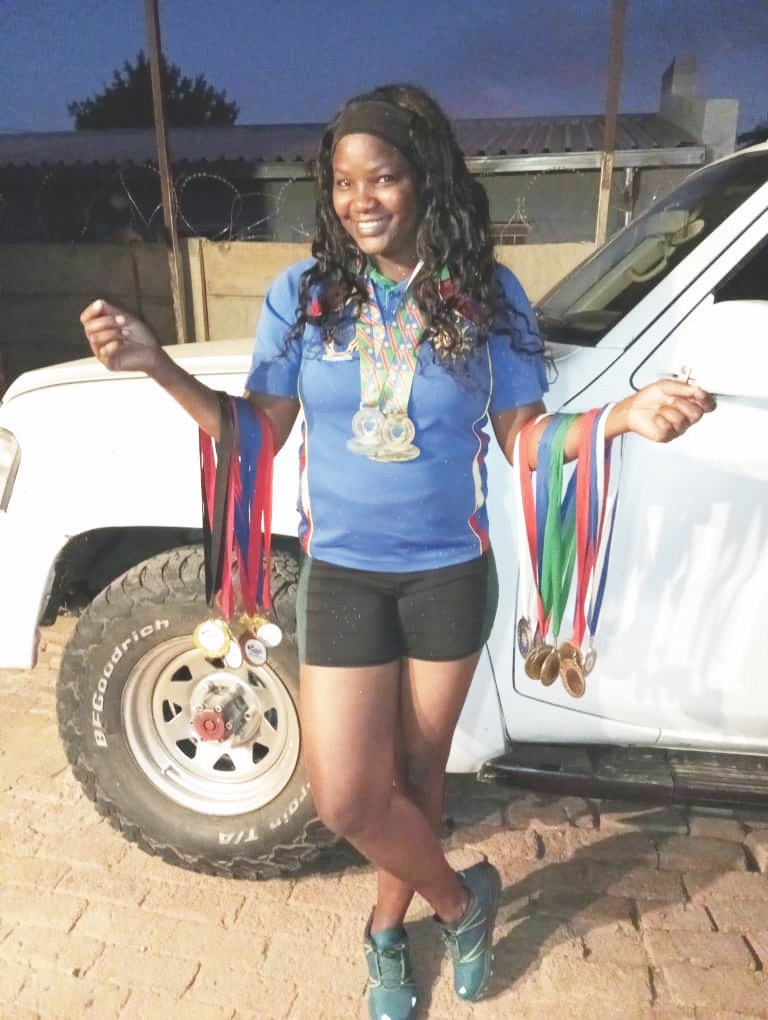
Katjijova first joined the Sunshine Athletics Club when she moved to Windhoek in 2002 before she moved on to Welwitschia 77 Athletics Club.
Her final stop was the Golden Cheetah Athletics Club under seasoned coach Lucky Gawanab, where she says she enjoyed her best years.
“I must admit, it was an absolute pleasure training under coach Gawanab and he helped me improve tremendously as an athlete. I was really enjoying myself and I was always looking forward to the national championships,” Katjijova says.
She says she was very competitive and hated to lose, “but I was not that type of person who would cheat or win at all costs”.
The former Rietquelle pupil says she ran a lot of top races in the country, especially during the Namibian Athletics Championships, but one national event in 2013 stands out from the rest.
“I was running for Golden Cheetahs and coach Gawanab prepared me very well for the 200m and 400m races. I knew I was up against some serious opposition, because there were Globine Majova and the tough nut Tjipekapura Herunga,” she remembers.
“I did not give myself any chance because Globine and Tjipekapora were just returning from their top-class training camp in Jamaica, which I was also denied by the athletics powers that be. But I must say I was fired up to face both of them.”
Katjijova, collected a silver medal in the 400m after finishing as runner-up to Herunga, while the 200m appeared too fast for her as she was beaten into third place by Majova and Herunga.
“I was particularly happy with my time in the 400m, because those two girls were returning from Jamaica where they were exposed to top-class training,” she says.
“Imagine if I went to Jamaica as well. If the truth can be told, some of the athletes that went on that training camp to Jamaica were never faster than me on the track, but for reasons not known to me I was always victimised at national level.”
Katjijova joined the Namibian Police in 2013 and started competing in the regional police games, known as the Southern African Regional Police Chiefs Cooperation Organisation Games that Namibia hosted.
Katjijova returned with a silver medal for the 800m from the Botswana National Championships in Gaborone in 2004 – the only time she managed to leave Namibia with the national athletics team.
The courageous athlete, who’s running style was characterised by speed and endurance, collected a gold medal in a Nedbank 5km race, to which she added another gold during a street mile in the city and three bronze medals in the cross country.
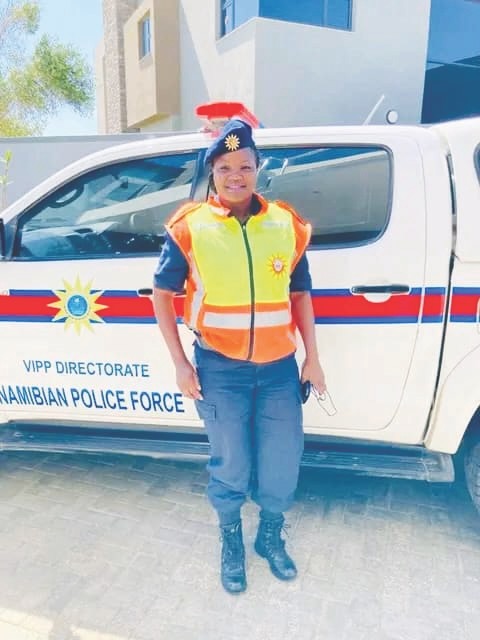
WORK, FAMILY
Katjijova, who is the single mother of three children, has been deployed to the Namibian Police VIP Protection Directorate since 2018.
She received her first police training at Patrick Iyambo Police College in 2013 before she went to the Ruben Danger Ashipala Police Training Centre at Ondangwa between 2014 and 2015.
She sustained a career-threatening injury while at Ondangwa after she tore her hamstring in 2014, but thanks to her biokineticist, Appel de Klerk, she was able to resume her athletics career.
She started working at Wanaheda Police Station, where she was stationed for two years from 2016 until 2017 before her deployment to the VIPP Directorate.
A normal day for her still starts with a jog early in the morning, which is more regular especially now that they are busy preparing for the Khomas Police Championships.
She has participated in the javelin and discus since 2022 and has been raking in the gold medals in the javelin, even at the Athletics Namibia National Championships.
Katjijova’s advice to young runners is never to give up on their dream to become the best.
“They say you sow what you reap. You just never know when your turn will come to be a champion.
“Nurture your talent by listening to advice from your coaches and never skip training sessions.”
In an age of information overload, Sunrise is The Namibian’s morning briefing, delivered at 6h00 from Monday to Friday. It offers a curated rundown of the most important stories from the past 24 hours – occasionally with a light, witty touch. It’s an essential way to stay informed. Subscribe and join our newsletter community.

The Namibian uses AI tools to assist with improved quality, accuracy and efficiency, while maintaining editorial oversight and journalistic integrity.
Stay informed with The Namibian – your source for credible journalism. Get in-depth reporting and opinions for
only N$85 a month. Invest in journalism, invest in democracy –
Subscribe Now!