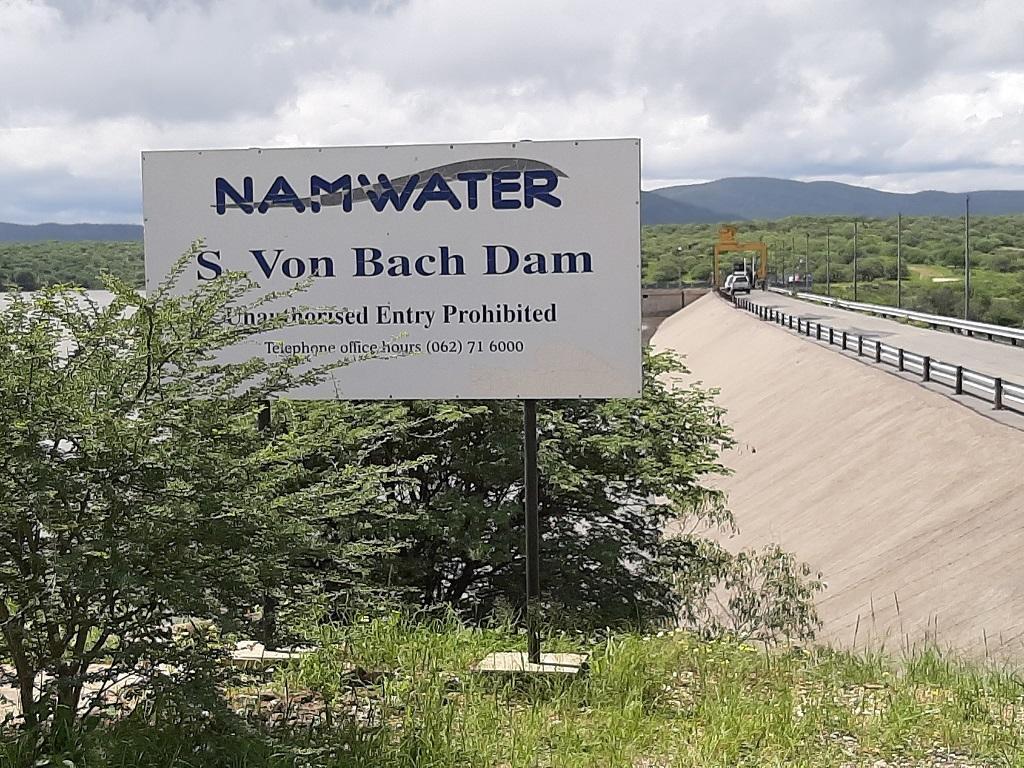
The national water utility, NamWater, is transitioning to power parts of its operations using solar energy in a bid to reduce mounting electricity costs.
This currently accounts for as much as 40% of its annual operational expenses.
NamWater says it has launched a procurement process inviting independent power producers (IPPs) to prequalify for the construction and operation of solar photovoltaic (PV) plants on NamWater-owned land and dams.
The procurement includes a specific project to power the Von Bach-Windhoek water supply scheme.
“NamWater is now faced with the situation where the cost of electricity remains a major concern.
“If alternatives to address high electricity costs could be identified, the situation could at least be managed more competently and efficiently,” the utility says.
According to NamWater, energy costs for water treatment and pumping totalled more than N$363 million in 2021.
During that year, the average specific energy cost was N$2.22 per kilowatt-hour (kWh), with average consumption recorded at 2.67kWh per cubic metre of water.
The utility says between 2016 and 2021, payments to NamPower alone rose from N$136.9 million to more than N$171 million, while distributors such as Erongored and Cenored also saw annual charges steadily increase.
NamWater says its current electricity demand stands at 18 megawatts (MW) per hour and is expected to double due to upcoming infrastructure projects, including the coastal desalination plant and upgrades to the Rundu and Oshakati water treatment plants.
To manage future demand and cost pressures, the utility says its renewable energy strategy aims to integrate solar PV technology across selected water schemes.
“The target of the goal is for solar PV power plants to supply 30% to 70% of the required energy for targeted water supply schemes,” NamWater says.
As part of this plan, NamWater has issued a separate expression of interest for a solar PV project on farm Aqua Clara 329 near the Von Bach treatment facility.
The project is expected to meet the 5.748MWh daily energy requirement of the Von Bach-Windhoek water supply scheme.
The utility cites a 2023 feasibility study led by the Namibia University of Science and Technology, which identified four schemes – Von Bach, Oshakati, Calueque, and Kuiseb – as having strong technical and economic potential for solar PV deployment.
The study found that achieving 70% renewable energy (RE) penetration at Von Bach would result in the lowest levelised cost of energy (LCOE) and the highest net present value (NPV).
“For the RE penetration levels considered (30%, 50%, and 70%), the higher the %RE, the lower the LCOE, lower operating costs, and a higher NPV,” the report says.
NamWater says it is authorised to generate and procure renewable energy under the modified single buyer model and the national renewable energy policy of 2017.
These regulatory frameworks allow the utility to enter into direct power purchase agreements with IPPs and feed surplus electricity into the national grid.
According to NamWater, the primary aim of the initiative is “to promote renewable energy generation, reduce carbon emissions, and contribute to Namibia’s energy security and sustainability goals”.
In an age of information overload, Sunrise is The Namibian’s morning briefing, delivered at 6h00 from Monday to Friday. It offers a curated rundown of the most important stories from the past 24 hours – occasionally with a light, witty touch. It’s an essential way to stay informed. Subscribe and join our newsletter community.

The Namibian uses AI tools to assist with improved quality, accuracy and efficiency, while maintaining editorial oversight and journalistic integrity.
Stay informed with The Namibian – your source for credible journalism. Get in-depth reporting and opinions for
only N$85 a month. Invest in journalism, invest in democracy –
Subscribe Now!