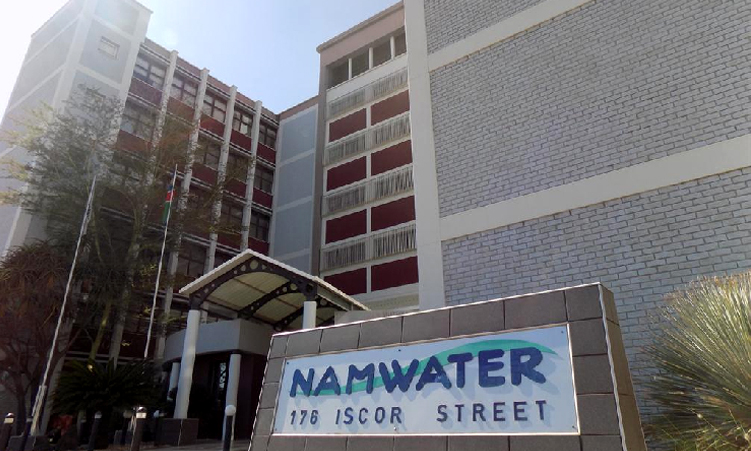
The Namibia Water Corporation (NamWater) has implemented an immediate recruitment freeze until April to manage liquidity constraints caused by N$2.8 billion in outstanding debt from various customers.
NamWater spokesperson Lot Ndamanomhata confirmed this to The Namibian yesterday.
Chief executive Abraham Nehemia says the debt stems from several local authorities, including the Rundu, Rehoboth, Keetmanshoop and Khorixas town councils, and the Gobabis Municipality.
The recruitment freeze is detailed in an internal memorandum dated 30 October 2025, titled ‘Immediate Freeze on Recruitment’, drafted by Nehemia and addressed to all managers.
In the memorandum, Nehemia instructs all divisions to halt hiring “until further notice”, citing liquidity constraints, rising operational costs and the need for urgent cost-containment to safeguard the company’s financial sustainability.
He says the freeze affects all vacant posts, positions currently in recruitment processes, replacement hires for resigned or retired staff, and contract renewals that would require increased budgets.
“This decision has been necessitated by the current financial position of the business and the imperative to exercise stringent cost-containment measures to ensure the organisation’s financial sustainability.
“Our current financial performance and liquidity position require immediate and decisive action to manage operational costs. Personnel costs constitute our largest expenditure category, and the addition of new employees at this juncture would further strain our financial resources,” the memo reads.
Nehemia says the decision is intended to preserve cash flow, stabilise operations, meet existing obligations to employees and suppliers, and allow time for a comprehensive financial review.
The recruitment freeze will remain in place until at least 1 April, when NamWater’s management plans to reassess the company’s financial position, revenue outlook and the affordability of resuming hiring.
“We recognise that certain vacancies may be genuinely critical to business operations, service delivery, regulatory compliance, or revenue generation. Exception requests for critical positions will be considered on individual merit.
“I recognise that this decision will create challenges in your divisions. Some of you are already operating with vacancies and stretched teams. I do not take this decision lightly,” he says.
Nehemia says the entity will not commit to expenditures it cannot afford.
“We owe it to our existing employees, our customers, and our shareholders to manage resources responsibly,” he says.
THE FIGURES
According to figures sent to The Namibian, town councils alone owe NamWater about N$927 million, representing 32.8% of the outstanding N$2.8 billion.
When combined with municipalities, village councils and regional councils, local authorities account for over half of NamWater’s unpaid bills.
Rural water communities are the second-largest debtors, owing approximately N$783 million (27.7%).
Meanwhile, private consumers owe about N$342.5 million (12.1%), exceeding the combined debt of mines and industries.
Mines owe the water utility N$166 million (5.9%), while industries account for only 1.6%.
Government ministries owe roughly N$21.9 million, less than 1% of the total.
NAMWATER RESPONDS
Ndamanomhata says the recruitment freeze has been effective since 30 October last year “as part of prudent financial management measures in response to current liquidity challenges”.
“It is important to emphasise that this was an internal operational directive, intended to ensure financial prudence and organisational sustainability while a comprehensive financial review is undertaken. The measure is corrective and temporary in nature,” he says.
He says NamWater’s only source of operational cash flow is revenue collected from customers, adding that when payments are not honoured, the corporation’s financial position is immediately affected.
“Unlike private entities, NamWater continues to supply water in the national interest, even where payment challenges arise, recognising that in some instances non-payment is linked to administrative failures rather than consumer unwillingness.
“NamWater cannot subsidise large institutions indefinitely, as this falls outside its mandate. The recruitment freeze is a temporary cost-containment measure and does not signal any reduction in NamWater’s commitment to service delivery, infrastructure maintenance, or regulatory compliance.”
He says only non-essential recruitment has been paused.
“To address financial pressures, NamWater is implementing enhanced revenue collection strategies, operational efficiency measures, and continued engagements with government and key stakeholders,” Ndamanomhata says.
‘INCOMPETENCE’
Economist Omu Kakujaha-Matundu says the entity’s debt management department is incompetent.
“For it to amass such huge uncollected debt points to incompetency of the debt management department and political interference for NamWater to go after defaulters.
“It is well understood that NamWater, as a national utility, is supposed to operate on a cost-recovery basis. That is, it is not expected to generate huge profits,” he says.
Kakujaha-Matundu says water is a basic human right.
“Since water is a basic human right, if the reason is government interference, then the government has to cough up. If it is owing to management failure to efficiently manage debt, then heads should roll.
“As for the freeze on jobs, it is a good long-term strategy. By doing so, it shows there are many not-so-needed or excess positions on their human resources books, which could be frozen without compromising efficiency,” he says.
The economist says state-owned enterprises tend to fill too many redundant positions, more so at management level.
Another strategy is to identify duplicate positions and lay those employees off or retrench them.
“Finally, as no economy can run without water, the government should make a plan to keep NamWater afloat and turn the situation around.
“Then serious restructuring should happen, including the implementation of a sustainable debt management strategy,” he says.
In an age of information overload, Sunrise is The Namibian’s morning briefing, delivered at 6h00 from Monday to Friday. It offers a curated rundown of the most important stories from the past 24 hours – occasionally with a light, witty touch. It’s an essential way to stay informed. Subscribe and join our newsletter community.

The Namibian uses AI tools to assist with improved quality, accuracy and efficiency, while maintaining editorial oversight and journalistic integrity.
Stay informed with The Namibian – your source for credible journalism. Get in-depth reporting and opinions for
only N$85 a month. Invest in journalism, invest in democracy –
Subscribe Now!