


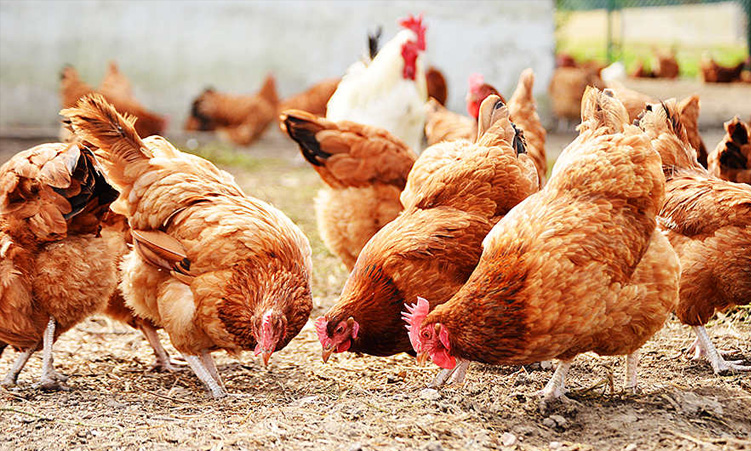
NAMIBIA meets over 85% of its poultry demand and is self-sufficient in eggs, with local production growing steadily amid rising consumption and potential export opportunities.
This was said by Louis Kleynhans, who was re-elected as chairperson of the Poultry Producers’ Association, for the 2026/27 year at the association’s annual members’ meeting and information day held in Windhoek on 26 March.
Erastus Kadhikwa was re-elected as vice chairperson.
Namibia’s poultry demand is growing rapidly, with annual consumption estimated around 30 000 tonnes, projected to reach 38 500 tonnes by 2029.
Domestic production is rising, with over 17.6 million chickens slaughtered locally as of late 2025, but the country still imports approximately 18.7 million kilograms of poultry products.
The country’s poultry industry reached a production value of N$1.74 billion in 2024, a 13.47% increase from the previous year.
Kleynhans said after poultry was declared a controlled product under the Livestock and Livestock Products Board of Namibia (LLPBN) regulation, competition from cheap egg imports had disappeared, creating room for local production to grow.
“The LLPBN is managing the situation well that even small and medium enterprises are taking about 60 000 day-old chicks a week,” he said, adding that while the country does not export any poultry products yet, there is a huge potential for exports.
He said the association, which is affiliated to the Namibia Agricultural Union (NAU), has 28 members, with a number of prospective members having expressed interest in joining.
The information day also marked the launch of a new capacity building training programme for poultry producers, titled: All About Poultry: From Basics to Business.
During the session, Markus du Plessis from Feedmaster presented the fundamentals of poultry farming, covering housing, breeds, basic set-ups for layers and broilers, as well as feeding and nutrition.
According to the NAU newsletter, this programme will continue throughout the year with one online session monthly covering various topics related to poultry farming.
Reflecting on 2025, Kleynhans said the poultry sector is the second-largest contributor to Namibia’s agricultural production, after the cattle industry and highlighted the growth of Hochland Farms as a notable example of industry development.
“The farm began with 200 chicks per week and has since expanded to operate environmentally controlled housing and its own processing facility, with a target of slaughtering 30 000 broilers per week,” he said.
Kleynhans, however, said products such as livers, gizzards and feet remain in short supply, and processed or crumbed poultry products continue to be largely imported.
He said Namibia’s disease-free status nonetheless positions the industry well for potential future export opportunities to neighbouring countries, following a path similar to that of the red meat sector in European markets.
Kleynhans acknowledged a gap in the industry regarding practical training infrastructure.
“As visiting existing farms presents biosecurity risks, there is currently no dedicated demonstration facility where new producers can observe a commercial broiler or layer operation firsthand. This is an area the association intends to explore going forward,” he said.
He added that day-old broiler chicks are generally available, with Namibia’s largest producer importing batches of between 5 000 and 30 000 chicks at a time from South Africa.
He said layer chick supply is more sensitive, with imports sourced from The Netherlands or elsewhere in Europe when South African supply is disrupted, resulting in significantly higher costs due to airfreight.
“Despite the added expense, uninterrupted supply was noted as the priority,” he said, adding that Namibia’s poultry producers are performing at internationally competitive levels, with production figures that meet world standards.
Kleynhans expressed gratitude to Agrimark, Feedmaster and Agra for their sponsorship.
– email: matthew@namibian.com.na
In an age of information overload, Sunrise is The Namibian’s morning briefing, delivered at 6h00 from Monday to Friday. It offers a curated rundown of the most important stories from the past 24 hours – occasionally with a light, witty touch. It’s an essential way to stay informed. Subscribe and join our newsletter community.

The Namibian uses AI tools to assist with improved quality, accuracy and efficiency, while maintaining editorial oversight and journalistic integrity.
Stay informed with The Namibian – your source for credible journalism. Get in-depth reporting and opinions for
only N$85 a month. Invest in journalism, invest in democracy –
Subscribe Now!