



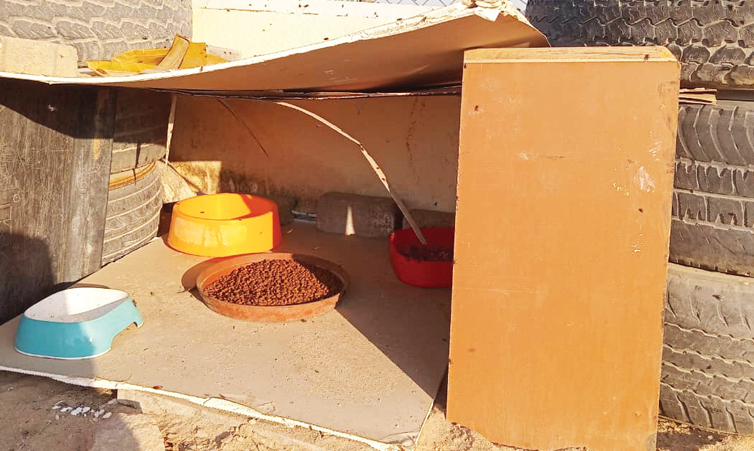
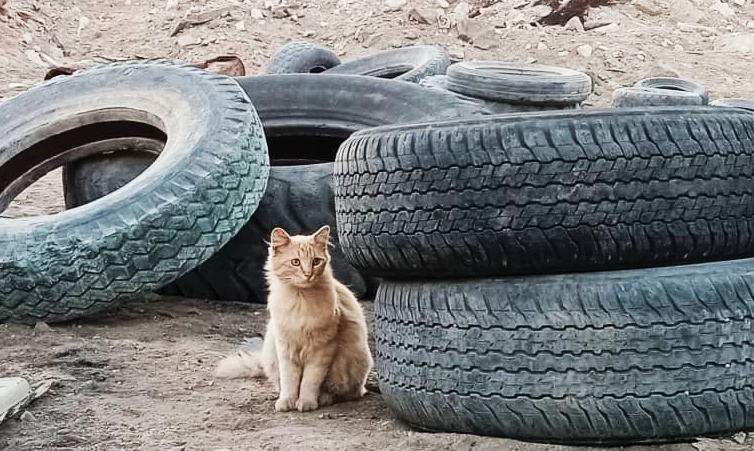
Somewhere in a quiet corner of Swakopmund’s suburbs, something stirs among a pile of old tyres.
A tiny, furry head emerges from its hiding place. The ginger kitten rushes to food left by humans – mouth and whiskers pressed to the ground.
More cats follow to join the feast.
A swarm of flies rises into the air where two women have dropped their bags.
Barbara Wayrauch and Andrea Pescetti study each cat carefully. It has been cold the past couple of days.
The women are looking for newcomers and survivors. Both are volunteers at Have-a-Heart Namibia, a non-profit organisation established across Namibia with the aim of saving the lives of cats and dogs through sterilisation.
‘UNCONTROLLABLE’
Abandoned cats live at industrial sites and rubbish dumps in Namibia, trying to survive outside hospitals and restaurants.
They are regulars, particularly at Eenhana and Oshakati state hospitals.
Without intervention they breed uncontrollably and even eat patients’ food.
Last month, the Eenhana District Hospital in the Ohangwena region said it was unable to contain its feral cat problem.
Similar situations were reported at other hospitals across the country, including at Katutura Intermediary Hospital in Windhoek, and Rundu, Engela and Onandjokwe hospitals.
In response, a network of volunteers at Swakopmund and around the country are helping these animals live healthier lives.
HUMANS TO BLAME
Wayrauch has dedicated the last decade of her life to the trap-neuter-return programme, which humanely captures feral cats and brings them to a vet to be sterilised before releasing them back to where they were found.
Despite a full-time job, she invests her time and money, often wading through trash, in helping the abandoned animals.
“The condition of the cats improves. A cat that looked bad before, underweight and constantly having kittens, becomes a different animal after you sterilise them,” she says.
Wayrauch believes humans are responsible for creating and maintaining the country’s feral cat problem.
“It’s not that these cats just come here from somewhere and spread out and have young. The human being is always to blame. Unfortunately, it’s very popular in Namibia to take a little kitten for free.
“It’s cute for a while, but when it gets bigger, it becomes a problem. And then you have to get rid of it somewhere,” she says.
People frequently abandon their cats in areas where other cats live already.
“There are few places cats can go where they are not exposed to dangers such as dogs, cars, and cruel humans. This leads to abandoned or neglected cats congregating in numbers that would rapidly grow out of control if it weren’t for sterilisation programmes,” Wayrauch says.
While volunteers do not like disclosing locations of cat colonies because of past negative experiences, Wayrauch says around 300 cats are sterilised at Walvis Bay every year.
After about 10 years, these numbers are starting to stabilise.
STERILISE, STERILISE, STERILISE
“The problem is we would get it under control within a few years if there weren’t always people who don’t sterilise their cats and don’t take care of them any more. Those cats then give birth to more cats. That’s why we’re never done,” she says.
Large, unchecked colonies can start causing problems for their human neighbours, especially when they form around restaurants or hospitals.
Wayrauch says the best solution is to work together with trap-neuter-return programmes – not only for ethical reasons, but practical ones.
“Often we are told by businesses to get rid of the cats. We don’t do that, because other cats will come. It’s just like with leopards: You shoot one and five others will take its place.
“Unfortunately, because so many people don’t sterilise their cats, there are always many stray cats who will settle again, and then you have a bigger problem,” she says.
“Let’s sterilise the couple you have at your restaurant or hospital or police station and make sure they are fed so they are in good condition. We have many examples where it worked well.”
CATCHING MICE
Cats who receive supplemental cat food a few times a week are more likely to be energetic enough to catch mice.
In fact, that is how the cat colonies at Swakopmund first started over a 100 years ago, Wayrauch says.
The town was struggling with a rat and mouse problem at the time and cats were deliberately released to combat this.
“We still need them to do this job today. We tell the fish factory or the restaurant: If you see cats, be happy, cats eat mice and rats,” she says.
She says apart from food, volunteers ensure the cats have access to fresh water.
The Have-a-Heart Namibia project works with veterinarians to provide the necessary spaying and neutering procedures at the lowest possible cost or even for free.
They also help bring veterinary services to remote or rural areas through their mobile clinic, so that many more cats can be neutered.
It’s important that organisations and people work together to achieve success, Wayrauch says.
‘PLEASE HELP’
She says every contribution helps.
The organisation has a special account at Summit Sales in Windhoek where they source most of their cat food, to which the public can contribute.
Wayrauch says adopting cats through the Society for the Prevention of Cruelty to Animals (SPCA) rather than accepting free kittens is the best option as such organisations help ensure vaccination and sterilisation are more affordable.
She says they are always looking for more volunteers.
“We need more awareness about where these cats come from. Irresponsible people are responsible for street cats. Sterilisation is the only solution that exists.”
SPCA Windhoek director of operations Sylvia Breitenstein reiterates the importance of sterilisation and responsible cat ownership.
“Cats have become a big problem, feral cats at least. If you have a cat, please spay or neuter it, otherwise you are contributing to this problem as a cat owner,” she says.
Breitenstein says stray cats are skittish and will avoid humans.
If you find them living on your property, it may be a good idea to leave out food regularly over a period of time.
“This will get them used to returning to a certain spot and make it much easier to trap them in the future. One should be careful not to corner them as this may frighten them.”
She also recommends trap-neuter-release programmes as an efficient way to deal with stray cats.
In an age of information overload, Sunrise is The Namibian’s morning briefing, delivered at 6h00 from Monday to Friday. It offers a curated rundown of the most important stories from the past 24 hours – occasionally with a light, witty touch. It’s an essential way to stay informed. Subscribe and join our newsletter community.

The Namibian uses AI tools to assist with improved quality, accuracy and efficiency, while maintaining editorial oversight and journalistic integrity.
Stay informed with The Namibian – your source for credible journalism. Get in-depth reporting and opinions for
only N$85 a month. Invest in journalism, invest in democracy –
Subscribe Now!