When the banging on the door started, Tonateni Moses (25) thought someone had mistaken the house for another.
Then came the words that would define the terrifying night.
“This house is mine.”
Moses says the words were spoken by a group of South African men who allegedly forced their way into the house where he was sleeping in Vredendal, a farming town in South Africa’s Western Cape province.
He says the house belonged to his uncle, who had lived in South Africa for many years, and that he was staying there while trying to find his footing after moving to the country.
That night, however, the house became a place of fear.
“The men were aggressive and forcibly entered the house. I pushed against the door with all my strength, hoping they would leave as they forcefully pushed the door. They later managed to open it,” Moses says.
Jacinta Ngobese-Zuma, the founder of the March and March organisation in South Africa which focuses on illegal immigration, told The Namibian that Namibians were not targeted during the demonstrations.
After gaining entry, Moses says the men assaulted him and took his belongings.
“They took my phones. They also kicked me and slapped me,” he recounts.
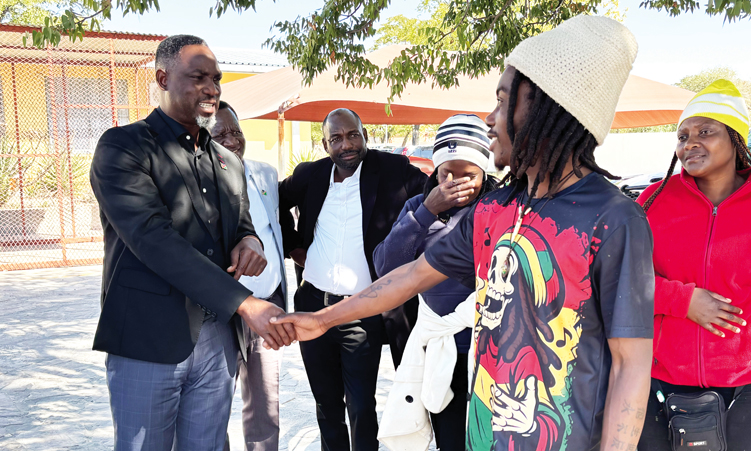
Moses is among 72 Namibians who were repatriated from Vredendal this past weekend following violence targeting foreign nationals in parts of South Africa.
But his journey to South Africa had started with hope.
He moved there in 2024 after his uncle invited him to study to be an electrical millwright at a vocational training centre.
The plan was to acquire a skill that would improve his chances of securing employment.
However, the opportunity never materialised.
“My uncle could not pay for me because the course was expensive. It was about N$25 000. He kept giving me excuses and I started looking for a job,” Moses says.
A former learner at Ekwafo Secondary School at Ongwediva, where he completed Grade 12 in 2020, Moses says he went to South Africa believing it would offer better opportunities.
Instead, he found himself caught in a wave of hostility towards foreign nationals.
He recalls a night when tensions between Namibians and South Africans escalated into violence after the demonstrations started.
According to Moses, bottles and stones were thrown during the confrontation as some South Africans attempted to force migrants to leave the area.
“Some Namibians were injured on their heads and faces, but some South Africans were also injured during the confrontation,” he says.
Born to a Namibian father and an Angolan mother, he plans to travel to Angola, where his mother resides.
“I am happy that I can now sleep peacefully that I am no longer in South Africa where I could be injured or killed any time,” he relates.
For another Namibian, Wilpartina Namukanda (37) who was part of the group brought back home, the violence left behind destruction.
“They took our things and burned our houses,” she says.
She recalls seeing anti-migrant activists marching while carrying sticks and pangas. She also claims some carried containers they believed contained fuel.
She said the fuel was intended to burn houses occupied by migrants.
“They were singing and shooting ‘abahambe’ while blowing a whistle. They were saying we should go back because we have taken their jobs,” she says.
She says the lives of Namibians who are still at Vredendal are in danger. “If those people catch you, they will kill you,”she says.
She recounts an incident where she was almost closed in at work but was saved by her manager.
Despite the trauma, the woman, who has an 11-month-old baby, says she plans to return to Vredendal once the situation improves.
“There are opportunities compared to here in Namibia. There we also get paid per week,” she says.
She says the income she earned in South Africa helped her support her child, who is in boarding school. Before moving to Vredendal, she worked at graveyards in Noordoewer and Aussenkehr at the Namibian border with South Africa.
Oshana governor Hofni Iipinge encouraged the Namibian immigrants to stay in the country as there are opportunities for women and for the youth.
He also says that those who still want to go back from South Africa after the violence has subsided can go back.
The governor urged Namibians not to ridicule and criticise those who have returned saying they should be treated as brothers and sisters.