




Namibianisation and Black Economic Empowerment (BEE) policies in Namibia have been criticised as a ruse to create the illusion of empowerment.
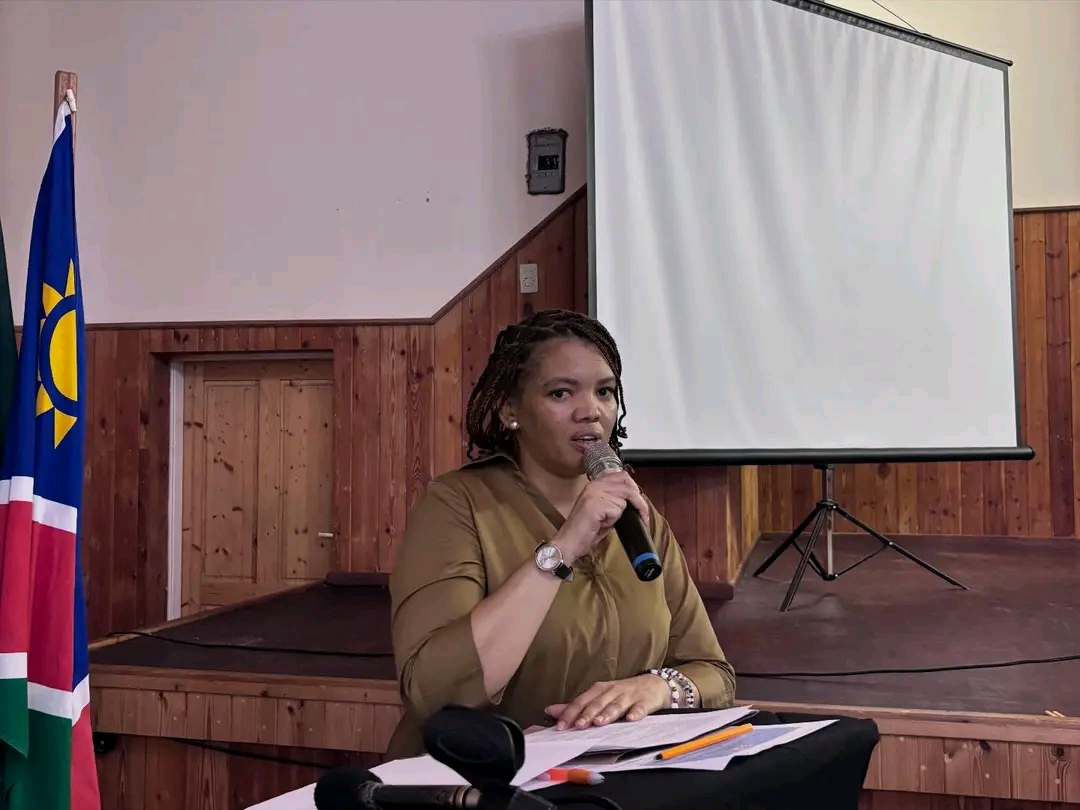
Speaking at the launch of the book ‘Fishrot: Fisheries and Corruption in Namibia’, Tangeni Amupadhi, co-author of the book and editor of
The Namibian, highlighted that these policies only benefit a small group of individuals and further disadvantage those they seek to uplift.
The book examines the collusion between Icelandic fishing company Samherji and Namibian business and political elites to enrich themselves at the expense of the Namibian people.
Amupadhi said he is not against BEE or Namibianisation as an idea, rather how it is currently being used.
“BEE, Namibianisation are a ruse. They are schemes used to make us believe we are getting empowered,” Amupadhi said.
Amupadhi argues that the current process of auctioning fishing quotas to the highest bidder fails to benefit the larger population, despite the intentions of the Namibianisation policy to encourage the participation of previously disadvantaged Namibians in the fishing industry.
Amupadhi said when locals are invited to participate in bidding projects, it is only those who have access to resources, information about the bidding process and the know-how on how to fill out required documentation who benefit.
This, he says, leaves the average Namibian at a disadvantage, as they would not know how to fill out the required forms or even be aware that applications are open.
While the Namibian government’s efforts to address past inequalities are commendable, Amupadhi says it is clear that the current policies need to be re-evaluated to ensure that they truly benefit the wider population.
The book ‘Fishrot: Fisheries and Corruption in Namibia’ examines the methods used by Icelandic fishing company Samherji and Namibian political and business elites to enrich themselves at the expense of Namibians.
Co-authored by Amupadhi, former Unam economics professor Roman Grynberg and investigative journalist Shinovene Immanuel, the book sheds light on the corrupt practices that have enabled the Fishrot scandal.
Grynberg has suggested that the Namibian government should consider alternative approaches to the ownership of natural resources and local participation.
In particular, he has called for a system similar to that used in Norway, where revenue derived from natural resources is placed into an offshore trust fund (sovereign wealth fund).
Grynberg believes that such an approach could help to address some of the pressing issues facing Namibia, such as the problem of thousands of people living in shacks.
“They (Namibians) don’t want the excuse that there are no resources to solve the problem of thousands of Namibians living in kambashus while they can be living in decent houses. They (the government) can solve that. They just don’t want to. They don’t care,” Grynberg said.
In addition, Grynberg has criticised the government for not doing enough to tackle the legacy of colonisation and apartheid.
He believes that the government lacks the will to take the necessary steps to address these issues, and that this is partly due to the need to buy the support of the country’s elite.
“This can be ended. They just don’t want to. Why? Because you need to buy your own elite,” Grynberg said.
Immanuel on his part highlighted the vital role whistleblowers play in uncovering corrupt practices, stating that without them, corruption scandals such as Fishrot would go undiscovered.
He urged members of the public to report any suspicions of corrupt activities to the relevant authorities, while civil society organisations and the media should continue to investigate and expose corruption.
“It is mostly about encouraging sources to continue speaking to us. There is always a way to protect sources,” Immanuel said.
Immanuel called on the public, civil society and the media to take up their respective roles in seriously pushing for accountability and transparency.
The authors further warn about the potential threat of corruption in new industries being explored such as green hydrogen and oil.
* ’Fishrot: Fisheries and Corruption in Namibia’ is available at The Namibian’s offices for N$150 per copy. The book was published by The Namibian and UCT Press with support from Konrad-Adenauer Foundation.