




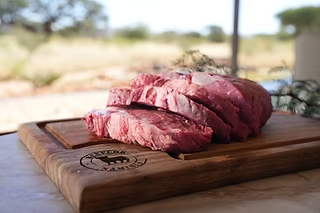
NAMIBIA is actively expanding its beef and lamb exports to the Middle East, targeting the United Arab Emirates (UAE) and Qatar, with three of the country’s top export abattoirs operating Halaal-certified facilities.
Meatco spokesperson Undamuje Hambira says the abattoirs run by the parastatal observe stringent regulatory and religious requirements in line with Islamic dietary laws.
“At Meatco, Halaal compliance is not merely a procedural requirement – it is a strategic business imperative,” she says.
Savanna Beef Processors board chairperson Mecki Schneider echoes this, saying while the savanna abattoir has been certified by the Namibia Islamic Halaal Association (Niha), being compliant was a business decision.
He says slaughter numbers at Savanna are currently limited as the company is awaiting certification allowing exports to the Southern Africa Development Community area and the European Union.
“We strictly adhere to the dictates of the certification conditions,” he says, adding that the company has employed a Muslim follower to do the halaal slaughtering.
Okahandja-based Beefcor Meat Suppliers spokesperson Chantelle du Prat says the export abattoir was certified by Niha as a requirement for exporting beef to Muslim countries.
Halaal-certified meat is obtained from livestock such as cows, sheep, or poultry that are slaughtered, processed, and packaged in strict compliance with Islamic dietary laws.
Hambira says Meatco abattoirs adhere to stringent halaal regulatory and religious requirements, ensuring that all meat and food products processed at the parastatal’s facilities are permissible under Islamic law.
“Animals must be slaughtered by a Muslim using a sharp knife, ensuring the animal is healthy and gets completely bled out. The slaughterer invokes the name of Allah before performing the cut, as required under Islamic law,” she says.
Halaal-certified products must be stored and transported separately from non-halaal items to prevent cross-contamination.
“All halaal products must be free from forbidden substances such as pork, alcohol, and any ingredient deemed impermissible under Islamic law, and animals must be handled humanely throughout the slaughtering process.
“At Meatco, our halaal processes are monitored daily to ensure compliance. This is overseen by our halaal inspector, Uthmaan van Niel,” Hambira says.
Schneider says once Savanna Beef Processors starts full-time slaughtering, the country would retain about 50 000 weaners exported on the hoof to South African feedlots annually, where value is added to the animals, instead of in Namibia.
He says slaughtering the animals locally would guarantee value addition, like deboning and packaging locally for the export market, instead of taking them to South Africa as is the case at the moment.
In an age of information overload, Sunrise is The Namibian’s morning briefing, delivered at 6h00 from Monday to Friday. It offers a curated rundown of the most important stories from the past 24 hours – occasionally with a light, witty touch. It’s an essential way to stay informed. Subscribe and join our newsletter community.

The Namibian uses AI tools to assist with improved quality, accuracy and efficiency, while maintaining editorial oversight and journalistic integrity.
Stay informed with The Namibian – your source for credible journalism. Get in-depth reporting and opinions for
only N$85 a month. Invest in journalism, invest in democracy –
Subscribe Now!