




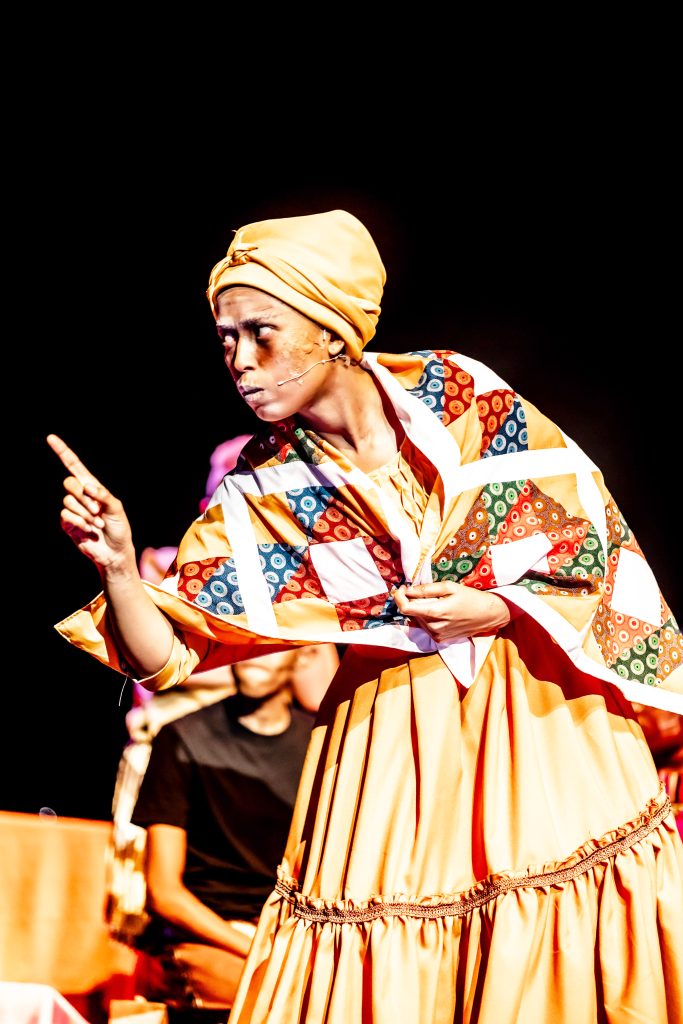
There are moments in ‘People of Song’ when Diolini /Uiras’ voice rings so clear and true that the depth of her character’s anguish seems to engulf the room.
This long-buried trauma is at the heart of the Namibian and German co-production which had its world premiere at the National Theatre of Namibia in Windhoek last week.
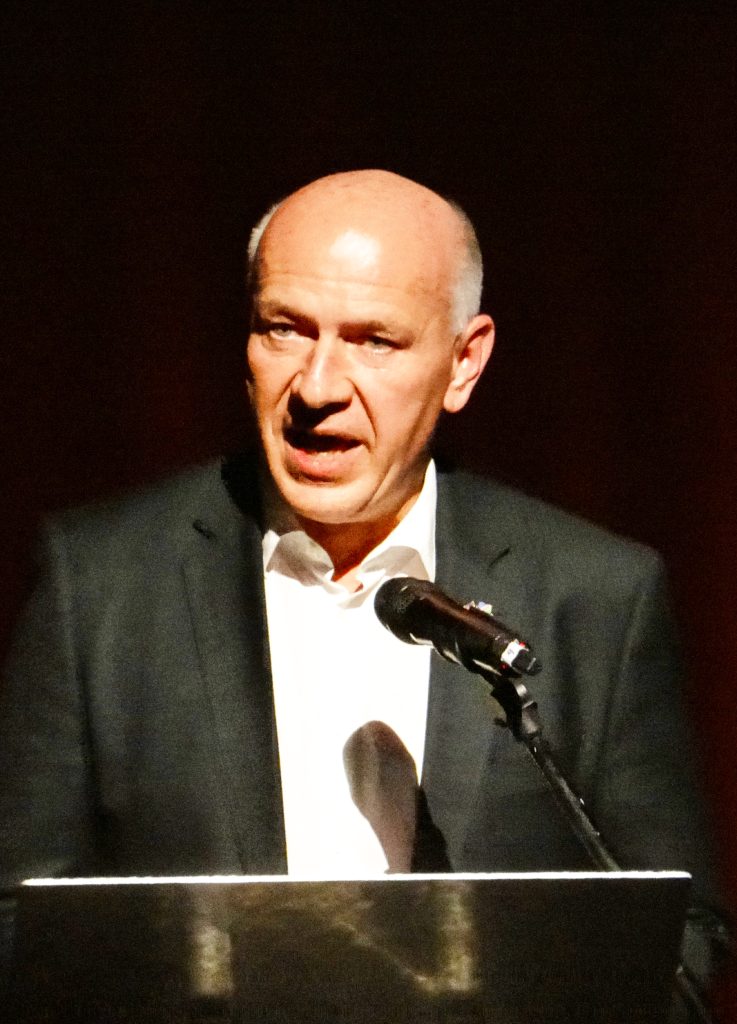
Opened by Kai Wegner, the governing mayor of Berlin, during his visit to commemorate 25 years of partnership between the Namibian and German capitals, ‘People of Song’ is a remarkable example of this constructive cooperation following Germany’s colonial rule of Namibia (1884 to 1915).
The collaborative musical brings together German and Namibian music and theatre talent to tell a story of family, German colonial legacy and lingering trauma while highlighting the importance of ongoing acknowledgement and meaningful restitution.
Starring /Uiras as Ouma (grandmother), Natasha Kitavi as Aniros and Eslon Hindundu as her father, Tsaudago, ‘People of Song’ introduces a young Namibian girl who loves the songs and traditions of her homeland but wants to share her own music with the world.
As life ticks on in Aniros’ multicultural Namibian community, a German man named Hermann, played by David Wehr, discovers an artefact left to him by his once globe-trotting, estranged but now deceased father.
OPENING WOUNDS
Compelled to learn more about the object, Hermann travels to Aniros’ community, where the past shatters the present and opens tightly stitched wounds.
Directed by Jason Kooper and Kim Meyer and featuring a treasure trove of original Namibian and German compositions, influenced by the countries’ folk songs, lullabies, popular and traditional music, ‘People of Song’ is an inspiring addition to Namibia’s musical canon.
The product of a sprawling Namibian road trip in search of indigenous music, ‘People of Song’ engaged elders, cultural groups and musicians in an attempt to experience and expand Namibia’s musical character and sound.
The musical is the culmination of such excursions and the result is both ambitious and affecting.
As ‘People of Song’ transitions between the relative tranquility of Namibian life, the tension of intergenerational conflict as well as a Dickensian German scene change, the musical architecture of Marco Heise and choral direction of Osmond !Owoseb ignite magnificent orchestral and choral ensembles.
Cinematic in its score with music performed by the Jugendsinfonieorchester Bremen, the Namibia National Symphony Orchestra and the Youth Orchestras of Namibia, ‘People of Song’ also features a wealth of Namibian composers such as David Haoseb, Engelhardt #Unaeb, Erna Chimu, the Kufamosha Cultural Group, Michael Doeseb, Zikizee Hangero, Hindundu, Victor Ardelean, !Owoseb and Heise.
The dynamic choral talents of Nythen Dien, Tove Kangotue, Donovan Seibeb, Lyvodia Ouses, Jo-Anna Shapumbe and Angelina Akawa are also to be applauded for their versatility and verve.
The pity here is that, despite being musically impressive, the indigenous language songs lacked surtitles that could illuminate the sometimes woefully on-the-nose narrative for the largely English-speaking audience.
In a musical, this seems a glaring oversight as lyrics are often used to expand and underscore the character’s interiority.
Significant issues with sound, particularly when speaking or when accompanied by the orchestra or choir, were also notable and spoken words were not always clear.
This delicate balance of dialogue, monologue, orchestral and choral performance is integral to the experience of a musical theatre production, so again, and unfortunately, something was lost here.
SOUND ISSUES
As ‘People of Song’ travels to Berlin’s Humboldt Forum and to Bremen, the production’s cast and crew must address issues with sound, mic levels, mixing and balance as well as a slightly dragging first act, especially compared to the excellent second one.
On to more positive elements, and there are many, one must give kudos to light designer Markus Wenk, choreographer Marchell Linus, and to stage designers Jonathan Kitavi and Gretl Kautzsch.
Each ensures seamless and creative transitions and their simple, functional and ultimately harrowing use of crates to create shebeen settings, a humble home and dusty European store rooms is both clever and contextual.
Admirably navigating these scenes are the cast members themselves. Kitavi as Aniros is melodic, fierce and forgiving.
Embodying the estranged and angry son as well as the initially ignorant but ultimately teachable and apologetic Hermann, Wehr works through the range of these emotions with presence and skill. Hindundu, who is also a composer and conductor, wears his actor hat with promise and /Uiras is the star of ‘People of Song’.
Captivating as Ouma, /Uiras – expertly aged by costume designers Yamwe and Marscha Kaffer – commands the stage through a combination of soaring vocals, stern vibrato and bent physicality.
Through /Uiras’ Ouma, ‘People of Song’ tells its story of colonial violence, long-held silence and intergenerational trauma, while Wehr’s Hermann represents a generation of descendants left to grapple with the legacy of their forefathers.
In ‘People of Song’, Namibian artefacts speak.
They haunt the children of those who stole them, and they lead them back to the scenes of unspoken crimes. Indigenous artefacts are witnesses and triggers, even when the peoples they belong to may have forgotten their cultural significance.
“I am not a jackal!” says Hermann, drawing on a story and a metaphor that thread their way through the production. He isn’t. But those who know, may feel unsettled by Hermann’s declaration of finally “feeling at home” now that he’s in Namibia.
“I know you’re not your father,” says Aniros, trying to soothe some of Hermann’s horror. “But you need to acknowledge what happened. Only then can we move forward.”
Through ‘People of Song – Unpacking An Untold Story’, a collective of Namibian and German creatives take a step forward and their footprint is made of music.
“I don’t think I can talk right now,” Ouma tells Aniros, still contending with the past.
“But maybe you can sing.”
– martha@namibian.com.na; Martha Mukaiwa on Twitter and Instagram; marthamukaiwa.com
In an age of information overload, Sunrise is The Namibian’s morning briefing, delivered at 6h00 from Monday to Friday. It offers a curated rundown of the most important stories from the past 24 hours – occasionally with a light, witty touch. It’s an essential way to stay informed. Subscribe and join our newsletter community.

The Namibian uses AI tools to assist with improved quality, accuracy and efficiency, while maintaining editorial oversight and journalistic integrity.
Stay informed with The Namibian – your source for credible journalism. Get in-depth reporting and opinions for
only N$85 a month. Invest in journalism, invest in democracy –
Subscribe Now!