







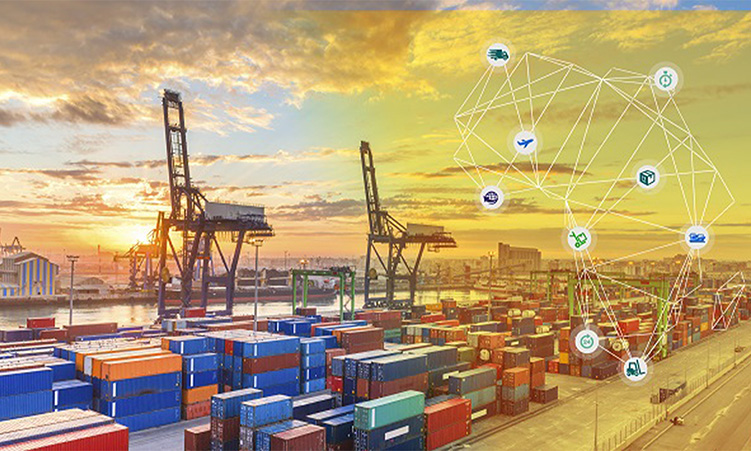
Namibia’s early support for the African Continental Free Trade Area (AfCFTA), its stable policy environment, and strong institutional frameworks put it in a good position to benefit from rising intra-African trade.
This comes as intra-African trade is poised to increase despite global tensions.
The AfCFTA, a flagship project of the African Union’s Agenda 2063, aims to create a single continental market of over 1.4 billion people with a combined gross domestic product (GDP) of about US$3.4 trillion.
African Export and Import Bank (Afreximbank) economist Yemi Kale says there’s enormous potential for Namibia to expand its role in value-added exports, green hydrogen, and regional services, particularly in logistics and warehousing.
He said this following the conclusion of the 32nd Afreximbank annual meetings in Abuja almost a fortnight ago.
“Namibia plays a strategic role, especially through its regional logistics infrastructure. For example, the Port of Walvis Bay is a key gateway for trade with landlocked Southern African Development Community (SADC) countries, offering access to markets like Botswana, Zambia, and the Democratic Republic of Congo,” the economist said.
Kale said Africa’s sluggish participation in global trade turned out to be a buffer against the full force of economic shocks resulting from United States president Donald Trump’s trade war with China and the wars in the Middle East.
Despite global headwinds, Africa’s trade rebounded strongly in 2024, with trade between African countries growing by 12.4% to reach US$220.3 billion from a contraction of 5.9% in 2023.
The African Trade Report 2025, launched on Wednesday, showed that Africa’s total merchandise trade recovered, surging by 13.9% in 2024, to US$1.5 trillion, following a 5.4% contraction in 2023.
The report is themed ‘African Trade in a Changing Global Financial Architecture’.
Kale said the continent’s growth will be stronger this year than the last.
“Absolutely. Africa’s limited integration has acted as a buffer during global economic disruptions – such as rising interest rates, inflation, and geopolitical fragmentation – but it is not a sustainable growth model in the long run.
“For Africa to industrialise, attract meaningful investment, and fully leverage its demographic dividend, deeper integration into global value chains will be essential,” he said.
Kale said it should be a strategic and selective integration that focuses on areas like green industrialisation, technology transfer, and value-added manufacturing rather than just exporting raw commodities.
“Our aim should be to plug African economies into parts of the global economy that enhance productivity, create jobs, and build resilience – not those that expose us disproportionately to shocks.
“Countries like South Africa, Nigeria, Egypt, and Kenya have deeper economic links with the global system, giving them a more influential role.
Their influence stems from their market size and dominance in their subregions, as well as for Egypt and South Africa – in particular their relatively diversified export bases, relatively developed capital markets, and regional leadership roles.
“For instance, South Africa participates in the global automotive value chain and hosts some of the continent’s most sophisticated financial systems. Nigeria, despite challenges, remains one of Africa’s largest economies and is integrated into global oil and capital markets.
“Kenya is at the forefront of digital finance and fintech. These characteristics create both influence and exposure to global financial and trade dynamics,” he said.
Namibia last week officially launched its inaugural export consignment under the AfCFTA framework.
SALT BREAKS GROUND
The event marked a major step for the country’s economic integration into the continent, with Namibian salt being the first commodity to be exported under the new agreement.
“Today marks the beginning of a journey that seeks to position Namibia to take full advantage of Africa’s single market.
Traditionally, Namibia has relied on the Southern African Customs Union and the SADC as its primary trade blocs,” minister of international relations and trade Selma Ashipala-Musavyi said at the event.
She said under the AfCFTA, Namibia now has the opportunity to expand its reach well beyond these regional borders, accessing new markets across western, northern and central Africa.
Namibia signed the AfCFTA agreement on 2 July 2018 before ratifying it on 1 February 2019.
Ashipala-Musavyi said the agreement offers Namibian businesses the tremendous opportunity to expand their market reach, enhance competitiveness, and contribute to economic growth and diversification.