



Official results from last week’s elections show a low voter turnout: 40.7% for regional councils, compared to 57% in 2015, and 36% for local authorities compared to 48% in 2015.
This suggests a significant decline in voter numbers over the past decade: many citizens appeared to vote with their feet by staying away.
Disillusionment with liberal democracy was undoubtedly the main feature of these elections.
The Swapo government has implemented austerity measures since 2016, which is the underlying reason for the disenchantment. Neoliberalism undermines democracy.
With the low turnout, Swapo increased its share of votes to 63% (regional) and 52.4% (local), reclaiming political control of urban councils such as Windhoek, Walvis Bay, and Swakopmund.
This was because of a decrease in support for the Independent Patriots for Change (IPC), which got 15% (local), compared to 21% in 2020, and 12% (regional) compared to 17% in 2020.
Support for the Popular Democratic Movement (PDM) continued to wane with a national vote share below 10%.
The Landless People’s Movement (LPM) received 9% of local authority votes, a slight decline.
SAME OLD SWAPO
Swapo ran its local and regional government elections on the same slogans as last year’s national elections: natural resources beneficiation and youth empowerment for sustainable development.
It seemed to make no attempt to address local and regional issues.
On the surface, this either means the party does not have solutions or that it does not care to address them because of the party-list system, which is unaccountable to local constituencies.
On a deeper level, it reflects a crisis of liberal democracy that has been unable to deliver a decent life for all citizens.
Swapo’s slogans are particularly hollow in the context of the “open” (neo-colonial) economy, a lack of industrialisation and mass unemployment among youth.
There is undeniably an extreme dissonance between what the Swapo elite say and what is happening in the country.
As political analyst Henning Melber recently pointed out in ‘Development as (In)Justice: The Case of Namibia’, Swapo failed “to provide minimum resources and services such as water, food, energy and infrastructure to all”.
There has, for example, been no beneficiation of important minerals such as gold or uranium since political independence, let alone in the fishing industry, because of compromises by the Swapo leadership at independence.
Swapo, although divided, limps on but remains in control of state resources.
Failures in terms of alleviating poverty, job creation and housing construction nevertheless mean its political support will otherwise continue to worsen.
THE OPPOSITION
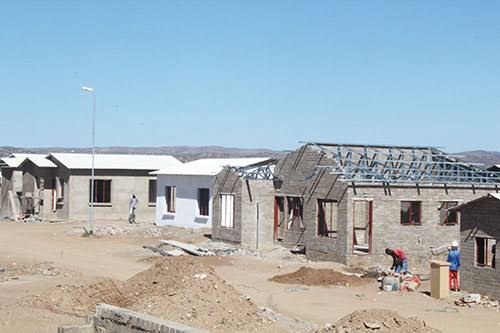
During its campaign, the IPC raised crucial issues such as the 48% youth unemployment, more than 900 000 Namibians living in shacks, a collapsed healthcare system, etc.
However, the IPC is centre-right and unable to differentiate itself from Swapo.
The IPC candidate for the Keetmanshoop Local Authority elections, Gertzon Witbooi, for instance, had the notable slogan “our electricity is through the roof”.
Nonetheless, the IPC did not suggest solutions for the skyrocketing prices of basic services.
Because of an internal crisis, the LPM did not field candidates in several local authorities.
Its president, Bernadus Swartbooi, recently threatened to appeal to United States president Donald Trump for protection of non-Oshiwambo Namibians and even the secession of southern Namibia.
Swartbooi also professed support for Israel on national television. In a country with a history of genocide, this far-right stance finds little political support and therefore, the LPM will never be a nationwide party.
The opposition parties have offered no political alternative to neoliberalism.
If anything, they have serious limitations.

This is seen in the lack of ideological differentiation of the IPC, the stagnation of the LPM, the PDM’s continuing deterioration, the sloganeering of the Affirmative Repositioning (AR) movement and the Namibia Economic Freedom Fighters (NEFF), and the irrelevance of Swanu.
The AR slogan of ‘Fighting for you!’ must be viewed within the (limited) framework of liberal parliamentary politics, not mass mobilisation, while NEFF’s ‘Let’s take over the city together’ in the Windhoek Local Authority elections lacked substance.
Swanu, with its one parliamentary seat, continues to have an unremarkable national political presence and has no influence on ideological discussions. It lost its way a long time ago.
IT’S NOT APATHY
In the final analysis, the fall-off in voter turnout is due to the degenerating socio-economic conditions in Namibia.
Calling it voter apathy is a misnomer and hides the real reasons for the general crisis of liberal democracy.
The notion of ‘voter apathy’ is an affront to Namibians: they understand that voting has not led to fundamental change in their daily lives in terms of job creation, decent housing, price controls on food and basic services, etc.
There is no democratic culture in Namibia only a stifling Swapo dominance.
This is also seen in nepotism in the public sector.
The way forward for any mass movement in Namibia is to oppose austerity measures and to mobilise communities at grassroots level.
There are encouraging signs in civic associations such as A Right to Shelter Foundation (Gobabis) and the Community Representatives Organisation (Tsumeb), though their political impact is still marginal.
This trend will hopefully grow and eventually strengthen grassroots democracy.
WHAT NEXT?
It seems obvious that only residential associations or community organisations can put sufficient political pressure on municipalities that function on the neoliberal principle of cost recovery instead of providing a dignified existence for citizens.
Ultimately such organisations should fight against child poverty too, while making demands such as 350 kWh of free electricity per household per month and 50 litres of free water per person per day.
They would also have to organise communities to set up cooperatives for food sovereignty and solar power.
There must be a vision of community wealth-building and democratic employee-owned businesses.
Such grassroots demands were missing from the centre-right parties. Only an anti-neoliberalism mass movement that appeals to Namibia’s working class has a future.
– The authors are members of the Marxist Group of Namibia.
In an age of information overload, Sunrise is The Namibian’s morning briefing, delivered at 6h00 from Monday to Friday. It offers a curated rundown of the most important stories from the past 24 hours – occasionally with a light, witty touch. It’s an essential way to stay informed. Subscribe and join our newsletter community.

The Namibian uses AI tools to assist with improved quality, accuracy and efficiency, while maintaining editorial oversight and journalistic integrity.
Stay informed with The Namibian – your source for credible journalism. Get in-depth reporting and opinions for
only N$85 a month. Invest in journalism, invest in democracy –
Subscribe Now!