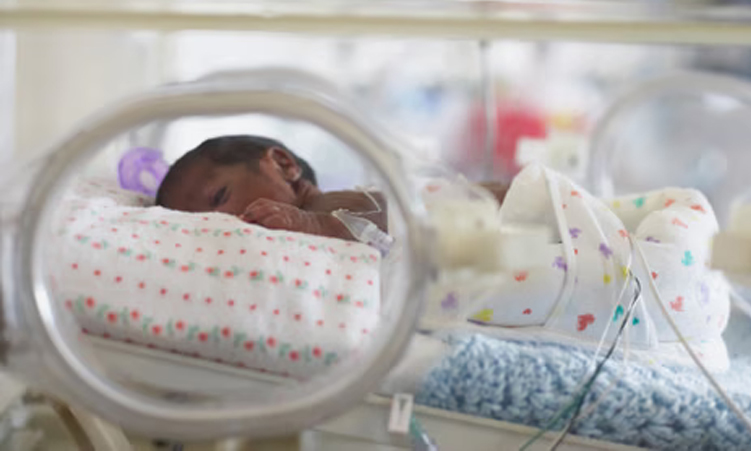
United Nations Children’s Fund (Unicef) country representative Samuel Ocran warns that thousands of Namibian newborns continue to die in the first days of life, while many children under five are still falling ill from preventable diseases.
Ocran was speaking yesterday morning during the World Health Day commemoration at Okapale, Goreangab, in Windhoek.
Speaking under this year’s theme, ‘Together for Health: Stand with Science’, Ocran said every death represents not just a statistic, but a child, a family and a lost future.
“Behind every number is a child, behind every statistic is a family and behind every loss is a future that is gone,” he said.
He added that Namibia has made progress in maternal and child health, with nearly nine out of 10 women attending antenatal care and nearly nine out of 10 births occurring in health facilities.
He said too many mothers still face serious risks during pregnancy and childbirth, and diseases such as malaria, pneumonia, diarrhoea and malnutrition continue to threaten the lives of young children.
Ocran added that preventive interventions are critical to reducing these deaths.
In March alone, Unicef delivered 9 331 essential health items across Namibia, including nine labour and delivery beds to support safe childbirth, 1 100 weighing scales and 50 mid-upper arm circumference tapes to detect malnutrition early, and 5 022 water, sanitation and hygiene dignity kits to prevent infections and prepare for cholera response.
He said 12 500 mosquito nets arrived on 2 April to respond to the growing malaria risk.
Deputy health and social services minister Hambeleleni Ndjaleka, speaking on behalf of minister Esperance Luvindao, says the country’s response must remain rooted in science and prevention.
“When we say we stand with science, we are making a profound declaration. We stand for prevention over avoidable suffering,” Ndjaleka says.
She says the recent environmental detection of poliovirus type 2 in Namibia, without any reported paralysis cases, shows the value of science-backed surveillance systems in identifying threats before they spread.
Ndjaleka warns that malaria continues to put pressure on families and health services, with 39 681 confirmed cases, 3 008 hospital admissions and 44 deaths recorded since late December 2025.
World Health Organisation country representative Richard Banda says Namibia’s progress in reducing under-five mortality over the past decades represents “thousands of children who now have the chance to grow up and thrive”.
Banda adds that Namibia’s gains reflect the commitment of policymakers, health workers and communities.
“It is, therefore, important to pause and recognise our health workers. They continue to show dedication, skill and resilience, often in difficult circumstances. Quite simply, they are the pillars of the health system. At the same time, we cannot ignore the challenges ahead,” he says.
Banda says noncommunicable diseases such as diabetes and cancer are becoming more common.
“Mental health is a rising concern, especially among young people. And climate change is no longer a distant issue; it is affecting food security, water resources and the spread of disease,” he stresses.
In an age of information overload, Sunrise is The Namibian’s morning briefing, delivered at 6h00 from Monday to Friday. It offers a curated rundown of the most important stories from the past 24 hours – occasionally with a light, witty touch. It’s an essential way to stay informed. Subscribe and join our newsletter community.

The Namibian uses AI tools to assist with improved quality, accuracy and efficiency, while maintaining editorial oversight and journalistic integrity.
Stay informed with The Namibian – your source for credible journalism. Get in-depth reporting and opinions for
only N$85 a month. Invest in journalism, invest in democracy –
Subscribe Now!