


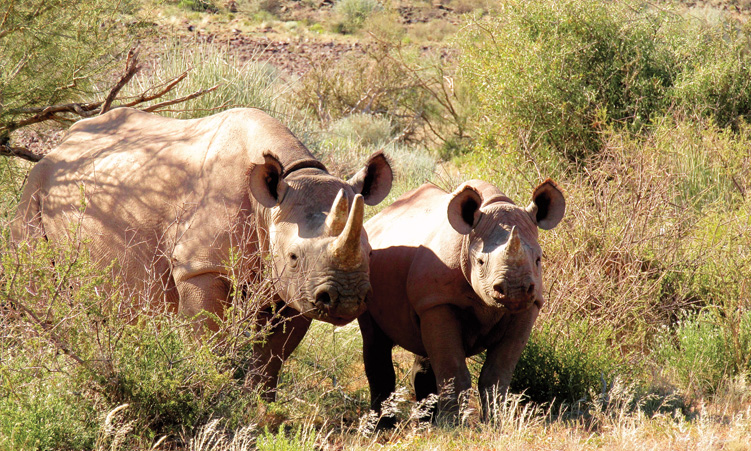
Namibia has taken a major step in endangered species protection with the launch of the world’s largest privately-owned black rhino sanctuary.
The sanctuary is the result of a strategic partnership between Gondwana Collection Namibia, Elephants, Rhinos and People (ERP) Namibia, and the Ministry of Environment and Tourism.
It aims to restore the endangered black rhino to a landscape it last roamed more than 150 years ago along with other vulnerable species once native to the region.
With fewer than 5 500 black rhinos left in the wild, the initiative strengthens Namibia’s global reputation for conservation leadership.
The project builds on three decades of ecological restoration within a vast, formerly overgrazed stretch of land that has been rehabilitated into a thriving biodiversity corridor.
“This sanctuary is not just about rhinos, it’s about restoring balance to a region that holds immense natural and national value,” says Gondwana Collection managing director Gys Joubert.
“We are proud to contribute to this shared legacy under the leadership of the ministry and alongside ERP” he says.
What began in the 1990s as an ambitious land rehabilitation effort has evolved into one of Africa’s largest privately managed conservation areas.
The area is now home to a team of skilled park managers, rangers, and environmental experts conducting annual game counts, ecological monitoring, alien plant removal, and anti-poaching patrols.
These efforts are guided by Gondwana Collection’s ecological management plan, which promotes biodiversity conservation, open ecosystems, and collaborative wildlife corridor management with neighbouring landowners and national parks.
With the recently concluded game count in the canyon park, numbers continue to indicate a steady growth in the numbers of species in the region and the once-barren landscape is now teeming with life again.
The return of black rhinos to this terrain signals a full-circle moment in desert conservation.
TECHNOLOGY MEETS TRADITION
ERP Namibia is contributing advanced wildlife protection capabilities to the project.
The organisation has deployed a technology-enabled model that combines satellite tracking, perimeter fencing, intelligence-led patrols, and community informer networks to combat poaching and ensure species survival.
“ERP’s involvement is a game changer,” says ERP Namibia director Willem Bodenstein.
“We bring the necessary technology and experience to safeguard this keystone species, while uplifting surrounding communities through meaningful environmental and social impact projects.”
The project is closely aligned with the ministry’s black rhino custodianship programme, now in its fourth decade, and benefits from strategic oversight by the ministry.
TOURISM AND COMMUNITY UPLIFTMENT
The long-term sustainability of the sanctuary hinges on responsible, conservation-driven tourism.
Gondwana Collection is in the process of developing immersive visitor experiences, including rhino tracking safaris, educational excursions, and wilderness sleep-outs.
A new Rhino Information Centre will support environmental education and visitor engagement.
These offerings are expected to generate sustainable employment and socio-economic opportunities for surrounding communities while reinforcing Namibia’s eco-tourism appeal.
“This is about creating a conservation economy that benefits people and planet,” Joubert says.
“We welcome all stakeholders – local, regional and international, to join this legacy project to protect one of the world’s most threatened wildlife species.”
The ministry will continue to provide regulatory guidance and ensure the sanctuary’s integration with national conservation frameworks.
The initiative stands as a model for how long-term conservation success can be achieved through public-private partnerships, scientific management, and community buy-in.
In an age of information overload, Sunrise is The Namibian’s morning briefing, delivered at 6h00 from Monday to Friday. It offers a curated rundown of the most important stories from the past 24 hours – occasionally with a light, witty touch. It’s an essential way to stay informed. Subscribe and join our newsletter community.

The Namibian uses AI tools to assist with improved quality, accuracy and efficiency, while maintaining editorial oversight and journalistic integrity.
Stay informed with The Namibian – your source for credible journalism. Get in-depth reporting and opinions for
only N$85 a month. Invest in journalism, invest in democracy –
Subscribe Now!