The Ministry of Finance and Public Enterprises has ruled out any increases in value-added tax (VAT) in Namibia, irrespective of potential changes in South Africa’s tax policies.
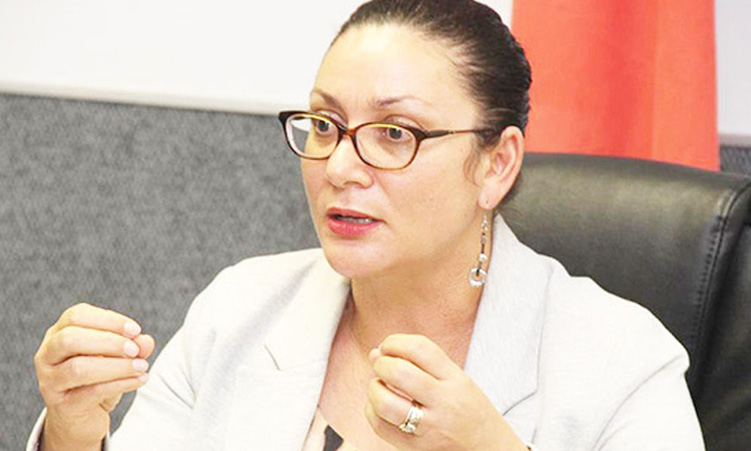
Deputy executive director of economic policy Oscar Capelao has confirmed that Namibia maintains an independent tax policy within the Southern African Customs Union (Sacu).
“We can confirm there are no discussions to follow suit with a VAT adjustment. The Namibia tax policy is independent of other Sacu countries,” Capelao told The Brief.
Capelao says VAT is a domestic consumption tax, meaning it is borne by the final consumer in the country where the product or service is consumed.
“Exports are zero-rated, meaning no VAT is added to exports by exporting parties.
Importing countries apply respective VAT rates at the point of import. Our imports from South Africa will continue to be subject to our 15% rate,” he says.
He further notes that businesses claim input VAT on their tax returns, mitigating any immediate cost implications for businesses operating in Namibia.
“A change in rate should not immediately increase business costs at a VAT line level, as businesses do not incur the VAT costs,” Capelao says.
Addressing concerns over potential price hikes, Capelao emphasises that a VAT increase in South Africa (SA) would not automatically lead to higher prices in Namibia.
“Should SA increase its VAT rate, it will not lead to increases in our prices given the zero-rating on exports,” he says.
However, he acknowledges that market dynamics could have a long-term influence on pricing and trade patterns.
“The overall price elasticity of goods and services will determine price impact to consumers and margins of business, which could impact export prices in the long run.
Broadly, full VAT cannot be passed on to consumers since there is a trade-off to be made by businesses to protect sales volume,” he says.
Capelao also reiterates Namibia’s fiscal independence from other Sacu member states, including SA.
“It is important to highlight that Namibia’s tax policy is independent of other Sacu countries, including South Africa, as our tax amendments are informed firstly by domestic conditions such as rebalancing of fiscal tools for revenue, competitiveness of our fiscal regime, the principle of fairness and equity of taxes, and boosting the local economy for growth,” he says.
He adds that historical trends support this stance, stating that SA has increased its VAT rates before with a similar muted impact on Namibia.
Meanwhile, South Africa’s finance minister, Enoch Godongwana, has postponed the presentation of the national budget due to internal disputes within the coalition government.
His proposal to raise VAT by 2%, which would have led to higher prices for goods amid an ongoing cost-of-living crisis, faced strong opposition from coalition partners, ultimately stalling the budget process, national reports indicate.
SA last raised its VAT rate from 14% to 15% in 2018.
In an age of information overload, Sunrise is The Namibian’s morning briefing, delivered at 6h00 from Monday to Friday. It offers a curated rundown of the most important stories from the past 24 hours – occasionally with a light, witty touch. It’s an essential way to stay informed. Subscribe and join our newsletter community.

The Namibian uses AI tools to assist with improved quality, accuracy and efficiency, while maintaining editorial oversight and journalistic integrity.
Stay informed with The Namibian – your source for credible journalism. Get in-depth reporting and opinions for
only N$85 a month. Invest in journalism, invest in democracy –
Subscribe Now!