



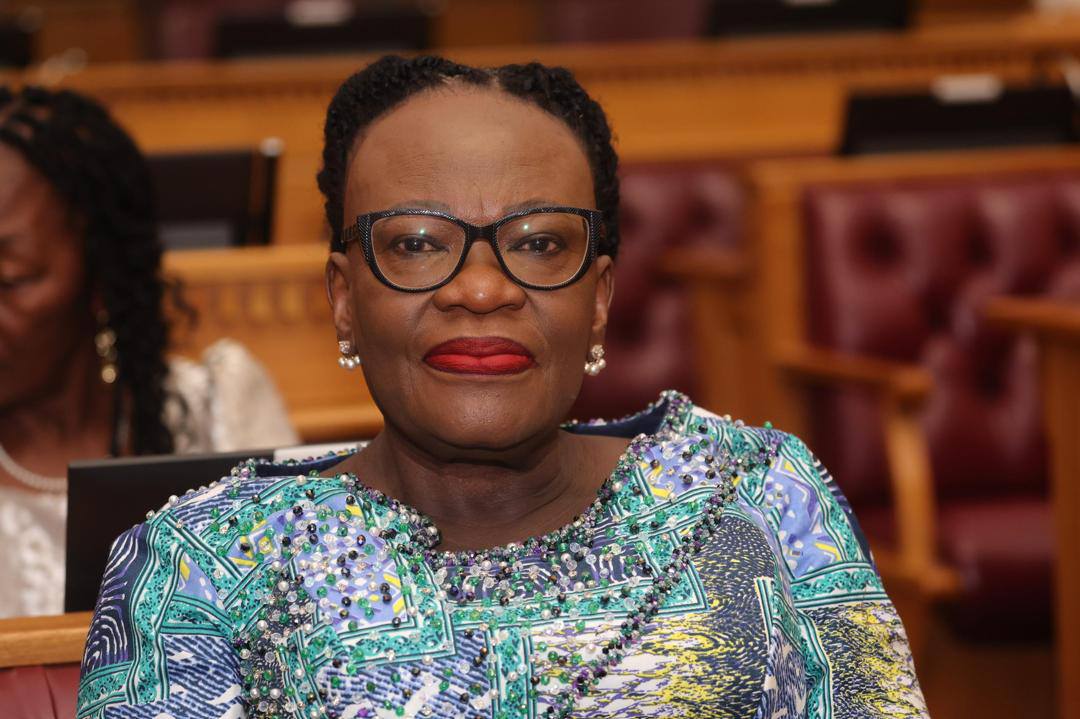
Selma Ashipala-Musavyi at the 23rd Theo-Ben Gurirab Public Lecture, Windhoek, 17 June 2025
We were amply welcomed by the director of ceremonies, however and in my own stead, I welcome you all to the 23rd Theo-Ben Gurirab Public Lecture, a flagship programme of the Ministry of International Relations and Trade, established in 2017. The aim of the Dr Theo-Ben Gurirab lecture series is manifold:
To pay tribute to and honour in a befitting form, a son of the Namibian soil, who dedicated his entire youth and life to advocating and fighting for the independence of Namibia;
To, as we say, bring foreign policy closer to the people, through discussions of different topics in the international arena that pertain to Namibia’s national interests as well as her role in the international fora; and finally, by so doing,
Generate public interest, awareness and participation in Namibia’s foreign policy.
Today’s lecture is therefore a continuation of a proud tradition, under the theme ‘Fostering Resilience: Strengthening Intra-Commonwealth Trade and Investment’.
We live in a world characterised by uncertainties. A world of us and them, the industrialised and the suppliers of raw materials, and so the list continues. Against this background, the theme carries special significance as it accords the Commonwealth trade ministers an important opportunity to digest the global economic situation, the global trade tensions, and their impact on the Commonwealth and global economies.
The historic nature of this meeting should never be lost on us. Indeed, for Namibia to be co-hosting this ministerial meeting on trade, taking place for the first time outside London, in itself is a milestone that affirms the Commonwealth’s enduring commitment to regional engagement and inclusivity. Above all, it reflects Namibia’s growing role as a trusted, reliable partner and an active contributor to multilateral trade dialogue.
As we are all aware by now, in November 2024, the people of Namibia elected Netumbo Nandi-Ndaitwah as the first female president of the Republic of Namibia. Upon taking office, the president merged the Ministry of International Relations with International Trade to form the Ministry of International Relations and Trade. This move was a deliberate recalibration, to accentuate economic diplomacy in our international relations. The fifth administration continues to recognise that diplomacy in the 21st century must go beyond political alliances; it must serve as a vehicle for advancing national development, attracting investment, and creating new markets for Namibian goods, services, and ideas.
In addition, the government has identified seven national priorities, namely: agriculture, sports, youth empowerment, quality education and training, creative industries, quality health and social services, as well as land, housing and sanitation, given their untapped potential.
The year 2025 occupies an important space in the multilateral calendar. To mention but some, this year we shall mark the 80th anniversary of the founding of the United Nations. Yet, we continue to live in a world of unprecedented unpredictability, volatility and uncertainty, amidst heightened geopolitical tensions, where multilateral trade rules are being threatened. The theme of the ministerial meeting, ‘Fostering Resilience: Strengthening Intra-Commonwealth Trade and Investment’, thus aptly captures the values of democracy, peace, development, and wealth, which bind together our 56 Commonwealth family of nations.
Namibia, with its growing digital economy, abundant critical mineral resources, and aspirations in renewable energy – including green hydrogen and nuclear energy – stands ready to engage and lead in these areas. These are not abstract concepts; they are concrete opportunities for Namibia to partner, innovate, and grow alongside fellow Commonwealth countries.
Furthermore, these have real implications for job creation, climate resilience, and long-term development. I shall be remiss if I do not point out that the classification of Namibia by the World Bank as a higher middle-income country has created challenges, especially in accessing soft loans.
Notwithstanding, Namibia’s participation in frameworks such as the SACUM–UK Free Trade Agreement, SADC, SACU, and the AfCFTA positions Namibia uniquely at the confluence of regional and global trade.
While the AfCFTA is primarily a regional initiative led by the African Union, the Commonwealth provides complementary support through various mechanisms, including capacity building, policy advice, facilitation of trade, and promoting intra-Commonwealth cooperation. Our task now is to maximise these linkages through innovation, industrialisation, and strategic investment.
Within her capacity, Namibia is ready to lead and to learn. Ready to contribute to shaping a trade agenda that is inclusive, sustainable, and resilient. We must work together – Commonwealth governments, businesses, academia, and civil society – to remove trade barriers, improve market access, and ensure no member state is left behind, especially our least developed countries and small island developing states.
In conclusion, this lecture series, inspired by the vision of Theo-Ben Gurirab, reminds us that diplomacy must always reflect the hopes of the people it serves. Let us honour that legacy today, by seizing the moment, strengthening our partnerships, and fostering resilient trade that lifts all boats. Let us build a Commonwealth of action, one that transforms challenges into opportunities for the next generation.
I thank you.
In an age of information overload, Sunrise is The Namibian’s morning briefing, delivered at 6h00 from Monday to Friday. It offers a curated rundown of the most important stories from the past 24 hours – occasionally with a light, witty touch. It’s an essential way to stay informed. Subscribe and join our newsletter community.

The Namibian uses AI tools to assist with improved quality, accuracy and efficiency, while maintaining editorial oversight and journalistic integrity.
Stay informed with The Namibian – your source for credible journalism. Get in-depth reporting and opinions for
only N$85 a month. Invest in journalism, invest in democracy –
Subscribe Now!