


Namibia has proposed to the 20th conference of the United Nations Cites a controlled commercial trade in its registered raw ivory stocks with verified international partners.
The 20th Conference of Parties to the Convention to International Trade in Endagered Species (Cites) started in Samarkand, Uzbekistan on Monday and will run until 5 December.
According to the proposal seen by The Namibian and submitted by the Ministry of Environment and Tourism, Namibia seeks to trade in an existing stock of more than 46 000kg of registered raw ivory, which the country has accumulated from elephants that died of natural causes and through management practices.
The proposal says partners receiving Namibia’s ivory have been verified by the Cites secretariat as having sufficient national legislation and domestic trade control.
This will ensure that ivory imported from Namibia will not be re-exported and will be managed following all requirements concerning domestic and manufacturing and trade.
“Namibia conducted legal international trade in ivory in 1985, 1999 and 2008, as a highly regulated export of 19 870 kg to Japan and China in total.
“On both occasions, the Cites secretariat confirmed that the trade had taken place successfully and that there was full compliance with all precautionary undertaking,” says the Namibian government in its proposal.
Namibia’s elephant population is increasing and must be controlled, secure and viable, but there are high financial and security implications involved with the storing of ivory and ivory from natural mortalities and management practices are continuously being accumulated, the proposal argues.
“Our conservation model has enabled the expansion of the elephant population from just over 7 500 in 1995 to over 25 664 at present.
“The biggest potential long-term threat to the Namibian elephant population is nevertheless, the loss of habitat and the fragmentation of range through the interruption of access routes and conflict with people in the absence of effective incentive mechanisms to maintain such habitat,” says the proposal.
As with previous sales, says the proposal, “all revenues generated from ivory sales will be paid into the Game Product Trust Fund and used exclusively for elephant conservation – including monitoring, research, law enforcement and other management expenses, as well as for community conservation and development programmes.”
The government argues that the climate in Namibia is dry, making it virtually impossible to maintain ivory quality without incurring huge expenditures.
It says Namibia has reported all information on ivory stocks, seizures and quota and the Monitoring of Illegal Killing of Elephants programme is now in its 16th year.
Elly Ndokosho, the director for scientific services in the environment ministry, on Monday said the ministry sent a delegation to Cites’ 20th conference.
“These proposals will be discussed from 29 November,” she said. At the conference, Namibia’s proposal is number 13.
Elephant Human Relations Aid (EHRA) manager for conservation programmes Christin Winter on Tuesday said after Namibia’s last once-off ivory sale in 2008, when the market was flooded, elephant poaching skyrocketed as demand for ivory had increased dramatically and statistics show that the sale led to highest poaching numbers ever recorded between 2011 and 2012.
Winter said even though Namibia’s sale of ivory brings in funding for conservation work, the threat to live with elephants in the whole of Africa is likely to increase.
She said what Namibia decides to do can have a negative impact on conservation in other African countries that may not have the resources to protect elephants properly.
“As EHRA, we believe in the value of living elephants and that the demand for ivory should not be met or further fuelled.But rather more efforts should be made to reduce that demand and educate what buying ivory means for elephants in the wild and the communities elephants live with,” said Winter. She added that elephants that are shot at live in fear of people and are a higher threat to human-wildlife conflict.
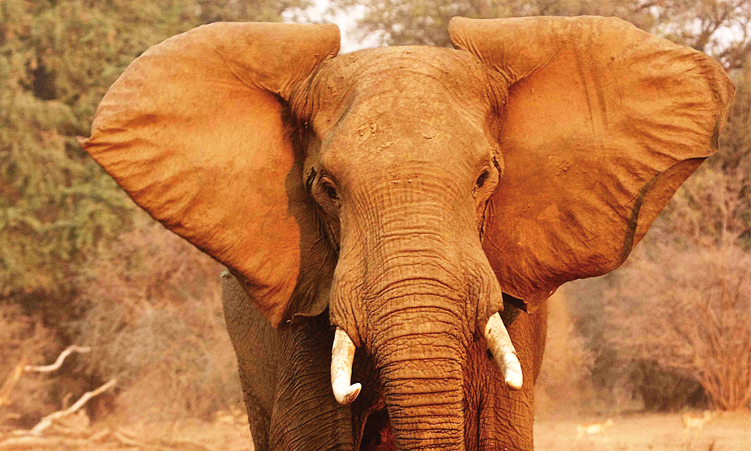
The elephant is the biggest terrestrial animal in its ecosystem, helping maintain suitable habitat for many other species that share the same environment.
Some savannah vegetation species rely on elephants for seed dispersal and germination. Elephants play a pivotal role in shaping habitat due to their influence on factors ranging from freshwater availability to forest cover.
As a keystone species, African elephants shape the structure and composition of savannah vegetation, creating spatial heterogeneity, habitat niches and landscape level diversity while also facilitating access to water for a range of other species.
In an age of information overload, Sunrise is The Namibian’s morning briefing, delivered at 6h00 from Monday to Friday. It offers a curated rundown of the most important stories from the past 24 hours – occasionally with a light, witty touch. It’s an essential way to stay informed. Subscribe and join our newsletter community.

The Namibian uses AI tools to assist with improved quality, accuracy and efficiency, while maintaining editorial oversight and journalistic integrity.
Stay informed with The Namibian – your source for credible journalism. Get in-depth reporting and opinions for
only N$85 a month. Invest in journalism, invest in democracy –
Subscribe Now!