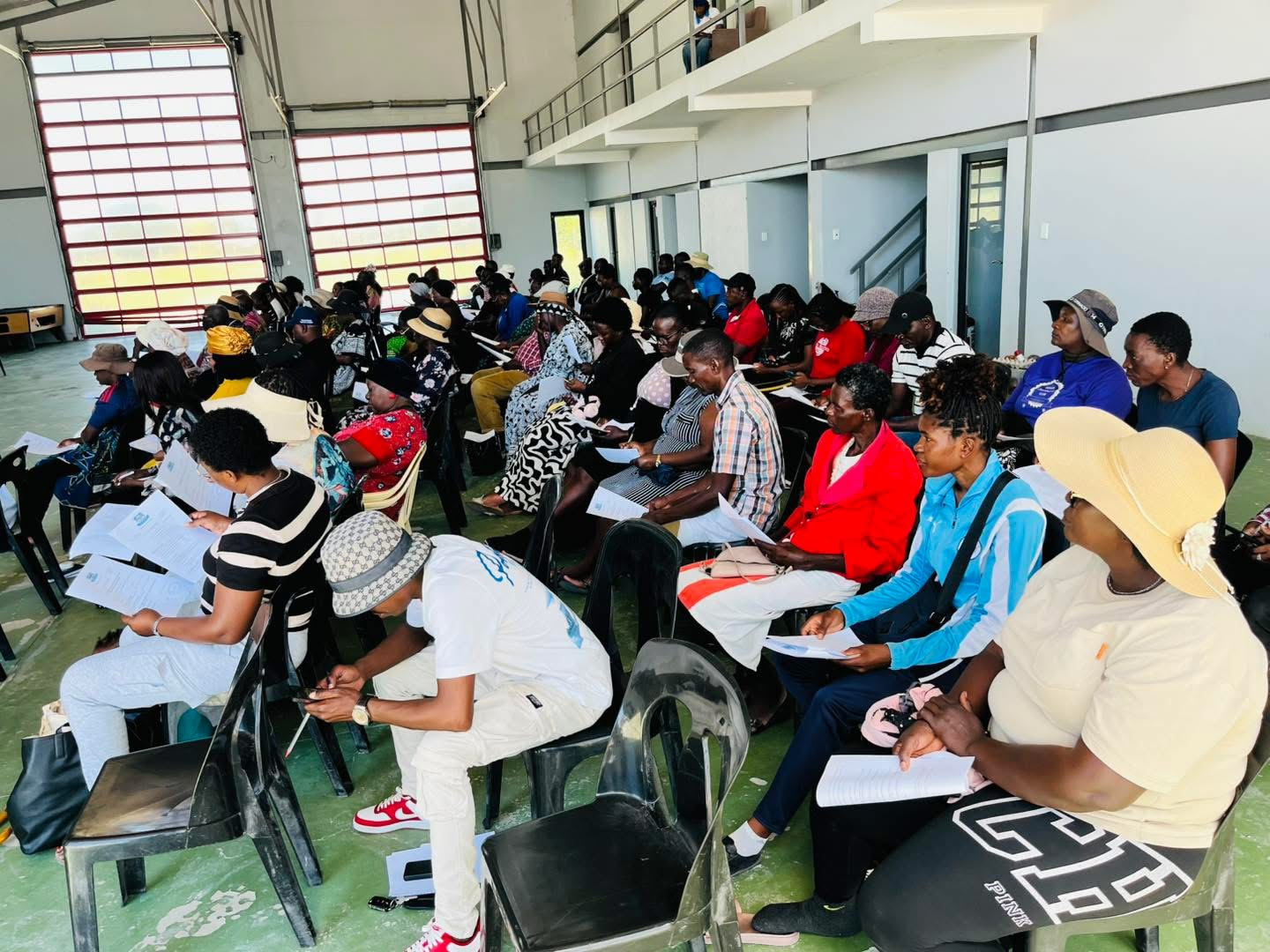





Minister of education, arts and culture Anna Nghipondoka at the official launch of the K-FIT Project, 12 March 2025.
It is an honour and privilege to stand before you today as we mark a significant milestone in our national education journey, the official launch of the ‘ICT Transforming Education in Africa’ project. This initiative, under the esteemed Unesco-Korean-Funds-in-Trust (K-FIT) partnership, is a testament to our shared commitment to harnessing digital technologies for educational advancement.
Today, we not only celebrate progress, but also reaffirm our dedication to bridging the digital divide and equipping our learners with the skills they need to thrive in an increasingly digital world.
Technology is no longer a luxury; it is a necessity. Across the globe, the rapid evolution of digital tools is reshaping societies and economies, demanding that we rethink how we prepare future generations for success. Namibia recognises this imperative and has made commendable strides in integrating digital technologies into our education system.
Information and communication technology (ICT) is not merely an add-on, but an integral part of our ministry’s mission to ensure equitable and quality education for all Namibians.
In this regard, ICT features prominently in our 2022 National Conference on Education (NCE) Project Charter (2023–2030) as one of the 10 levers of change, our roadmap towards educational prosperity.
These levers emphasise the need for a digitally inclusive education system that empowers teachers and learners alike. However, while we have made significant progress, we acknowledge that the dynamic nature of technology necessitates continuous adaptation and innovation. If we are to fully harness the potential of ICT for enhanced teaching and learning, we must build upon our achievements and address the existing gaps.
This project presents us with a remarkable opportunity to further our efforts in the digital transformation of education. By strategically integrating ICT, we aim to:
- improve access to high-quality, curriculum-aligned digital content that enhances teaching and learning,
- strengthen the digital capacity of teachers and learners, ensuring they can effectively use technology as a tool for knowledge creation and problem-solving, and
- foster a supportive policy environment for digital learning, ensuring sustainability and effectiveness in our ICT initiatives.
Through these interventions, we seek to create an education system where every Namibian child, regardless of their background, has equal access to the benefits of digital learning.
The ‘ICT Transforming Education’ initiative is a direct response to this need, aligning seamlessly with both national and international education and development frameworks.
It supports the realisation of Namibia’s Vision 2030, as well as global commitments such as the Sustainable Development Goals (SDGs) and Unesco’s 42 C/5 Output 8.ED8, which promotes inclusive and effective digital learning. Additionally, it contributes to Output 2.4 of the United Nations Sustainable Development Cooperation Framework (2025–2029), which seeks to enhance digital ecosystems for youth and marginalised communities.
A critical first step in this project was the needs assessment conducted between June and August 2024, which provided valuable insights into our strengths, challenges, and opportunities for ICT integration.
Based on these findings, the project will focus on achieving four key outcomes:
- Platforms and content: Ensuring teachers and learners have easy access to high-quality, curriculum-aligned digital teaching and learning resources.
- Teacher capacity: Providing continuous professional development for teachers through the ICT Competency Framework for Teachers, equipping them with the skills needed to integrate technology effectively in classrooms.
- Learner capacity: Empowering learners with foundational digital skills, including coding, computational thinking, and artificial intelligence, to prepare them for the jobs of the future.
- Policy development: Streamlining and rationalising policies for ICT in education to create a more coherent and effective framework for digital learning.
The success of this project relies not only on government efforts, but on the collective responsibility of all stakeholders. To our educators, your role in integrating ICT into teaching practices is crucial in shaping a future-ready generation. To our learners, embrace digital learning as an opportunity to expand your knowledge and skills. To our partners, your continued support and collaboration will ensure the sustainability and impact of this initiative. To our communities and parents, your engagement in supporting digital literacy at home will reinforce the efforts made in our schools.
Today, as we officially launch this transformative initiative, let us reaffirm our commitment to digital education. Let us work together to ensure that no learner is left behind in the digital age. Let us harness the power of technology to create a more inclusive, innovative, and prosperous education system for Namibia.
Before I conclude, allow me to extend my sincere gratitude to Unesco and the Government of Korea for their invaluable partnership and unwavering support in this endeavour. To all those who have contributed to this initiative, I commend your efforts and urge you to remain steadfast in our shared mission.
Together, we can transform education through ICT. Together, we can build a future where technology is a gateway to opportunity for every Namibian child.
Therefore, it gives me immense pleasure to officially launch the K-FIT Project!
I thank you.
In an age of information overload, Sunrise is The Namibian’s morning briefing, delivered at 6h00 from Monday to Friday. It offers a curated rundown of the most important stories from the past 24 hours – occasionally with a light, witty touch. It’s an essential way to stay informed. Subscribe and join our newsletter community.

The Namibian uses AI tools to assist with improved quality, accuracy and efficiency, while maintaining editorial oversight and journalistic integrity.
Stay informed with The Namibian – your source for credible journalism. Get in-depth reporting and opinions for
only N$85 a month. Invest in journalism, invest in democracy –
Subscribe Now!