




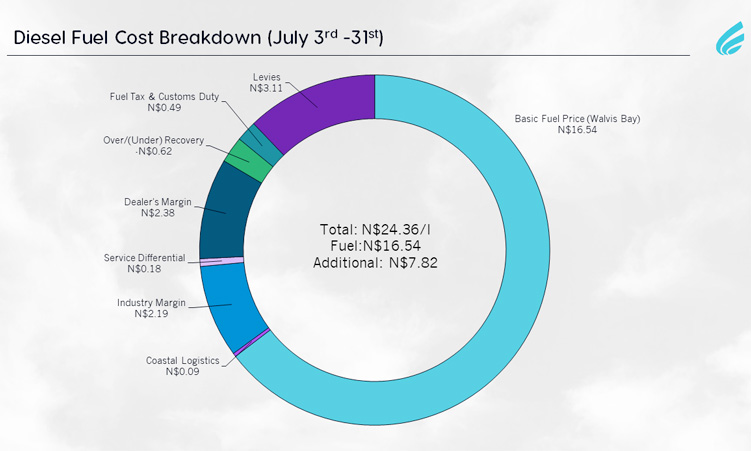
Diesel (ulsd10) decreased in July, with the pump price falling by N$4 to N$24.36 a litre.
The headline drop is welcome, but that figure is less a single cost than a stack of components, and the fuel itself is only part of it.
Of the N$24.36, the cost of the product landed at Walvis Bay accounts for N$16.54, or roughly two thirds.
The rest is the industry and dealer margins (N$2.19 and N$2.38, respectively), smaller items such as coastal logistics and the service differential, less N$0.62 for the over/under-recovery adjustment and the statutory charges.
The levies come to N$3.11 and fuel tax and customs duty add a further N$0.49.
July also marked the first month post the Cabinet’s 50% cut to fuel levies, which was in place from April to June, that shielded consumers from the full brunt of the global fuel prices but cost the government over N$1 billion to fund the gap.
July’s diesel price still fell by N$4, which shows how much the international product cost eased, enough to absorb the levies returning and still leave diesel cheaper at the pump.
The reason the diesel price carries such weight is that it is not really a consumer good but a production input.
Of the 1.1 billion litres of fuel the country uses each year, around 70% is diesel, and it powers the sectors that create most of Namibia’s value: farming and livestock, mining, construction and the road freight that moves all of it to port and market.
For a farmer running a borehole or a harvester, a mine running its fleet, or a transporter hauling goods to Walvis Bay, diesel is a cost of production before it is anything else.
That is why every charge added on top of the basic fuel price is more than a motoring expense.
It raises the cost of producing and moving almost everything in the economy.
The levies fund genuine needs, from the road network to the Motor Vehicle Accident Fund and the National Energy Fund, but each cent also lifts the floor under the cost of doing business.
For a country trying to raise its productivity and competitiveness, the weight of charges sitting on diesel is not a neutral choice and it warrants the same scrutiny as any other input cost to the productive economy.
– Ida Williams is an economist at Cirrus Capital.