



Health and social services minister Esperance Luvindao says the government is missing an estimated 34% of tuberculosis (TB) cases in Namibia, leaving many infected people undiagnosed and outside the treatment system.
Speaking at the observance of World Tuberculosis Day at Gobabis yesterday, Luvindao said while progress has been made, a significant number of cases remain undetected.
“In Namibia, we notified 8 370 patients with TB last year, 293 of whom had drug-resistant TB.
While these numbers represent lives saved, our concern lies with the people we have not reached.
It is estimated that we missed 34% of the total TB cases in the country,” she said.
Luvindao said the challenge is particularly evident in the Omaheke region, which has the highest TB case notification rate in the country despite being sparsely populated.
“We know that many communities live on farms and settlements far from health facilities,” she said.
She said long distances to health facilities make it difficult to detect and treat patients.
However, Luvindao said the ministry is taking steps to address the gap through active case finding.
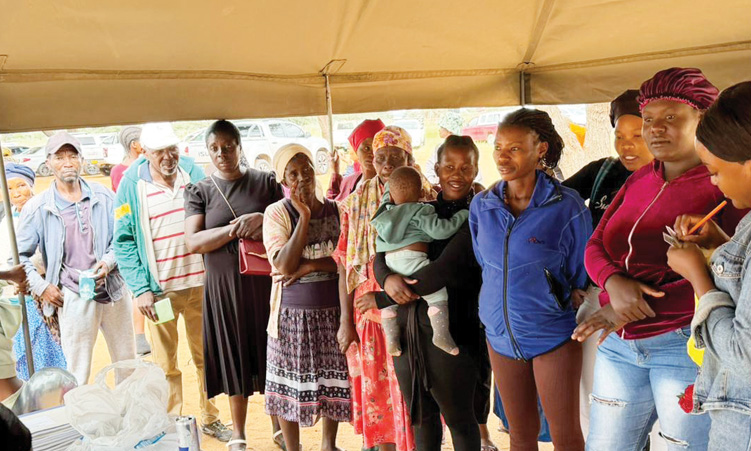
“As we speak, the ministry has a team present here today, ready to screen anyone who wishes to be tested using state-of-the-art X-ray systems.
With this technology, we are going into the communities to find the missing cases,” she said.
Despite the challenges, Luvindao said Namibia has made progress in managing tuberculosis.
“In 2024, we reached a treatment success rate of 87%, just 3% short of the World Health Organisation (WHO) target,” she said.
She added that treatment success for drug-resistant TB stands at 75%, surpassing the WHO target.
Luvindao said progress has also been made in addressing the TB/HIV co-epidemic.
“We have maintained a positive trend where almost 100% of TB patients are tested for HIV, and 99% of those who test positive are initiated on anti-retroviral therapy,” she said.
She said the HIV positivity rate among TB patients has declined significantly over the years, from over 65% in 2005 to 32% in 2025.
To address existing gaps, Luvindao announced the launch of the fifth edition of the National Guidelines for the Management of TB.
“These guidelines include the expansion of active case finding to reach the ‘missing’ 34%, a revised diagnostic algorithm and updated treatment regimens, the expansion of TB preventive therapy, and a strong focus on patient-centred care,” she said.
She added that the fight against TB requires collective effort across sectors, adding that the government remains committed to prioritising TB despite declining international support.
“We will continue to prioritise TB within our national health agenda and strengthen domestic financing mechanisms, as we cannot rely solely on external funding,” she said.
According to Namibia Institute of Pathology (NIP) spokesperson Jefta Gaoab, accurate diagnostics remain central to closing the gap in missed TB cases.
“Ending TB requires a resilient and responsive diagnostic system, and NIP remains at the centre of that system in Namibia,” he says.
Gaoab adds that TB testing is available at 89% of NIP laboratories across all 14 regions, while samples from facilities without testing capacity are referred to fully equipped centres.
“For the current 2025/26 financial year to date, the NIP conducted a total of 108 663 TB-related tests,” he says, noting that each test contributes to interrupting transmission chains, improving patient outcomes, and strengthening national disease surveillance.
In an age of information overload, Sunrise is The Namibian’s morning briefing, delivered at 6h00 from Monday to Friday. It offers a curated rundown of the most important stories from the past 24 hours – occasionally with a light, witty touch. It’s an essential way to stay informed. Subscribe and join our newsletter community.

The Namibian uses AI tools to assist with improved quality, accuracy and efficiency, while maintaining editorial oversight and journalistic integrity.
Stay informed with The Namibian – your source for credible journalism. Get in-depth reporting and opinions for
only N$85 a month. Invest in journalism, invest in democracy –
Subscribe Now!