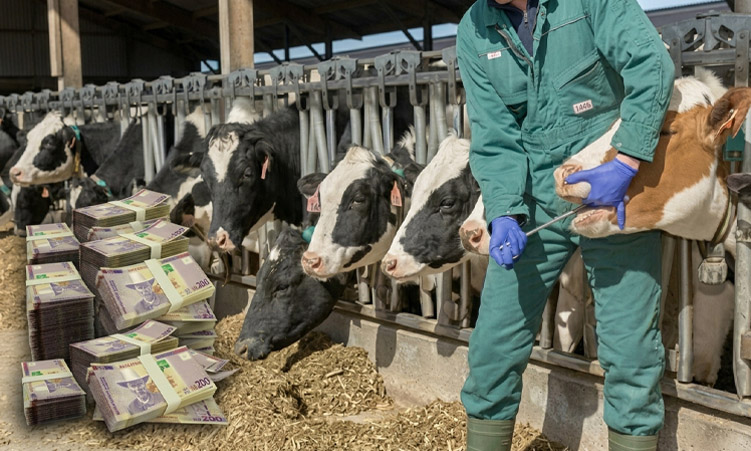
The agriculture ministry’s Directorate of Veterinary Services has failed to spend more than N$13 million of its budget during the 2024/25 financial year.
This is according to the latest audit report by auditor general Junias Kandjeke.
During this time, Namibia faced the threat of foot-and-mouth disease (FMD), with South Africa reporting renewed infections in early 2025.
The disease had spread to seven of South Africa’s nine provinces.
The audit report shows that the directorate underspent its budget by N$13.13 million, or 3.04%.
The division was allocated N$431.4 million and spent about N$418.3 million.
“The contributing factor was due to delays in the advertisement of vacancies, the appointment of new recruits, delays in the procurement process, the late award of tenders, and delays in the implementation of completion of capital projects,” Kandjeke says.
Namibia confirmed an FMD outbreak last month. The disease has since spread to 17 farms in the ||Kharas region, as well as to the Zambezi region.
Four days ago, minister of agriculture, fisheries, water and land reform Inge Zaamwani said Namibia needs about N$200 million to strengthen its FMD containment measures.
‘DISAPPOINTED’
Independent Patriots for Change shadow minister of agriculture, fisheries, water and land reform Michael Mulunga says the unspent money could have strengthened Namibia’s FMD preparedness.
He says farmers have complained about delays in veterinary inspections required for meat exports.
Mulunga also raises concerns about Namibia’s failure to establish a quarantine facility for imported animals, despite identifying the need in 2011.
“We are really disappointed in the Directorate of Veterinary Services,” he says.
He says Namibia is now scrambling to mobilise veterinary resources that could have been prepared in advance.
Earlier this year, four agricultural unions established the FMD Support Fund to strengthen preparedness against the disease. The fund has received pledges of more than N$12 million towards its N$50-million target.
Agricultural economist and researcher Salomo Mbai says the underspending raises questions about how the government allocates money to priority areas.
“So that return is actually an issue of probably the allocation of resources to key priority areas,” he says.
Mbai calls for a permanent emergency preparedness fund to help Namibia respond to animal disease outbreaks.
He says the fund should operate like the roads fund, with money available before emergencies occur.
He also suggested that the government could consider declaring a state of emergency during a serious outbreak.
Meanwhile, the audit report shows that veterinary and clinical services collected about N$1.73 million more than expected.
“The demand for veterinary services and medicine for livestock was higher than expected due to the outbreak of lumpy skin and other diseases and the better understanding of vaccinations,” the report states.
Kandjeke says laboratory testing fees also exceeded expectations by about N$1.9 million.
The audit report does not establish whether the underspending affected Namibia’s preparedness for the current FMD outbreak.