


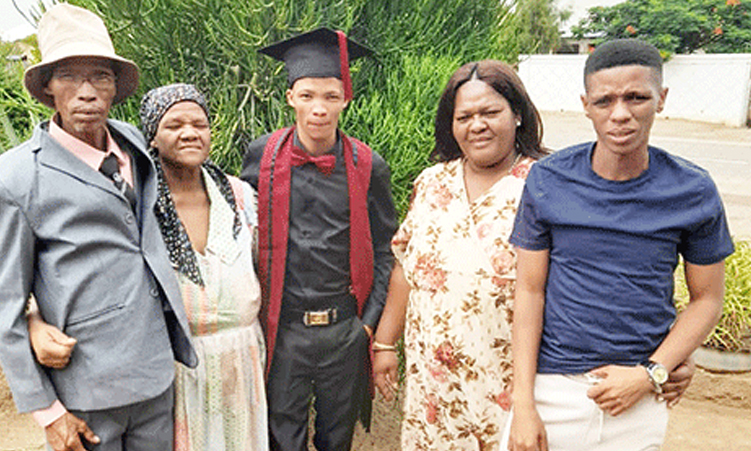
San students are increasingly pursuing higher education with aspirations to contribute to their communities.
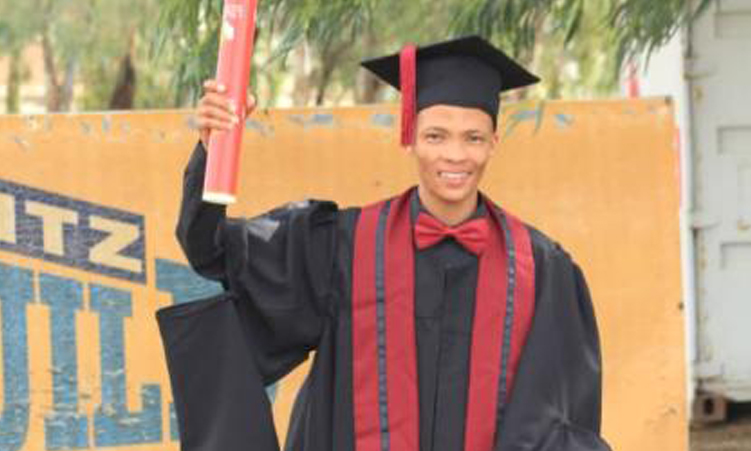
One such student is Petrus Askoek (26), a determined young man from the Tsjaka Ben Hur settlement in the Omaheke region.
His dedication to education culminated in obtaining a junior primary education diploma from the University of Namibia’s southern campus at Keetmanshoop.
Askoek says his ambition was to complete his schooling and ultimately lead a life dedicated to service.
His educational foundation was laid at Mphe Thuto Primary School at Tsjaka settlement.
Askoek has now returned to the school as a qualified Khoekhoegowab language teacher, imparting his knowledge to Grade 3 pupils.
He was active in his school years and was involved in San cultural activities in addition to playing football and participating in athletics.
He continued his secondary education at Johannes Dohren RC High School, where he completed Grade 12 in 2018.
The nomadic San pupils often face unique challenges that could lead to premature departure from the formal education system.
These challenges are frequently rooted in cultural pressures, such as the necessity for families to relocate in search of employment opportunities to sustain themselves.
In many instances, the San people engage in temporary labour which involves tasks such as constructing fences and herding goats and sheep in often demanding terrains.
Some also find employment on commercial farms.
This contributes to the unfortunate phenomenon of children discontinuing their schooling without completing their education.
Askoek was, however, determined to complete his school career.
“I didn’t focus on what I didn’t have or what other pupils have. Plus, I was a bookworm, even my classmates were complaining about it,” he says.
Askoek says his studies were paid for by the Office of the Prime Minister (OPM), adding that it was not an easy journey.
“Sometimes, I didn’t have food and toiletries on campus, but I kept pushing. These struggles didn’t make me lose interest in my studies. I sacrificed my time and always remained humble,” he says.
Drawing from his personal experiences, he offers words of encouragement to San youth who may have dropped out of school, urging them to never give up on their dreams and to persevere in their pursuit of a better future.
“Those who are studying must push themselves and think of the positive future ahead of them when they complete their studies.
Nothing is too late. Push for opportunities in life – let’s rise and grab any opportunity coming our way.”
He says there are specific programmes within the OPM and the Ministry of Gender Equality and Child Welfare that are designed to support San pupils who aspire to further their education at tertiary institutions.
“We must knock on those doors and be assisted with furthering our studies,” he says.
Askoek says teaching allows him to share knowledge and help others learn.
“I want to inspire, guide, and lay a strong foundation for pupils in their primary education. Through teaching, you also grow personally and professionally by improving your skills,” he says.
He says teaching helps build strong connections with others and can lead to other career opportunities.
He is happy to teach at the school where he started his education journey, Askoek says.
“This is where I went to school, and I planned to come back here and make a difference where I can. The pupils are going through the same things I experienced, and I would like to help them.”
Askoek says he considers every challenge an opportunity to grow.
“I take it one step at a time, remain humble and focus on my vision by staying away from bad things,” he says.
He plans to further his studies next year.
‘RACE IS STILL ON’
Photos: Nampa
“The race is still on and I would like to pursue an honour’s degree next year,” he says.
Askoek dedicates his achievement to his parents, sisters and the church leaders who have always been there for him with their unconditional love, support and prayers.
“Their encouragement gave me the strength to keep going, even when things were difficult. They believed in me when I doubted myself, and that made all the difference,” he says.
Omaheke regional development planner Desiree Masheshe says funding programmes are available for all marginalised groups, including the San, Ovatue, Ovatjimba, and those suffering extreme poverty.
“These programmes are aimed at uplifting the living standards of the marginalised. If the marginalised qualify to go to tertiary institutions, we assist them with all expenses involved,” she says.
Beneficiaries receive financial aid for tuition, hostel fees, toiletries, transportation, stationery, and other essentials.
Masheshe says the Omaheke region has the highest number of San pupils registered at tertiary institutions and encouraged those who qualify to further their studies, to approach the relevant offices countrywide.
She says the responsibility for these funding initiatives will now fall under the Office of Vice President, Lucia Witbooi, marking a transition from the previous oversight by the gender ministry.
– Nampa
In an age of information overload, Sunrise is The Namibian’s morning briefing, delivered at 6h00 from Monday to Friday. It offers a curated rundown of the most important stories from the past 24 hours – occasionally with a light, witty touch. It’s an essential way to stay informed. Subscribe and join our newsletter community.

The Namibian uses AI tools to assist with improved quality, accuracy and efficiency, while maintaining editorial oversight and journalistic integrity.
Stay informed with The Namibian – your source for credible journalism. Get in-depth reporting and opinions for
only N$85 a month. Invest in journalism, invest in democracy –
Subscribe Now!