


THERESIA NEPOLOIT IS only the beginning of the year. Some parents have succeeded in finding places for their children in their “preferred schools” and many others settled for “available schools”.
While other youths in Namibia may be doing well to get us politically active, I decided to tackle the way we allow ourselves to disregard our indigenous languages in our own country. In the opening paragraph, I made reference to “finding preferred schools”. I am still battling with finding such a school in Windhoek.
The point here is threefold: 1. When I found a good school, I did not find their curriculum appealing for my child’s age; that curricula is too full, enough to stress my child than to enable her to learn while still able to play; this school does not teach my child any of the Namibian languages, instead they have French and Afrikaans teachers to capture my child and deepen her loss of identity.
2. Another good school, which I almost called perfect for my child, had two main flaws. First, they are too tricky in the way they accept learners; Second, they do not teach any of the indigenous Namibian languages, instead they teach English, Afrikaans and German… In which country are we?
I am talking about what we call private schools. Somebody should help me understand. Are private schools exempted from following and adhering to the language policy of Namibia? Or, as it is with many official documents in the Land of the Brave, is this but yet another nice policy on paper?
It is the Namibian (African) child who is educated there. It is my child. I pay a lot to get that child to such schools. Do not even ask me why I opt to take my child to “private schools” because I find no other deserving option for my child. Indeed, they are my “preferred schools”.
The point I am trying to bring home is that we need to wake up and start to realise that with the money we work hard for, which we gladly part with every month (N$3 000, N$5 000 and some more) to keep our children in private schools, we are providing employment opportunities for many people, including the unqualified ones; we are selling our children to cultures unknown to us (through English and other foreign languages).
The challenge I post to owners of private schools is that, we the parents will appreciate you more than we do now if you would include two or three Namibian languages on your list of languages for our children to choose from, just like you do with European languages.
We are losing our children, their identities and their abilities to express their deep selves through the type of education we expose them to, which many of us still trust and believe will enable them to one day realise their dreams (there is irony in this).
The challenge I pose to our policymakers and implementers, in this case the ministry of education, is that they keenly begin to look at this and make it part of the requirements for any individual intending to establish a private education institution in Namibia. We have a responsibility to keep our country and it is time to make sure that 10 years from now, our children will still be able to dream and plan and live in their own languages, which will make and keep them proudly original or at least familiar with who they really are, by knowing their mother tongue or any other Namibian language.
We are our languages. Our languages carry our cultures and identities. We can only express our deepest feelings and emotions in our own languages. If these are taken from us or left out from our development programmes such as education, we might sound or seem fine, but the greatest likelihood is that we truly are lost to ourselves.
The argument that our languages are really not as important as others, like English, which are hailed as international languages and or languages of wide communication and all other fancy names we give, are made to blind you and me. They are made to keep us in the dark and make us feel inferior, so that we can lose our identity.
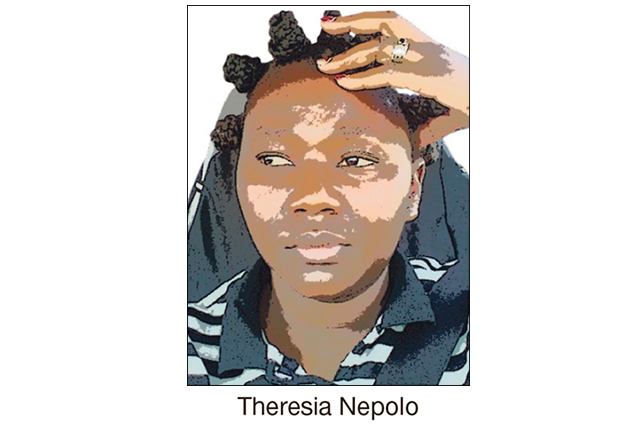
• Theresia Nepolo is an English lecturer at the Namibia University of Science and Technology. The views expressed in this article do not represent those of my employer or institution. tnepolo@nust.na or talamondjilahakalunga@gmail.com.
In an age of information overload, Sunrise is The Namibian’s morning briefing, delivered at 6h00 from Monday to Friday. It offers a curated rundown of the most important stories from the past 24 hours – occasionally with a light, witty touch. It’s an essential way to stay informed. Subscribe and join our newsletter community.

The Namibian uses AI tools to assist with improved quality, accuracy and efficiency, while maintaining editorial oversight and journalistic integrity.
Stay informed with The Namibian – your source for credible journalism. Get in-depth reporting and opinions for
only N$85 a month. Invest in journalism, invest in democracy –
Subscribe Now!