



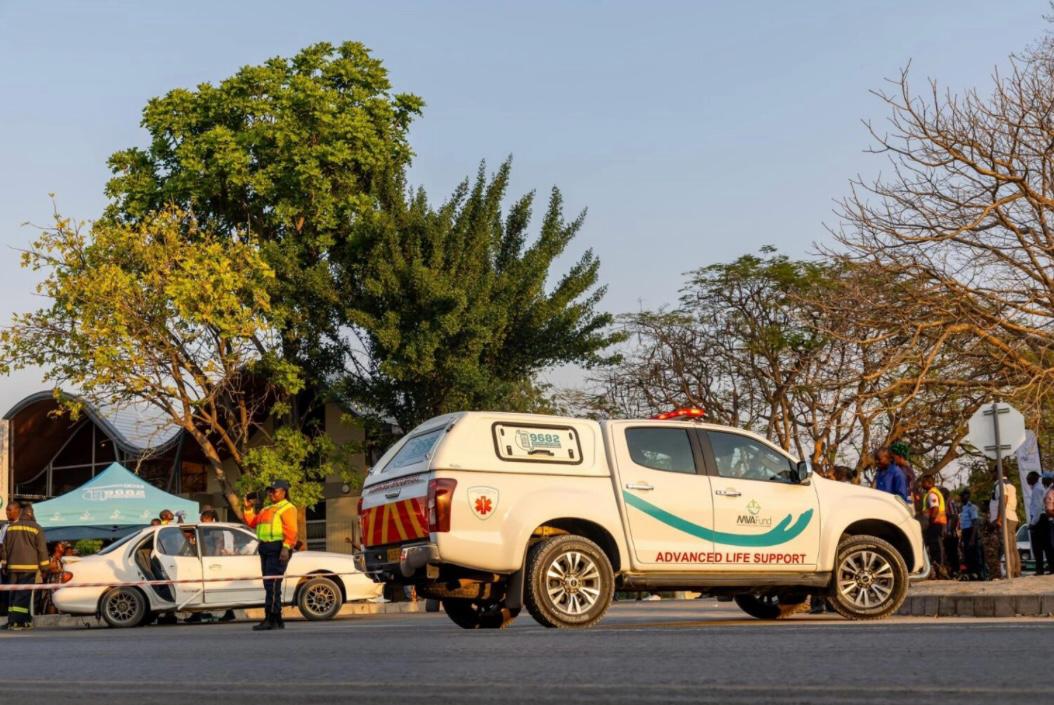
The Motor Vehicle Accident (MVA) Fund disburses an average of N$325 million each year, with around N$200 million spent on medical expenses for road crash victims, according to MVA Fund chief executive Rosalia Martins-Hausiku.
Martins-Hausiku says the fund’s spending reflects both the scale of Namibia’s road safety crisis and the need for preventive investment in the country’s healthcare system.
“Some of this money can go towards capacitating public hospitals with necessary equipment,” she says, adding that this would enhance the nation’s ability to treat and rehabilitate victims effectively.
Addressing delegates at the 10th Annual Road Safety Conference at Swakopmund, Martins-Hausiku stressed that the fund’s mission extends beyond compensation, focusing instead on long-term rehabilitation, dignity restoration and public safety education.
“Our mandate extends beyond the award of benefits; it is about preserving life, restoring dignity and contributing to national development,” she said.
Namibia continues to record a worrying rise in road fatalities, with 13.8 deaths per 100 000 people this year, up from 11.3 in 2024.
Although injury rates have declined slightly to 145.2 per 100 000, the fund notes that the social and economic impact remains severe.
“These are not mere statistics; they represent real people, Namibians whose dreams and aspirations are cut short,” Martins-Hausiku said.
She added that most accidents result from preventable behaviours such as speeding, fatigue and drunk driving.
She said the fund is partnering with law enforcement agencies, local authorities and educational institutions to promote safer road use through awareness programmes and data-driven enforcement.
Martins-Hausiku also highlighted efforts to digitise the fund’s operations to improve access to claims and enhance transparency.
“New partnerships with institutions such as the Namibia University of Science and Technology and and Mobile Telecommunications Limited aim to use technology and innovation in public education for safer road behaviour. When all else fails, we must create a forgiving and responsive environment,” she said.
Meanwhile, National Road Safety Council chairperson Eliphas !Owos-ôab says progress in reducing road fatalities remains constrained by outdated legislation and institutional weaknesses.
He says the council continues to operate under the National Road Safety Act of 1972, which lacks the provisions required to address modern challenges such as data integration, enforcement coordination and public education.
“The council continues to operate under the outdated National Road Safety Act of 1972, which lacks the necessary provisions to address modern challenges,” he says.
!Owos-ôab urges the government to fast-track the road safety management bill to empower the council with full authority to execute its mandate effectively.
“The transformation of the National Road Safety Council into a fully fledged, capacitated road safety agency is not just a strategic necessity, but a moral imperative,” he says.
In an age of information overload, Sunrise is The Namibian’s morning briefing, delivered at 6h00 from Monday to Friday. It offers a curated rundown of the most important stories from the past 24 hours – occasionally with a light, witty touch. It’s an essential way to stay informed. Subscribe and join our newsletter community.

The Namibian uses AI tools to assist with improved quality, accuracy and efficiency, while maintaining editorial oversight and journalistic integrity.
Stay informed with The Namibian – your source for credible journalism. Get in-depth reporting and opinions for
only N$85 a month. Invest in journalism, invest in democracy –
Subscribe Now!