





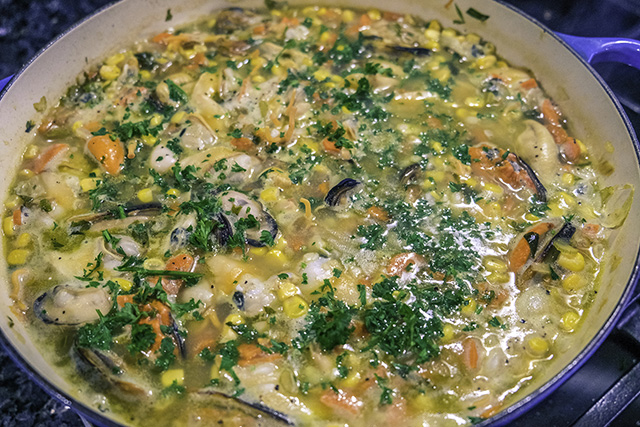
I think it is common knowledge that Namibians are not very fond of seafood. Sure, there are many Namibians who consume fish, and some who enjoy the occasional oyster, but for the most part seafood is not a significant component of our daily diets. Rather give us a generous chunk of beef or a generous portion of lamb or chicken.
For most Namibians, access to fresh seafood is extremely limited, and dependent on one’s ability to self-harvest. Fresh seafood is also very expensive; in fact, most Namibians simply do not consume fresh seafood because they cannot afford to do so.
Although our lucrative seafood industry exports most local seafood, recreational harvesting is allowed for most available edible species such as various types of fish, molluscs and crustaceans as regulated by the Namibian government. This is necessary to ensure the sustainable use of these resources.
Many Namibians do recreational angling and as a result, fish such as kabeljou ( ), galjoen ( ), West Coast steenbras ( ) and dassie ( ) are well known and well liked on our tables. Sadly, all these are red-listed on the Sassilist for fish species under threat of over-fishing. Species listed as red are regarded as being from unsustainable populations that have extreme environmental concerns, lack appropriate management or are ‘no sale species’ and illegal to buy or sell in South Africa. Namibia does not keep such as list, hence it is not possible to assess whether or not the status of these species is any different here locally.
This should be reason for concern for seafood consumers, and we should all collectively take great care to fish and buy with great awareness and concern for sustainable use of our fish.
The harvesting of crayfish has been regulated for a long time, and the species is currently under threat, bi-valve molluscs such as mussels and oysters, on the other hand, are not currently under threat and can be harvested with greater peace of mind.
Both black and white mussels are regulated, and each has a specific bag limit for recreational use. In Namibia, each recreational harvester is allowed to personally collect 50 black, brown or ribbed mussels. White mussels must not be able to pass through a ring with an inner diameter of 38mm and each harvester is allowed to harvest 25 white mussels per day. Other edible species includes limpets (25 per person per day), periwinkles (25 per person per day), prawns (five per person per day) and brown seaweed (10 kgs per day).
This is a lot of seafood, and importantly, it is for free (and will continue to be if we are responsible!). Yet, these do not seem to make it onto our tables, and into our diets. Instead they often end up in the bags of fishermen as fresh bait.
Shells from archeological sites show that humans living close to the Namibian coast consumed mussels and possibly limpets for at least 1 000 years. It appears thus that we have stopped utilising these for sustenance in modern times.
But, in theory at least, it should be possible to stay alive and even do quite well on a diet that includes free, fresh seafood personally harvested in accordance with the country’s regulatory framework.
Many people avoid seafood because they are intimidated by it or lack the knowhow to cook or prepare it. Others may well avoid shellfish for health reasons. Others still, fear contamination and shellfish poisoning. For whatever reason, most Namibians would not even consider harvesting a meal from the sea. Mussels are a good case in point.
The Namibian coast has two types of mussels available to recreational harvesters. Both black mussels ( ) and white mussels ( ) are available all year round. One company currently farms black mussels in the Walvis Bay Aquaculture Production Area. Commercially farmed mussels are grown using ropes hanging from platforms to which the mussels attach themselves. As mussels are filter feeders, no feed is required. Damage to the environment is minor. Like all bi-valves, mussels can enhance water quality by clarifying water and reducing concentrations of organic matter and nutrients in the water column.
White
Shellfish, and bi-valves in particular, are closely and regularly monitored by the Namibian government, which issues public warnings when elevated levels of toxins are detected, and mussels and oysters are deemed unfit to eat.
Mussels are versatile ingredients, and easy to prepare. Steamed with white wine or cream or grilled with garlic and butter is often more than enough. Eaten straight from the shell, or as a soup with bread or as a sauce with pasta, fresh mussels are hard to beat.
Take care when cooking white mussels. They need to be purged of the sand in which they live. This is done by allowing the mussels to sit in sea water for a few hours or even a day until they discard all sand. But make sure that the mussels remain alive; dead mussels don’t purge. Also, discard all unopened mussels once you have cooked them, as this is an indication that the mussel might have been dead, and it is always best to avoid these.
Happy cooking!
• 750 grams fresh white and black mussels
• 1 onion, finely diced
• 2 stalks celery, thinly sliced
• 1 clove garlic, mashed
• 2 tablespoons parsley, finely chopped
• 1 cup fish stock
• 3 tablespoons butter
• 2 cups milk
• 3 tablespoons cream
Allow the white mussels to soak in fresh sea water for a few hours to purge. If you do not do this, the soup will be sandy and quite unpleasant.

