






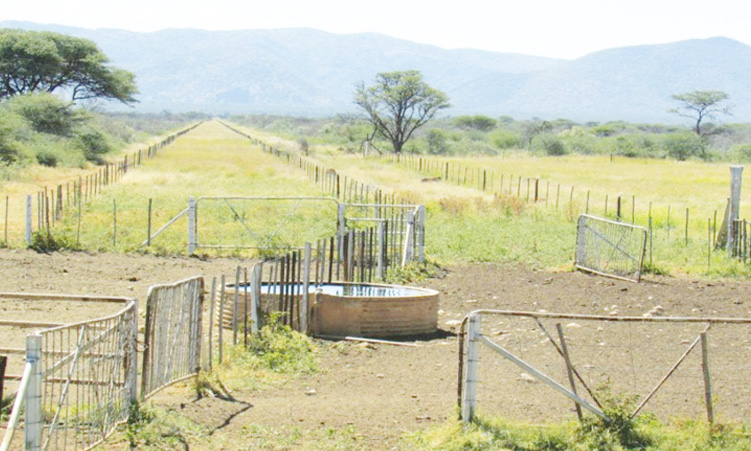
MORE than 30 allocated resettlement farms in the //Kharas region are said to be unoccupied and the land is lying idle.
//Kharas governor Dawid Gertze has expressed concern over the matter, saying the land needs to be used productively to ensure food security. He says the state is trying to address landlessness.
Gertze made the remarks during a courtesy visit of the parliamentary standing committee on urban and rural development and land reform on Tuesday.
The committee is busy conducting an oversight visit in the region.
“I don’t know the rules. I still need to read how to reclaim and redirect this land to those who can use it productively. That’s a worry, that’s a concern. I want this committee to consider my petition and ensure you address these issues in any feedback you provide to the parliament,” said Gertze.
//Kharas Resettled Farmers Association chairperson Sophia Motinga says resettled farmers are being blamed for being unproductive while the infrastructure they receive on the ground is not what they were told before taking possession of the farm, putting their plans in disarray.
Motinga says the implementation of the water and fencing rehabilitation programme under the Ministry of Agriculture, Fisheries, Water and Land Reform is slow and places human and animal lives at risk.
“There are too few water points. Not all boreholes are functional as we have been informed by government officials. Then the available water points are coupled with long distances between them. These are the day-to-day challenges experienced by farmers,” says Motinga.
The resettled farmers association says it is seeking urgent government intervention on unresolved issues surrounding access to their farms, lack of boreholes and water and dilapidated infrastructure.
Deputy director for land reform in the //Kharas region, Nelson Nangolo, says it is probable that some infrastructure was stolen after assessments were done, but this was only discovered upon allocation.
“We are here to make sure we help the farmers. Therefore, if they are rightfully and legally resettled, we can address their complaints,” says Nangolo.
Farmers have expressed disappointment with the resettlement programme’s allocation of farms and units in the //Kharas region.
Resettled farmer Andries Basson says the majority of farming units are allocated to people from other regions who do not take possession of the farms.
Basson says this is being done despite local people, who are in need of farming land and who have been applying for years, and who could have taken possession of the farms and utilised them better.
“I see people make applications and their applications get sent to Windhoek. Later you see people from other regions, far from the //Kharas region are being resettled here. The people here can take possession of these farms that are lying idle much quicker. We all know about weekend farmers as well. What can they develop?” Basson questions.
These sentiments were echoed by the governor in the courtesy call, who noted that the region’s inhabitants feel overlooked in terms of the allocation of resettlement farms. He also urged the committee to engage traditional leaders on reports of skewed land distribution in communal areas.
Committee chairperson Elifas Dingara says the committee’s main aim is to enact and pass the land bill in parliament.
“Governor, we have heard you. We will definitely take your concerns and assure they are addressed.
“Furthermore, we want this bill to be passed to address all issues that have been pending since independence. Because in communal land, people do not have title deeds, and without a title deed, you actually don’t own the land. Therefore, you will never own until such a time that we are able to issue title deeds all over the country,” says Dingara.