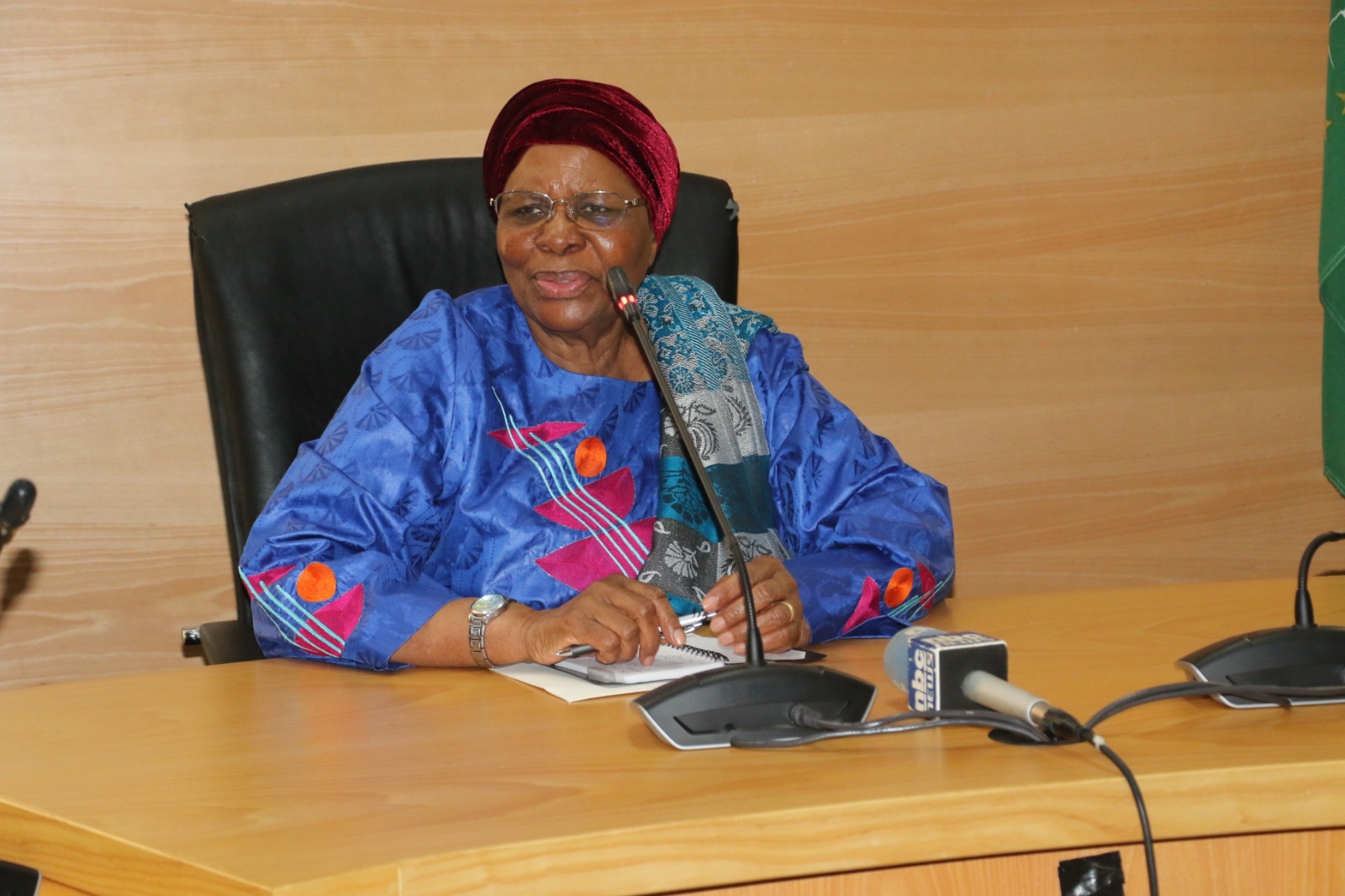





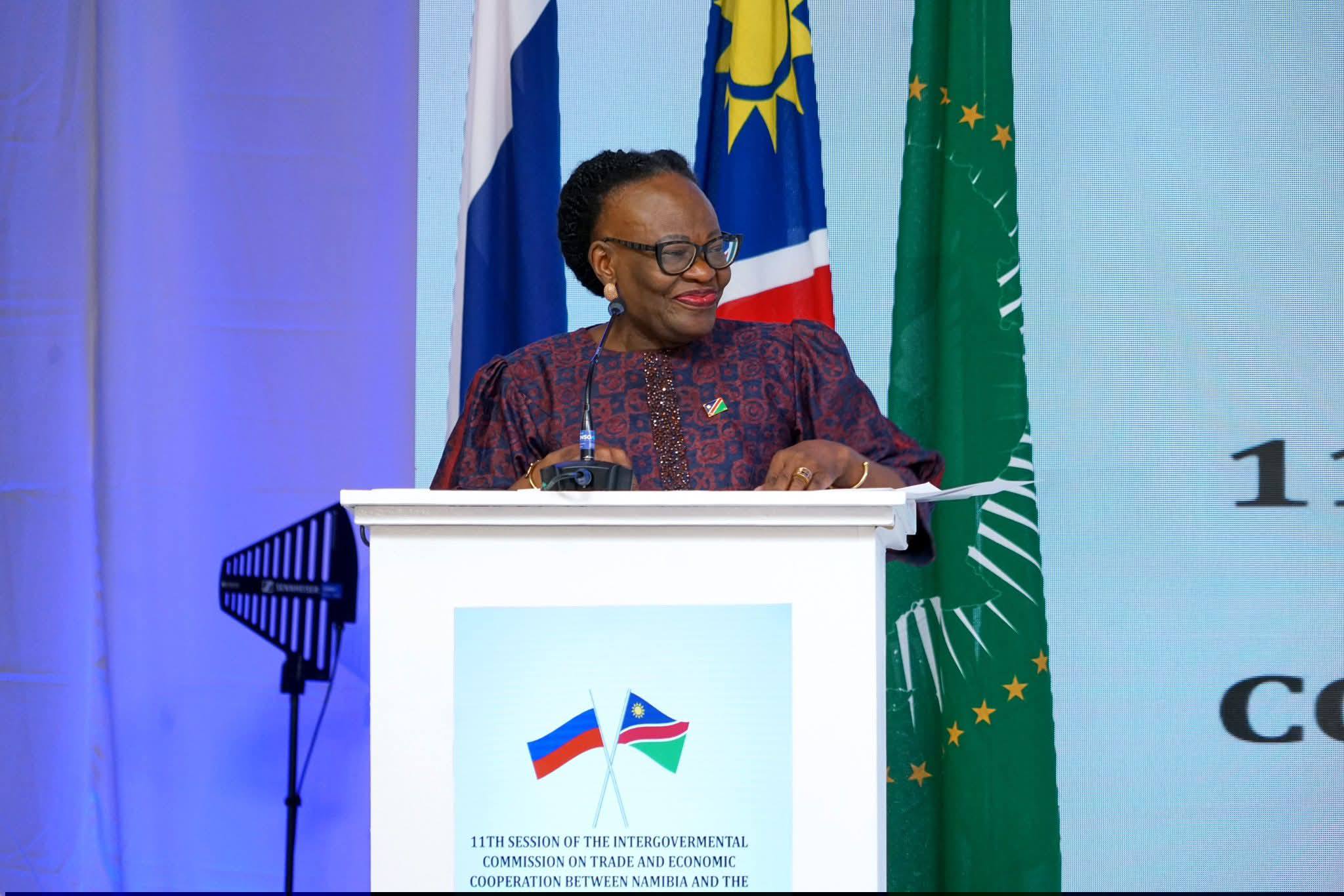
Opening remarks by Selma Ashipala-Musavyi, minister of international relations and trade, during the 11th session of the Namibia–Russia intergovernmental commission on trade and economic cooperation. Windhoek, Namibia, 16 March 2026.
___________________________________________________________
Good afternoon.
Once again, I extend a warm welcome to Yury Trutnev and your entire delegation to the Republic of Namibia. I also express my gratitude to ministers and deputy ministers for your participation in this meeting today. This meeting affirms the importance we all attach to the longstanding friendship between our two peoples, which translates into bilateral relations and cooperation between our two countries.
The pleasant memories of my recent working visit to the Russian Federation, particularly to Moscow, still resonate. Notwithstanding the fact that it was your first day in office in 2026, at the height of winter, you made yourself available and warmly welcomed me and my delegation. We had a very fruitful meeting. The visit also took me down memory lane, when in my youth I attended the Komsomol youth leadership school in Moscow. During that visit, we discussed the content of this session and the possibility of convening a Namibian–Russia business forum. I take this opportunity to thank you for facilitating the convening of the business forum, the first of its kind between our countries.
It is said that the only constant is change. The current geopolitical climate is testimony to that truism. The world is characterised by uncertainty more than ever before. International peace and security are under immense threat. Fostering peaceful cooperation through diplomacy is fading. Namibia believes it is our collective responsibility as the global community to bring about a safer world for both present and future generations. Our meeting today is a building block to that aspiration. Our two countries have continued to work closely at both bilateral and multilateral forums, and we are proud that we hold similar positions on many issues.
We convene today the 11th session of the intergovernmental commission on trade and economic cooperation to, among others, review progress made since the 10th session. This is also an opportunity to identify new areas of potential cooperation.
The business forum, which brought together a broad spectrum of businesspeople, has added new impetus to our mutual desire to take bilateral cooperation on trade and investment to the next level. The forum provided our business communities with an opportunity to explore and analyse the opportunities our countries offer. I extend our gratitude to both private sectors for their strong participation, and particularly to the Russian business delegation for travelling such a long distance to attend.
It is my hope that there will be more people-to-people contacts and business engagements. The Namibia Investment Promotion and Development Board and our trade department stand ready to play their roles in facilitating these engagements.
The Namibian government, under the leadership of the president, has identified priority areas within the framework of the sixth national development plan, which I also highlighted during our meeting in Moscow and at the business forum. These priority areas include agriculture, sports, youth empowerment, education and training, creative industries, health, land, housing and sanitation. These sectors are critical to improving the living standards of our people. I therefore continue to invite the Russian business community to explore opportunities in these areas.
I have reviewed the outcomes of the business forum and am pleased to note that follow-up activities have been identified.
The establishment of a fertiliser manufacturing plant, as a means of supporting various agricultural green schemes across the country, was also discussed. The discussions focused on the meat and poultry industries. Namibia would appreciate the support of the Russian Federation in this regard. The fertiliser plant will reduce costs, boost agricultural production at existing project sites and increase output for subsistence farmers. In the long run, this will reduce dependence on food imports and position Namibia to export both food and fertiliser to other African countries within the context of the African Continental Free Trade Area.
Since the 10th session, several draft agreements have been finalised and are ready for signing, including the draft agreement on cooperation and mutual administrative assistance in customs matters.
Progress has also been made in implementing the agreement on cooperation in the field of geology and subsoil management. The second joint working group met on 26 February 2026 in Windhoek, during which both parties reaffirmed their commitment to strengthening cooperation in mining. However, several legal instruments remain outstanding. I urge all stakeholders to expedite the finalisation of these cooperation frameworks for signing in the near future.
I am confident that our two countries will continue to explore the vast potential for investment, trade and bilateral cooperation for the benefit of our people.
With these remarks, I declare the eleventh session of the intergovernmental commission on trade and economic cooperation between the Republic of Namibia and the Russian Federation officially open.
I now invite my co-chair to deliver his remarks.
I thank you.
Spaciba.
In an age of information overload, Sunrise is The Namibian’s morning briefing, delivered at 6h00 from Monday to Friday. It offers a curated rundown of the most important stories from the past 24 hours – occasionally with a light, witty touch. It’s an essential way to stay informed. Subscribe and join our newsletter community.

The Namibian uses AI tools to assist with improved quality, accuracy and efficiency, while maintaining editorial oversight and journalistic integrity.
Stay informed with The Namibian – your source for credible journalism. Get in-depth reporting and opinions for
only N$85 a month. Invest in journalism, invest in democracy –
Subscribe Now!