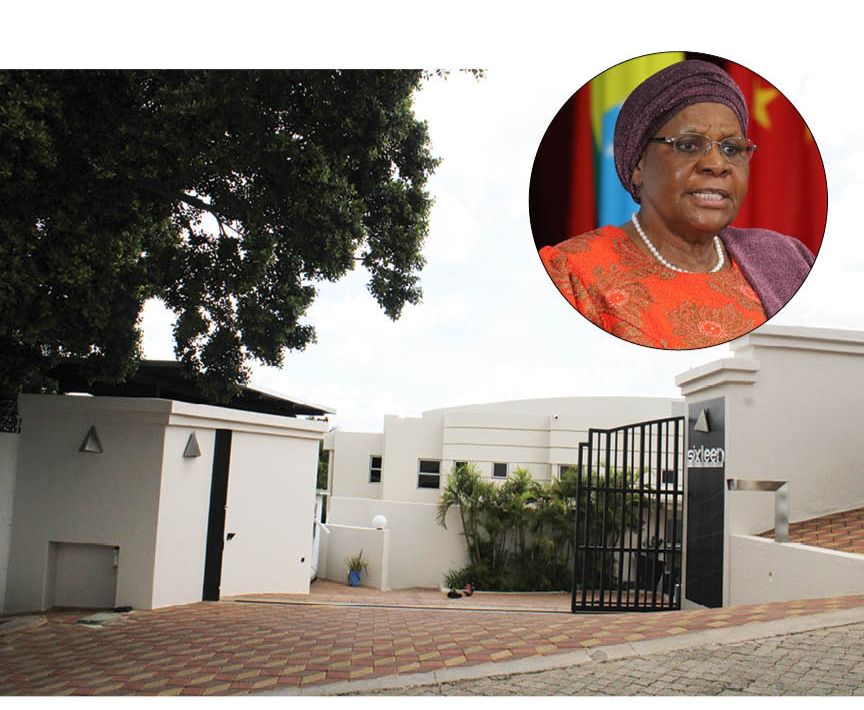




Statement by Esperance Luvindao, minister of health and social services, at the National Assembly, Windhoek – 21 October 2025.
I rise to address the assembly regarding the recent outbreak of mpox in Namibia. On 18 October 2025, the Ministry of Health and Social Services received confirmation of a single case of mpox at Swakopmund in the Erongo region. The patient is currently receiving comprehensive medical care and is in stable condition under isolation at the Swakopmund District Hospital. In accordance with World Health Organisation protocols, this single confirmed case constitutes an outbreak, which the ministry officially declared on 19 October 2025. Health authorities in the Erongo region are diligently working to identify any additional cases and monitor all immediate contacts.
As of today, 21 October 2025, the ministry has identified one additional confirmed case, an eight-month-old contact of the initial patient. There is also one suspected case reported from Rundu Intermediate Hospital, and we are awaiting the test results. Our investigation indicates that the primary probable case had a history of travel within the Southern African Development Community region and is a close contact of the two confirmed cases in isolation at Swakopmund.
I want to reassure the public that the ministry is fully equipped to manage this outbreak. Our approach involves a concerted, nationwide effort utilising both “whole-of-government” and “whole-of-society” strategies. The Mpox Incident Management System has been activated at both national and regional levels, operating under the National Health Emergency Management Committee. This multi-sectoral committee, comprised of experts from various government offices, ministries, agencies, and stakeholders, is responsible for developing and implementing public health emergency preparedness strategies and action plans.
We are leveraging the investments made during the Covid-19 pandemic response, particularly our enhanced isolation facilities and the experience of our dedicated healthcare workforce. We continue to follow the technical guidance of reputable international health agencies, specifically the Africa Centres for Disease Control and the World Health Organisation.
Namibia’s robust surveillance system ensures that all individuals showing signs or symptoms consistent with mpox are promptly identified, tested, and monitored. The ministry wishes to reassure the public that Namibia is adequately prepared to respond to public health emergencies and disease outbreaks, such as mpox. In addition, isolation facilities across the country are readily available or have been repurposed to accommodate and admit suspected infectious diseases that may require hospitalisation.
Mpox is a zoonotic disease (an infectious disease that is transmitted between species from animals to humans or from humans to animals) caused by an orthopox virus, which results in a smallpox-like disease in humans. However, the current global mpox outbreak is predominantly human-to-human transmission. Historically, the mpox virus was initially discovered in monkeys in 1958 and in humans in 1970 in the Democratic Republic of the Congo. Since then, mpox has been reported in numerous countries around the world, and currently, about 17 countries in Africa are experiencing active outbreaks, including countries in the Southern African Development Community region such as the Democratic Republic of the Congo, Zambia, Malawi and Tanzania.
Prevention remains our most effective tool. I urge all members of the public to adhere strictly to the following preventative measures: avoid close, skin-to-skin contact with individuals displaying a rash consistent with Mpox; avoid close physical contact, including sexual activity, with infected individuals or those exhibiting mpox symptoms; and practise diligent hand hygiene by washing hands frequently with soap and water.
The incubation period (interval from exposure to the virus and onset of symptoms) of mpox is typically from six to 13 days but can range from five to 21 days.
Mpox symptoms include fever, intense headache, swollen lymph nodes, muscle aches, and a rash that appears some days after the onset of symptoms and turns into blisters and crusts over time. The rash tends to be concentrated on the face, palms of the hands, and soles of the feet. The mouth, genitals, and eyes may also be affected, and the symptoms and skin rash generally last for two to four weeks. During this time, a person can transmit the infection to others.
Human-to-human transmission can result from close contact with respiratory secretions, bodily fluids, and skin lesions of an infected person or recently contaminated objects. People with mpox are infectious while they have symptoms (normally between two to four weeks), or until the crusts that have formed separate and a fresh layer of skin has formed. A person can contract mpox through direct contact with infectious skin or other lesions, such as in the mouth or on the genitals.
This includes face-to-face (talking or breathing), skin-to-skin (touching or vaginal/anal sex), mouth-to-mouth (kissing), mouth-to-skin contact (oral sex or kissing the skin), and respiratory droplets or short-range aerosols from prolonged close contact. Ulcers, lesions, or sores in the mouth can also be infectious, meaning the virus can spread through saliva. Transmission can also occur via the placenta from mother to foetus (which can lead to congenital mpox) or through close contact during and after birth.
Mpox can infect anyone and is not associated with any particular group of people or race. Clothing, bedding, towels, or objects such as eating utensils and dishes that have been contaminated with the virus from contact with an infected person can also infect others.
Common risk factors for acquiring mpox infections include people engaged in intimate skin-to-skin contact with infected individuals; healthcare workers and other employees working in healthcare settings; employees and other people handling imported infected animals and animal products originating from mpox-endemic areas; people living in congregated settings such as incarcerated populations, refugee camps, and school hostels; and people staying in prolonged close contact with persons infected with mpox or showing symptoms consistent with mpox infection, including sexual partners and household members.
Several measures can be taken to prevent infection with the mpox virus: isolate infected patients from others who could be at risk for infection; practise good hand hygiene after contact with infected animals or humans, for example, washing your hands with soap and water or using an alcohol-based hand sanitiser; avoid direct contact with any materials, such as bedding or laundry, that have been in contact with a sick animal or patient; and use appropriate personal protective equipment when caring for patients, which includes a gown, gloves, a respirator, and eye protection.
As a responsible member state of both the World Health Organisation and the Africa Centres for Disease Control, we are actively exploring options for acquiring mpox vaccines, prioritising our most vulnerable populations and procuring other necessary medical countermeasures. We are confident in the Africa Centres for Disease Control’s commitment to ensuring equitable vaccine distribution, prioritising local needs across affected member states.
I implore anyone experiencing symptoms consistent with mpox to seek medical attention immediately. Please visit your nearest health facility or consult with a private medical practitioner without delay.
In the wake of this outbreak, the Ministry of Health and Social Services has activated the public health emergency response and has mobilised resources to respond to the confirmed mpox outbreak.
Finally, I appeal to the Namibian public to remain calm and to rely only on verified information from trusted sources, such as the Ministry of Health and Social Services and recognised health organisations. The spread of unverified information can cause unnecessary panic. I also urge everyone to refrain from stigmatising, intimidating, or harassing affected individuals and their families. Compassion and accurate information are our strongest allies in managing this outbreak effectively. As the institution mandated to provide and protect public health, we will always provide accurate, truthful, and timely information concerning public health issues.
Further updates on the mpox situation will be provided as necessary. We appreciate the ongoing support and cooperation of the public as we work together to safeguard the health of the Namibian people. Your health and well-being remain our utmost priority.
For further enquiries, kindly contact the nearest health facility or the Ministry of Health and Social Services hotline (toll-free) numbers: 0800 100 100 or 085 110 0100, or the public relations officer at 061-203 2054, or email public.relations@mhss.gov.na
In an age of information overload, Sunrise is The Namibian’s morning briefing, delivered at 6h00 from Monday to Friday. It offers a curated rundown of the most important stories from the past 24 hours – occasionally with a light, witty touch. It’s an essential way to stay informed. Subscribe and join our newsletter community.

The Namibian uses AI tools to assist with improved quality, accuracy and efficiency, while maintaining editorial oversight and journalistic integrity.
Stay informed with The Namibian – your source for credible journalism. Get in-depth reporting and opinions for
only N$85 a month. Invest in journalism, invest in democracy –
Subscribe Now!