



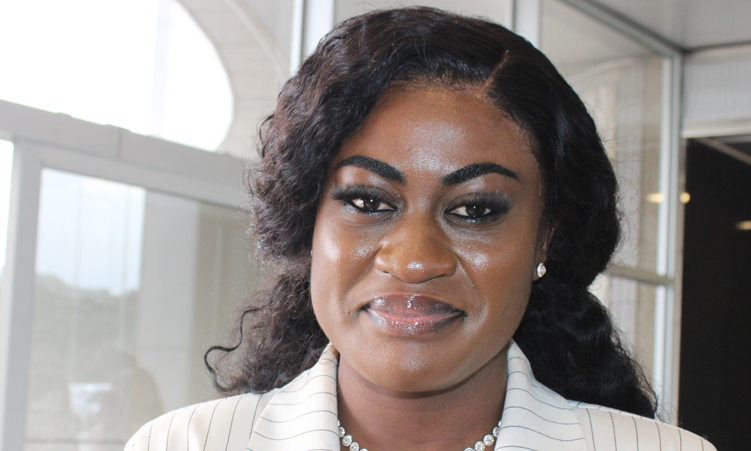
Statement by minister of health and social services Esperance Luvindao, National Health Facility Assessments Feedback Meeting, Windhoek, 1 October 2025
It gives me profound pleasure to be with you this morning as we receive the feedback report on the Health Facility Assessment Exercise. This occasion brings together the collective leadership of the ministry to reflect on the progress we have made, the challenges that confront us, and the collective responsibility we share in shaping the future of healthcare in Namibia.
During the period of 8-15 September 2025, the ministry embarked on a comprehensive facility assessment across all 14 regions, using three assessment tools, namely:
- The Health Facility Needs Assessments – to capture the reality of what our facilities require in order to deliver effectively.
- The Hygiene and Cleanliness Audit – to ensure that the environment in which we provide healthcare services upholds the highest standards of safety, dignity, and infection prevention standards.
- The Vision April 2026 Readiness Assessment – to measure our preparedness for the bold reforms ahead, establish baseline evidence for our progress towards meeting that vision, and, more importantly, adopt consequent actions in respect of priority facilities as key levers for delivering on the vision.
This feedback session is not just about sharing findings. It is about honest reflection, self-discovery, constructive dialogue, and collective strategic planning. It is also about accountability, because for remedial matters within our capacity, there is no room for laxity and inaction.
The presidential directive – rooted in hard realities
The presidential directive set forth by president Netumbo Nandi-Ndaitwah required that as from April 2026, all civil servants will have the benefit of accessing healthcare services from public health facilities.
This directive is not symbolic; it is rooted in financial and social realities. We must create the necessary incentive and conducive environment to invest in public health and raise the standard of services comparable to the best in the country and in the region.
In the current fiscal year, the government allocated more than N$12 billion to the Ministry of Health and Social Services to deliver healthcare services. In addition, between N$3 and N$4 billion is spent on the Public Service Employees Medical Aid Scheme (Psemas) annually to cover about 100 000 civil servants.
Many public enterprises – themselves funded by public resources – also provide medical aid benefits for their employees to access private health insurance. On top of this, the public sector continues to incur significant expenditure on referrals through the Special Fund for Uncommon Illnesses and through hospital “patient transfer” budgets.
For equity considerations and in a concerted bid to accelerate progress towards universal health coverage, we must take a critical look at where and how we target expenditure for sustainable health outcomes.
Ideally, these financial outlays should be pooled under a common framework – enabling transparency, accountability, and clear alignment between inputs and the health outcomes we aspire to achieve.
Vision April 2026 – a decisive turning point
Vision April 2026 is not just a date. It is a decisive turning point – a first step in taking greater accountability for taxpayers’ money, and a strategic redirection of resources to strengthen our public health system in a prioritised manner.
This presents the opportunity to redirect financial resources to strengthen the health system and invest in critical success factors such as human resources, infrastructure, medical equipment, digital systems, and innovation.
Why the assessments were necessary
Before we could take such a bold step, we had to face the question: are we ready?
That is why the health facility assessment was necessary, and the tools deployed enabled us to gather the evidence to act strategically.
What the findings tell us
The results from the assessment offer both encouragement and challenge. I am pleased to see examples of resourceful teams, dedicated staff, and managers who find ways to serve in spite of constraints. I am also reliably informed that during these assessments, some operational teams already started to address shortcomings. This sense of initiative and peer learning must be replicated across all facilities and regions.
At the same time, the findings highlight urgent gaps:
- Weak infection prevention and control.
- Non-operational or inadequate medical equipment.
- Staffing shortfalls in critical services across the board.
- Inconsistent supply of pharmaceuticals and stock management weaknesses.
- The majority of facilities are not yet ready to absorb Psemas patients.
These are systemic issues, not isolated incidents. They call for systemic solutions.
A phased, principled transition
We recognise why so much outsourcing has occurred, and why Psemas continues to be relied upon: because our public system has not always been able to deliver all services with the quality and at the scale required.
But we also know this: if we do not act now, we will never build the system we aspire to. That is why the ministry is implementing the transformational reform in phases.
Before April 2026, we will begin by:
- Establishing services that are currently limited or unavailable in the public sector.
- Decongesting the system and upgrading the quality of existing services to meet required standards.
- Expanding capacity and reducing reliance on outsourcing.
This is a gradual, principled transition. It ensures continuity, while steadily shifting resources to build our own capacity and facilities. Most importantly, it accelerates Namibia’s journey toward universal health coverage, ensuring that every citizen has equitable access to quality healthcare, funded fairly and sustainably.
Strategic pillars
This approach is built on key strategic pillars:
- Understanding our current capacity – with evidence on infrastructure, staffing, equipment, supply chains, and quality of services.
- Identifying priority entry points – deciding where we can begin phased integration of Psemas beneficiaries into public facilities, and where more time and investment are required.
- Scalability – progressively increasing facility capacity, ensuring that no region or district is left behind.
- Ensuring quality and safety – scaling services while maintaining standards. Our people deserve care that is not only accessible and inclusive but also safe, timely, and of good quality.
Medicines and clinical supplies – a constant priority
I am fully aware that managers and heads of hospitals are concerned about staff shortages and pharmaceutical and clinical supplies. I assure you these issues are top management priorities. The executive director has constituted a core team working tirelessly towards stabilising pharmaceutical and clinical supplies and addressing staff shortages.
Allow me to share a brief update:
- Phase 1: Purchase orders signed with 13 manufacturers for 205 of 575 pharmaceutical items, and for 382 of 454 clinical supplies. This cost N$860 million, but delivered minimum savings of N$221 million – a 20% reduction. Deliveries with two-week lead times are expected early this month.
- Phase 2: Began on 26 September 2025. Requests for offers went out to 120 pharmaceutical and 26 clinical supply manufacturers. Offers will close on 16 October 2025.
Patients judge our system not by our strategies, but by one simple question: is the medicine available when I need it? We must ensure the answer is always yes.
A call for shared responsibility
Vision April 2026 is more than a policy. It is a promise. A promise that taxpayers’ money will be used wisely. A promise that civil servants can trust the care they will increasingly receive at public facilities. And a promise that every Namibian will benefit from a public health system that is stronger, fairer, and more sustainable.
The ministry is committed to turning these findings into action. Your reports will directly inform where we invest, who we partner with, and how we support facility teams. Be rigorous, be honest, and be solution-oriented.
Some issues do not need more resources. Basic repairs, leaking taps, water pipes, light bulbs, distribution of essential items stored unused in facilities, and patient-centred work culture are all within our reach.
No doubt, the assessments you carried out were the first step. They gave us the evidence we need to act with clarity and confidence. Now it is up to us to move from evidence to action – with urgency, responsibility, and unity.
In conclusion, if we are to achieve equity, efficiency, and sustainability, we must ensure that the public health system is both the backbone and the standard-bearer of healthcare.
Let us seize this moment to build a public health system worthy of our people. Together, we can make it happen. Together, we will.
In an age of information overload, Sunrise is The Namibian’s morning briefing, delivered at 6h00 from Monday to Friday. It offers a curated rundown of the most important stories from the past 24 hours – occasionally with a light, witty touch. It’s an essential way to stay informed. Subscribe and join our newsletter community.

The Namibian uses AI tools to assist with improved quality, accuracy and efficiency, while maintaining editorial oversight and journalistic integrity.
Stay informed with The Namibian – your source for credible journalism. Get in-depth reporting and opinions for
only N$85 a month. Invest in journalism, invest in democracy –
Subscribe Now!