


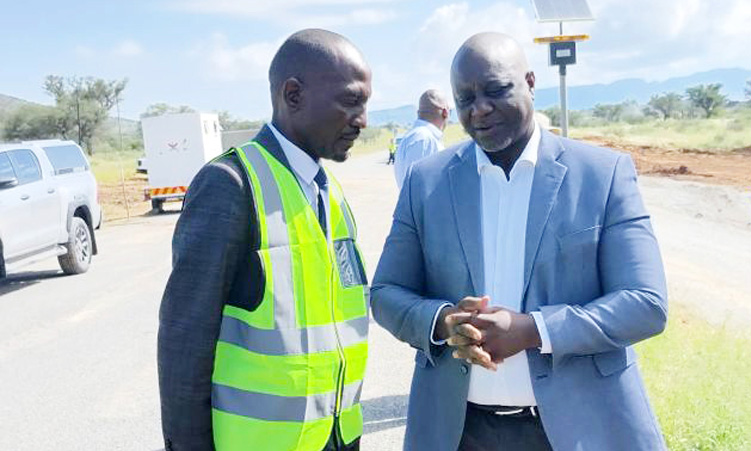
Minister of works and transport Veikko Nekundi’s order to investigate alleged tribal bias in recruitment at the Roads Authority has reignited the issue of hiring practices across state-owned enterprises and government offices.
Nekundi, who ordered the probe in 2025, alleged that six senior positions at the Roads Authority (RA) were dominated by employees from the Zambezi region.
The investigation found that the RA employs about 74 people from the Zambezi region, compared to more than 300 from northern Namibia.
Although Nekundi has said he was satisfied with the findings, the investigation has revived allegations of tribalism at parastatals.
Nekundi last week told The Namibian that the investigation originated from complaints by some RA staff who questioned the fairness of recruitment processes.
The RA, however, is not an isolated case.
In recent years, similar concerns were raised at the the Namibia University of Science and Technology (Nust), the Namibia Revenue Agency (Namra), the Ministry of Health and Social Services, the ||Kharas Regional Council, the Namibian Police, and the Namibian Defence Force (NDF).
A high-level parliamentary committee was appointed in 2004 to probe allegations of tribalism in government recruitment processes.
At the time, some government ministries, including the NDF and the police, were regarded as ‘empires of certain groups’.
Thirty-six years after independence, the issue is still a sore point.
THE AUTHORITY
At the RA, tensions intensified in the final months of Conrad Lutombi’s tenure of more than 15 years. Lutombi led the parastatal from 2010 to 2025 before being replaced by Hippy Tjivikua in December 2025.
Before Lutombi stepped down, concerns about recruitment appointments were already circulating within the institution.
Those concerns from RA officials intensified after Lutombi left, with some officials alleging they were being unfairly targeted.
“During a meeting on 9 April 2025, works minister Veikko Nekundi questioned recruitment figures, claiming that five individuals from the Zambezi region had been employed in senior roles,” the grievance letter, which The Namibian has seen, says.
The letter, written by six employees to the chief executive and the board on 11 December 2025, describes how Nekundi pressed the human resources department for clarity on the appointments.
“During this meeting and under agenda point 11, the minister questioned the RA human capital division regarding the number of employees appointed in March 2025. Human capital indicated that they could not immediately provide the statistics because they had not been notified beforehand that such data would be required,” the letter reads.
Nekundi said five individuals had been employed, and cited their names.
The employees also accused Nekundi of selectively targeting certain individuals, particularly a senior executive from the Zambezi region, while ignoring others appointed through the same restructuring process.
“The situation has caused reputational damage, anxiety and emotional distress, a hostile work environment, fear of ethnic profiling, erosion of job security and division among the staff,” the letter says.
MINISTERIAL AUTHORITY
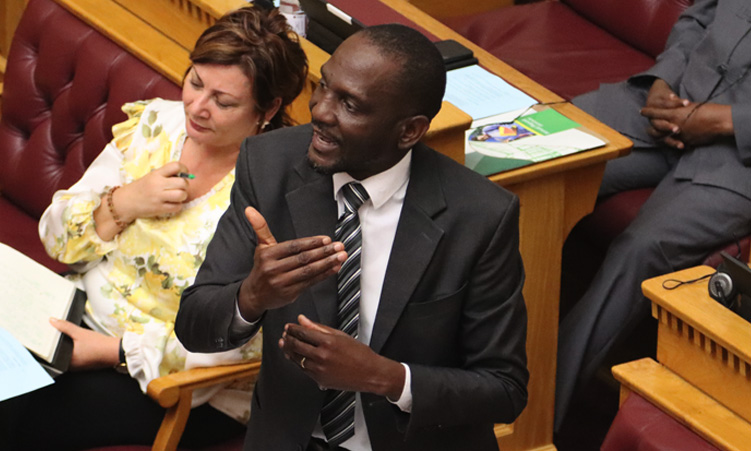
Nekundi last week said he had closed the matter following the investigation and that he was misled by staff members.
“I directed the board to investigate the allegations that were launched with my office of regionalism recruitment favouring people from the Zambezi region. I informed the board and management of the allegations and that they must with urgency investigate,” he said.
According to Nekundi, he could not ignore the complaints.
Former RA boss Lutombi last week denied allegations of tribal recruitment.
“If the people from Zambezi applied and met the requirements process it would be unfair to exclude them just because they are from Zambezi. All recruitments were done in line with the company policy and to accommodate all ethnic groups,” he said.
RA board chairperson Martins Kambulu last week told The Namibian that the company’s internal audit conducted an investigation into the alleged irregularities.
“Nekundi received several complaints from RA staff, after which he requested the then RA board and management to investigate the matters raised at a meeting held on 9 April 2025. Among the complaints was one concerning the appointment of staff members predominantly from the Zambezi region,” he said.
Kambulu said the RA categorically rejects any suggestion that the investigation was motivated by tribalism or victimisation.
“The investigation was conducted impartially, in accordance with established governance frameworks, and the findings speak for themselves,” he said.
A source close to the board, however, admitted concerns about tribal dominance in top roles.
It is also alleged that some parastatals ‘cook’ the recruitment process.
THE BIG PICTURE
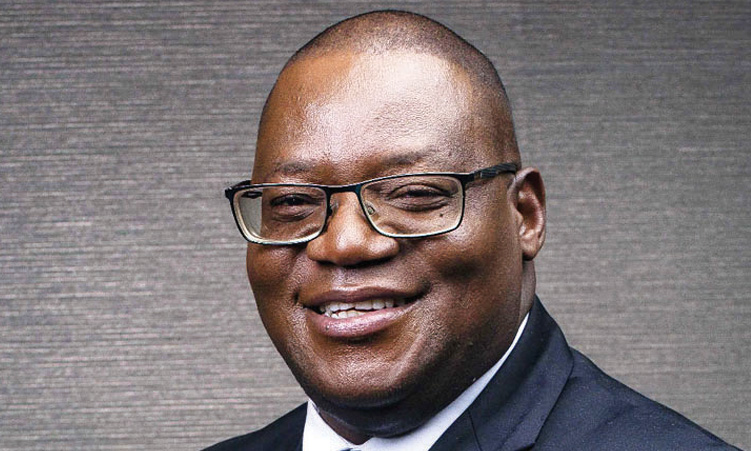
Former Namibia Wildlife Resorts chief executive Mathius Ngwangwama says the issue demands open and honest debate.
“Instead of sweeping it under the carpet, there needs to be open debate and discussion on the vices of tribalism, entitlement, corruption, favouritism, nepotism and cronyism so that they do not rear their ugly faces in Namibia,” he says.
Ngwangwama says tribalism can lead to the destruction of public institutions.
“Anyone starting discussion on this should be applauded,” he says.
He says subjective and personalised considerations in recruitment and procurement have been a persistent and long-running problem in public and private institutions.
“The simple solution to these challenges is to ensure job and procurement opportunities are adjudicated, not based on personal relationships, family networks, clans, lineage and the like, but rather on the stated rational requirements,” he says.
‘SYSTEMIC ISSUE’
The Office of the Ombudsman says the debate around tribalism points to a systemic problem.
“We have received several complaints about tribalism, nepotism, favouritism and unfair recruitment processes against local authorities, indicating that it is a systemic issue,” operations head and advocate Ingrid Husselmann says.
She says the situation appears different at parastatals, where complaints have been limited.
Husselmann says the law is sufficient.
“It simply needs to be implemented consistently and properly,” she says.
‘EMPIRES OF ONE’
Independent Patriots for Change spokesperson Imms Nashinge says Namibia lacks effective mechanisms to prevent tribal considerations from influencing hiring processes.
“These issues keep coming up every now and then, but we don’t have a mechanism in place to ensure recruitment processes are strictly based on identifying capable individuals,” he says.
Nashinge says stronger institutional oversight is needed, pointing to the Public Service Commission as a key body that should take the lead in addressing the issue.
“You do find divisions or sections in ministries where it is largely one group. Even at some local banks you find the dominance of a particular community.
Speaking on behalf of his party, Landless People’s Movement spokesperson Lifalaza Simataa says institutions must first recognise what tribalism looks like before they can address it.
“Once the acknowledgement exists we are able to begin to discuss institutional steps in addressing it.
“A complaint about 70 employees from the Zambezi while there are roughly 300 employees in the same institution from the northern regions, brings forth the conversation of how do we determine when there is an issue,” he says.
Popular Democratic Movement spokesperson Geoffrey Mwilima says unfair recruitment practices, often linked to tribalism and favouritism, continue to undermine confidence in public institutions.
He says merit should speak louder than tribe, adding that young people across the country are increasingly frustrated by what they perceive as “systemic exclusion and manipulated recruitment processes”.
“There must be an audit where we look at an independent body to audit these appointments,” he says.
Mwilima warns that representation in public institutions should reflect the country’s diversity.
Trade Union Congress of Namibia president Paulus Hango says tribalism concerns are mainly fuelled by unemployment.
“In some cases, certain groups appear to be better represented in government parastatals, which makes balancing representation difficult,” he says.
Hango says unions are alerted to these complaints.
“It is also difficult to prove such claims. Everyone should be treated fairly and not be victimised,” he says.
PATTERN
The Ministry of Defence and Veterans Affairs has previously faced criticism over allegations of favouring the Aawambo.
Ministry spokesperson Petrus Shilumbu has acknowledged that such concerns exist, but says it is not possible to satisfy everyone.
“Complaints will always be there, everywhere, even in other countries. We cannot satisfy all those who complain about why a certain tribe is appointed or promoted.
“The Oshiwambo group is not the only tribe from which we appoint people. We are fairly balanced. You could say about 75% balanced.”
He says most complaints come from juniors who are not satisfied with their allowances.
“When they are employed, three years later they already want to be promoted. However, this issue has been addressed, and the ministry has done justice in this regard,” he says.
“If you look at our army navy commander, they are not Oshiwambo-speaking, which shows we are trying to bring everyone on board without sidelining anyone. In terms of our five major generals, only one can hold the position of general at a time; the same applies to other structures.
“There are specific requirements for appointments, and any promotion comes with resource implications. You cannot promote people without having the budget.”
The Namibian has in the past reported that National Assembly lawmakers have appointed a high-level committee to investigate allegations that people from only one ethnic group have been filling most parliamentary vacancies.
At Namra, The Namibian last year reported that the ombudsman launched an investigation after a complaint alleging ethnic discrimination.
Namra at the time denied any wrongdoing.
Allegations of irregular recruitment and favouritism have also surfaced at Nust, where former vice chancellor Erold Naomab was suspended in 2025 pending a forensic investigation.
The suspension followed a series of complaints and a whistleblower dossier alleging wide-ranging governance failures, including nepotism, favouritism in recruitment, and interference in hiring processes.
– This article was produced by The Namibian’s investigative unit. Send us
story tips via your secure email to:
investigations@namibian.com.na
In an age of information overload, Sunrise is The Namibian’s morning briefing, delivered at 6h00 from Monday to Friday. It offers a curated rundown of the most important stories from the past 24 hours – occasionally with a light, witty touch. It’s an essential way to stay informed. Subscribe and join our newsletter community.

The Namibian uses AI tools to assist with improved quality, accuracy and efficiency, while maintaining editorial oversight and journalistic integrity.
Stay informed with The Namibian – your source for credible journalism. Get in-depth reporting and opinions for
only N$85 a month. Invest in journalism, invest in democracy –
Subscribe Now!