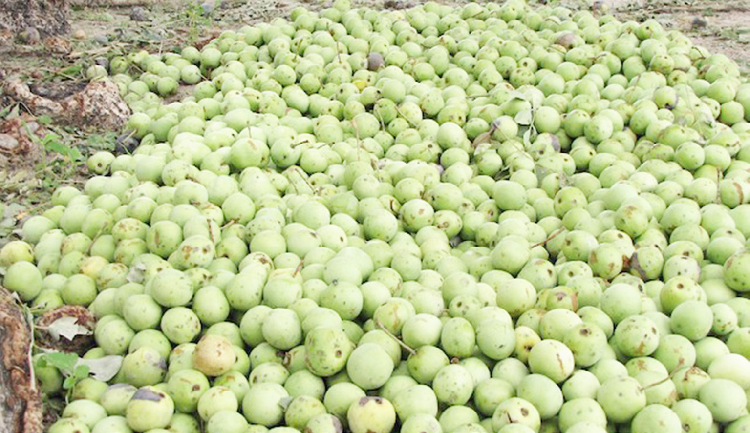
OF the many tree species found in north-central Namibia and elsewhere in southern Africa, the marula tree stands tall and proud as a most respected and celebrated tree which bares a fruit with many beneficial uses.
Scientifically called Sclerocarya birrea, the marula is a tree of many uses and is of great traditional, social, economic and nutritional significance.
This is highlighted by the fact that the seven northern traditional authorities rotate the hosting of the annual marula wine festival.
Last year the Uukwaluudhi Traditional Authority hosted the festival.
The occurrence of the marula tree, a protected species in Namibia, is strongly correlated with human settlements.
The marula fruit is now in season and women in several villages are (as a tradition), extracting juice from it to make wine and other products.
“Marula wine is very nutritious and makes the body healthy. It can also cure malaria,” said Elizabeth Shigwedha (46) from Oniimwandi village at Oshakati West constituency of Oshana region.
Her assertion is a belief held by many tribes. The fruit has long been used as a traditional medicine because it contains antihestamines.
According to the February 2020 booklet of the Namibia Network of the Cosmetic Industry (NANCi), the marula season remains a time of festivity while marula nuts support a wide range of industries and services.
The oil is valuable in cooking as well as skin and hair care. The leaves and the skin of the processed fruit can be fed to livestock.
Ananias Shikongo (47), from Otuwala village in Okatana constituency of Oshana, said the marula tree is highly valued because of many things that can be derived from it.
He said good chairs and stools can be made from the marula tree stem as it has light wood.
“Apart from wine, a non-alcoholic drink can also be made from the fresh marula juice,” he explained.
He added that in the past people were not allowed to bring weapons to marula wine parties because of fear they would use the weapons when drunken fights broke out.
In November 2019, several southern African countries gathered in Windhoek for a two-day Regional Marula Sector Development Plan workshop to explore ways of adding value to marula tree products.
The workshop attended by Namibia, South Africa, Botswana and Zimbabwe, suggested that marula products should be carefully profiled and clearly explained, to ensure quality standards and reliable supply and for the sector to clearly understand what the market required.
In northern Namibia, the marula fruit has contributed to employment creation, especially among women, generating income for households.
In 2004, the Eudafano Women’s Co-operative – comprising women from 27 associations in north-central Namibia established a factory at Ondangwa, where its members brought marula fruit to be processed into wine and oil for sale.
Factory manager Martha Negumbo said the women are still bringing the fruit to the factory and enjoying the benefits.
She said the co-operative had managed to recruit more members despite challenges such as the fluctuation in demand for the product.
In an age of information overload, Sunrise is The Namibian’s morning briefing, delivered at 6h00 from Monday to Friday. It offers a curated rundown of the most important stories from the past 24 hours – occasionally with a light, witty touch. It’s an essential way to stay informed. Subscribe and join our newsletter community.

The Namibian uses AI tools to assist with improved quality, accuracy and efficiency, while maintaining editorial oversight and journalistic integrity.
Stay informed with The Namibian – your source for credible journalism. Get in-depth reporting and opinions for
only N$85 a month. Invest in journalism, invest in democracy –
Subscribe Now!