


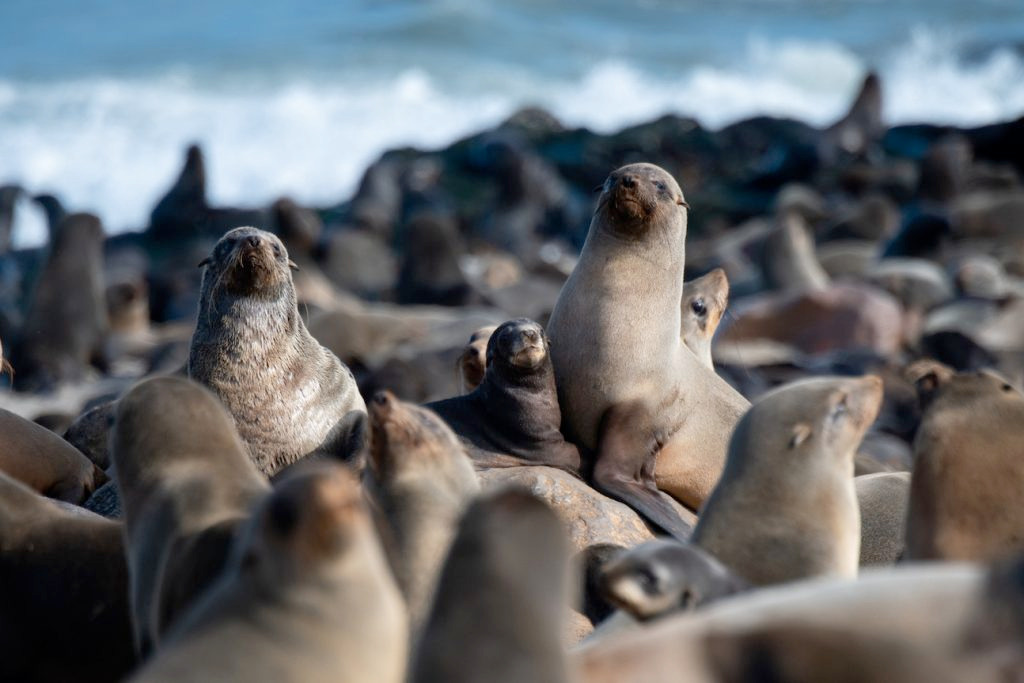
The parliamentary standing committee on natural resources has proposed an increase in Namibia’s annual seal harvesting quotas, recommending a rise from the current 50 000 to 200 000 seals for a fixed period.
The proposal aims to control the growing seal population, which has raised concerns over its impact on fish stocks and sustainable marine resource management.
Namibia currently has an annual hunting quota of 80 000 Cape fur seal pups and 6 000 bulls.
However, due to limited markets for seal products, the quotas have not been fully utilised, leading to a steady increase in the seal population.
The committee emphasised that effective population control is necessary to maintain a balance between marine conservation and economic sustainability.
To improve quota utilisation, the committee urged the Ministry of Fisheries and Marine Resources to extend the harvesting season until the end of November.
“The Ministry of Fisheries and Marine Resources must look into the possibility of extending the harvest season to the end of November to enable harvesters to catch their full quotas as allocated, cognisant of the fact that bulls only come to shore towards the end of September, which at present only gives two weeks of harvesting,” the committee stated.
Recognising the economic potential of seal harvesting, the committee encouraged the ministry to promote local consumption of seal meat through the Namibia Fish Consumption initiative.
It also called for an exploration of year-round harvesting to maximise the economic value of seals and meet market demand.
In a bid to boost exports, the committee recommended collaboration between the fisheries ministry and the Ministry of Industrialisation and trade to secure markets in Asia and Canada.
Additionally, the fisheries ministry has been urged to revise the Marine Resources Act to impose stricter penalties on companies mistreating workers aboard fishing vessels.
The committee further recommended that the ministry publish annual reports detailing seal population trends, quotas, and actual harvest numbers to enhance transparency and public awareness.
Seal harvesting is practised in nine countries, including Canada, Denmark, and Russia, with Namibia being the only southern hemisphere nation engaged in the practice.
Between 2005 and 2015, the country exported nearly 400 000 seal skins, despite ongoing criticism from animal rights groups.
Namibia has 26 seal colonies stretching from Lüderitz in the south to the Erongo region in the north.
Population trends within these colonies have fluctuated over time, primarily due to food-driven migration patterns.
In an age of information overload, Sunrise is The Namibian’s morning briefing, delivered at 6h00 from Monday to Friday. It offers a curated rundown of the most important stories from the past 24 hours – occasionally with a light, witty touch. It’s an essential way to stay informed. Subscribe and join our newsletter community.

The Namibian uses AI tools to assist with improved quality, accuracy and efficiency, while maintaining editorial oversight and journalistic integrity.
Stay informed with The Namibian – your source for credible journalism. Get in-depth reporting and opinions for
only N$85 a month. Invest in journalism, invest in democracy –
Subscribe Now!