




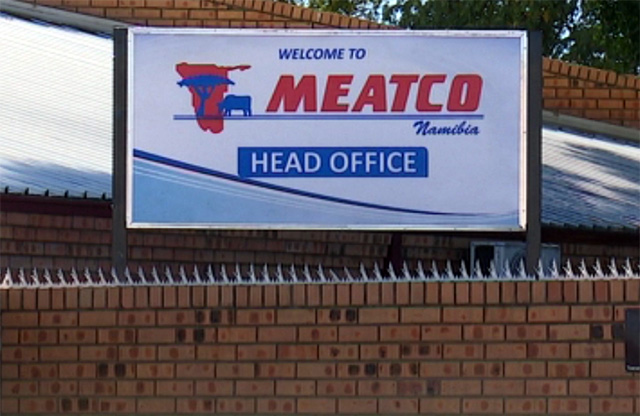
Meatco has shot down requests by employees for a salary increase, citing the company’s precarious financial situation.
Meatco CEO Mwilima Mushokabanji said the state meat processing company is currently facing financial difficulties that prevent it from granting the requested wage increases.
This comes as employees yesterday staged a protest outside the Meatco head office in Windhoek, voicing their frustrations and threatening to go on strike if their grievances were not addressed.
Among their demands was a 14% salary increase across the board.
However, Mushokabanji said the company needs time to recover financially.
“It’s not as if we are not giving you anything. We just want you to give the business time to recover. There are organisations that have cut down 50% of the salaries of employees. They have had retrenchments. This is not the right time for us to increase salaries.”
Mushokabanji acknowledged the strain on employees’ disposable income, caused by increased interest rates and the rising repo rate. Nevertheless, he maintained that the company is unable to provide salary increases at this time.
“I think we can always look at that once the business has recovered moving forward into the future,” Mushokabanji said.
Mushokabanji said most of the issues raised by the workers have been addressed already.
“We have systems, we have processes, our recruitment procedures are very tight, there is no space for corruption in Meatco,” he said.
Meatco finds itself in a precarious situation, recording a N$118-million loss for the period 1 February 2022 to 31 January 2023. In 2022, Meatco received a government bailout of N$200 million, and it is expected that the company will depend on continuous government support to sustain operations.
At the petition handover organised by the Namibia Food and Allied Workers Union (Nafau), Meatco employees voiced their demands for better benefits and urged the company to promptly initiate negotiations that were postponed from September to October last year, as outlined in Meatco’s collective agreement with Nafau.
During the petition handover, workers called for an adjustment in their housing allowance to N$1 000, a reduction in their medical aid contribution to 20%, and requested that Meatco cover 80% of the remaining medical expenses.
“The board does not seem to recognise employees’ efforts and contributions toward the company and we are disappointed and condemning the board decision to withhold the salary increase,” read the petition.
Furthermore, employees accused the Meatco board of lacking awareness about the company’s operations, resulting in misguided decision-making.
The petition called for the immediate removal of the board and urged the public enterprises minister to withdraw their extended contract.
Expressing scepticism about Meatco’s lack of financial capacity, workers suggested the possibility of the misappropriation of funds and demanded an investigation into Meatco’s financial activities, as well as a thorough examination of the company’s budget expenditure.
The workers also alerted the labour ministry that if no agreement is reached with Meatco by 27 July, they will proceed with a work stoppage and take industrial action.
NO TO PRIVATISATION
Amid demands for Meatco’s privatisation, Mushokabanji said such a decision would be ill-advised.
“We strongly believe that privatisation is not the way to go for Meatco. It’s actually not good for the country. We strongly believe that public-private partnerships probably can help between the government and the private sector.”
Meatco prioritises the establishment of a competent value chain, local fodder production, and the prevention of live animal exports. By retaining animals within the country, Mushokabanji said they can ensure the sustainable, competitive and profitable operation of all Meatco’s domestic meat processing facilities.
In the meantime, former Standard Bank Namibia Holdings chief executive Vetumbuavi Mungunda, who owns Ombu Capital, a consulting firm, has advised the government to contemplate establishing a new company that allows private investors and farmers to become shareholders.
The advice is part of Ombu Capital’s appointed duty, by the Development Bank of Namibia in consultation with the Ministry of Finance and Public Enterprises, to conduct an in-depth review of Meatco’s operations and recommend sustainable business model alternatives.
Meanwhile, economist Omu Kakujaha-Matundu said as a strategic national asset, Meatco should not be dismantled or closed solely due to poor leadership.
“The study points to a holistic approach to addressing the challenges facing the bovine sector. If those are addressed and throughput of Meatco is improved, Meatco will be turned into a profitable enterprise that will not only benefit farmers, but also pay dividends to the government for its shareholding.”
Political analyst Rui Tyitende said the study indicates fierce competition within the beef industry between white commercial farmers, and black commercial and communal farmers.
Tyitende said white commercial farmers, represented by Savanna Beef Namibia, have emerged as victors, while the government and black, communal farmers have been defeated.
Tyitende said the government’s management of the industry lacks innovative ideas and is susceptible to pressure.
“The new proposal will not address the structural problems facing Meatco. In fact, it might place additional pressure and financial strain on the government to assist the northern communal farmers with accessing lucrative markets,” Tyitende said.