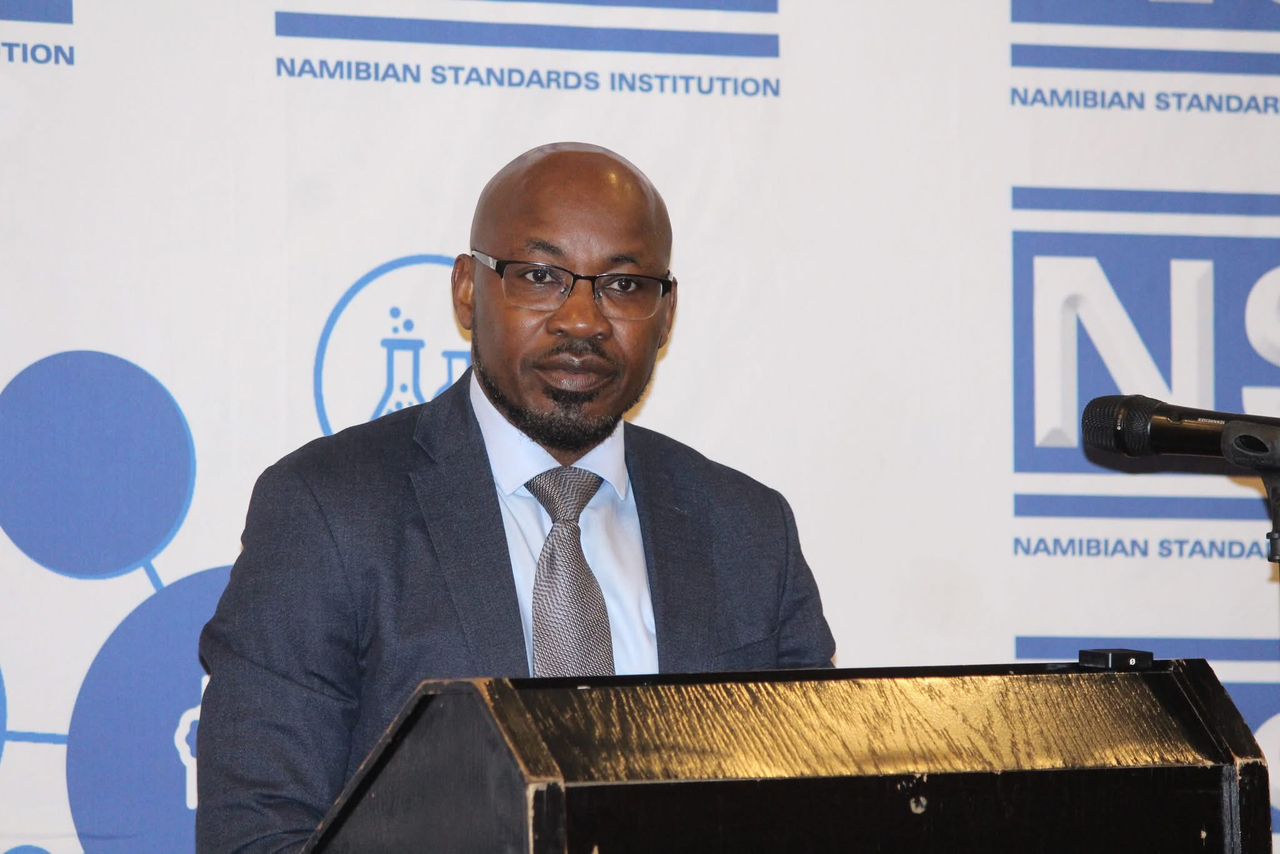




Executive director of justice and labour relations Audrin Mathe was over the weekend forced to remove a social media post in which he made a joke that was not well received.
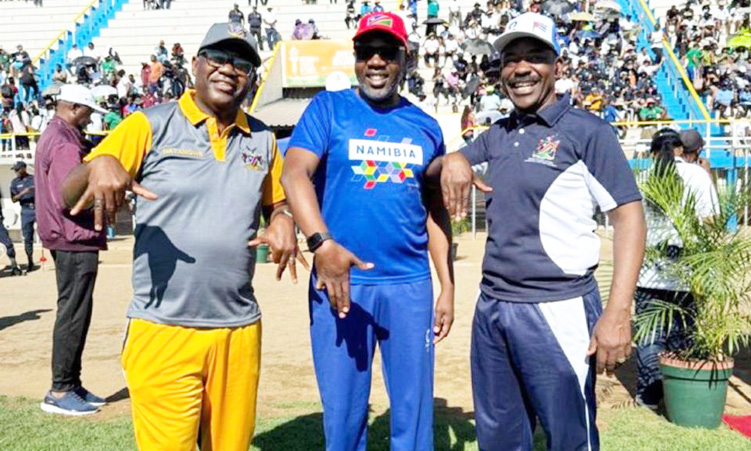
He posted a photo of himself with two other offials, referring to them ‘Kffr 1’ and ‘Kffr 2’.
This was in response to an incident at a recent teenage Halloween party in Windhoek, where two pupils blackfaced themselves, wearing the name tags ‘Kffr 1’ and ‘Kffr 2’, and posted a photograph of themselves on social media.
The image circulated online and prompted parents to complain to the school where one of the pupils is enrolled.
The school last week said it became aware of the incident on 2 November and took disciplinary action.
Popular Democratic Movement parliamentarian Inna Hengari over the weekend blasted Mathe’s post, saying he was downplaying the lived realities of “our people”.
“There are many black Namibian employers who treat and refer to their workers using the k-word. Those of us in positions of influence cannot use our platforms to further this harmful narrative,” Hengari said.
Mathe, however, said he was among the oppressed people and had experienced being labelled a ‘baboon’.
The executive director yesterday told The Namibian that his post, now deleted, was intended to use sarcasm to condemn racism.
“My post was not to suggest that racism is condoned. I fully acknowledge that the k-word carries deep historical and racial harm in Namibia and throughout southern Africa.
“It is a dehumanising slur with a painful legacy connected to apartheid and colonial oppression. I simply meant that in 2025, there are still those who view those in the photo as less human.
“This harm exists, regardless of the context or intention behind its use. Of course, we can have dialogue without normalising the use of racist language,” Mathe said.
‘CRIME AGAINST HUMANITY’
Political analyst Marius Kudumo says the incident shows that assuming racism ended after independence is wrong.
“The incident proves that assuming that racism, especially against Africans, would automatically end after the attainment of political independence and that the inherent dignity of every person would be respected is an illusion and not the case at all material times.
“ Race, ethnicity, and negative perceptions about other communities remain daily experiences in Namibia that need to be addressed,” he says.
He says understanding how racial attitudes persist in settler colonies requires examining the roots of racial knowledge and values.
Kudumo says racism should be addressed as a crime against humanity rather than through symbolic reconciliation.
“Racism should be dealt with radically and no jokes should be made about it, and from the point of view that it is a crime against humanity and humanness, and not artificially through an undefined policy of national reconciliation, but rather through decolonising education and knowledge.
“Those who were privileged by apartheid ought to acknowledge that selective benefits and privileges through past policy were wrong and not sustainable,” he says.
Political analyst Ndumba Kamwanyah says public figures must exercise caution when using racially charged language.
“This incident shows that Namibia still struggles with racism and a lack of sensitivity to its history. I find it troubling that an executive director could make such a joke without thinking about the painful meaning of the word. When two white pupils used the same word recently, it caused public outrage, which shows how serious it is,” he says.
Hengari said Mathe’s post undermines public trust.
“As a senior public official entrusted with upholding justice, fairness and the rule of law, your use of a derogatory racial slur that is rooted in colonial oppression and apartheid-era hatred, is a shocking betrayal of your office and the values of our nation.
“Such conduct is unacceptable, unlawful under our anti-discrimination laws, and irreparably damages public trust in the ministry you lead. It should matter even more when one of us (blacks) does it,” she said.
In an age of information overload, Sunrise is The Namibian’s morning briefing, delivered at 6h00 from Monday to Friday. It offers a curated rundown of the most important stories from the past 24 hours – occasionally with a light, witty touch. It’s an essential way to stay informed. Subscribe and join our newsletter community.

The Namibian uses AI tools to assist with improved quality, accuracy and efficiency, while maintaining editorial oversight and journalistic integrity.
Stay informed with The Namibian – your source for credible journalism. Get in-depth reporting and opinions for
only N$85 a month. Invest in journalism, invest in democracy –
Subscribe Now!