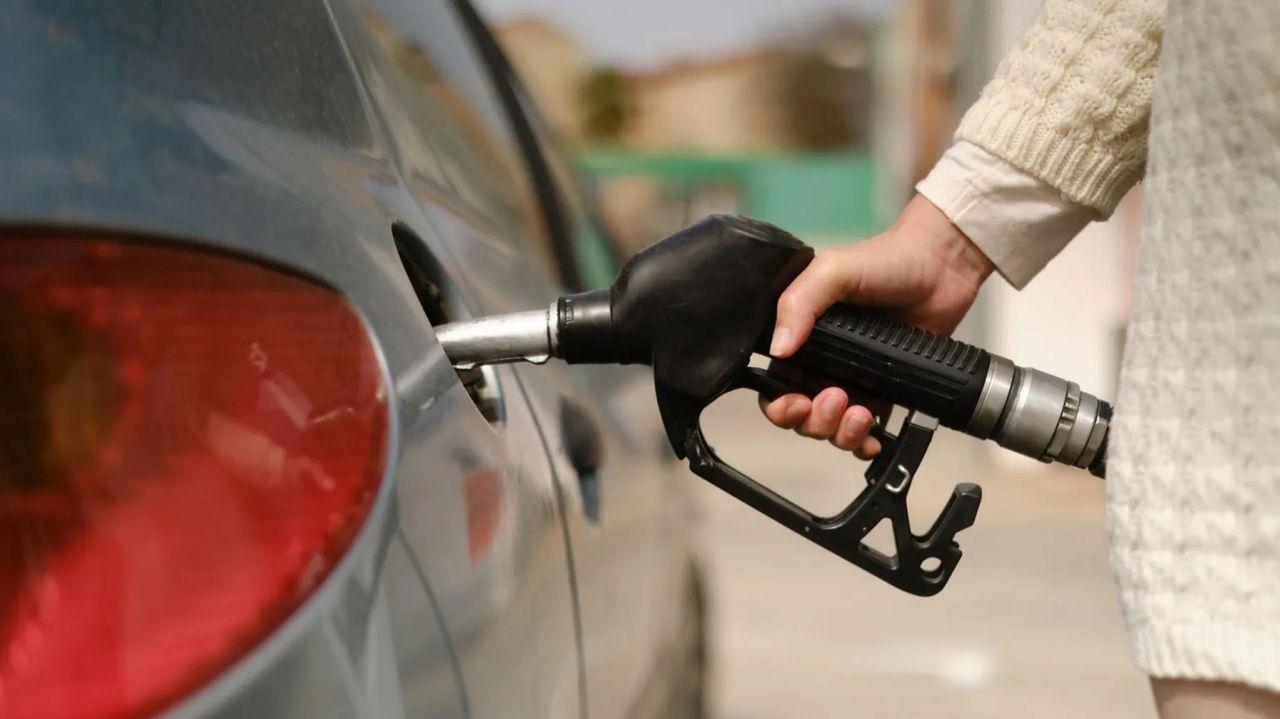




Namibian consumers face a potential fuel price increase of N$4.50 per litre in April, driven by international conflict, regional market shifts, and infrastructure constraints.
According to South African media reports, the country is bracing for potential fuel price shocks in April, as soaring international oil prices and a weakened rand threaten to drive prices to unprecedented heights.
Namibian analysts say the ongoing Israel-United States (US) and Iran war is expected to disrupt global fuel supply.
Economist Salomo Hei says the expected fuel price hike in South Africa would give an indication of what lies ahead for Namibia due to the shared regional market.
He says the exact impact will depend on the country’s current fuel reserves and import capacity.
“Because we operate in the same regional market, our prices are likely to move in a similar direction,” he says.
Namibia reportedly has roughly three months’ worth of fuel in reserve.
“Even if fuel can still be imported, it would be more expensive and harder to get in large quantities,” Hei says.
This comes amid fears that despite the country having three months worth of fuel supply, it might not have the capacity to carry larger amounts.
Additionally, the expectation for South Africa to increase fuel prices in April by R4.50 per litre could mean Namibia may follow suit, putting more pressure on already financially strained consumers.
The price of petrol and both diesel variants (diesel 50ppm and diesel 10ppm) remained unchanged in March.
At Walvis Bay, the fuel price remained N$19.58 per litre for petrol, N$19.63 per litre for diesel 50ppm, and N$19.73 per litre for diesel 10ppm.
Engelhardt Kongoro, the country director of former United Kingdom-based energy giant BP, warns that Namibia’s fuel infrastructure is designed for normal conditions, and any sudden disruption would likely strain the system.
This would cause serious fuel supply challenges if tensions in the Middle East continue to escalate, he says.
“We don’t have the capacity to store large amounts of fuel.
At most, we can hold a month or two’s supply,” he says.
Kongaro is also the former National Petroleum Corporation of Namibia chairperson.
He warns that any disruption of the Strait of Hormuz, a key shipping route through which about 20% of the world’s crude passes, would affect Namibia.
“If the Strait of Hormuz is impacted, it will hit us just like it hits the rest of the world – roughly 20% of supply,” he says.
ALTERNATIVES
Kongoro says although Namibia is exploring alternative routes to access more fuel, most alternatives are not easily accessible.
“Nigeria doesn’t have enough to export, China imports a lot of its fuel, and the logistics of switching suppliers are complex. Our fuel mainly comes from the Middle East, and that’s not something you can replace quickly,” he says.
Kongoro says emergency alternatives, such as using Angola fuel, are limited and often unreliable.
“The supply chain is long. If there’s a disruption, we’ll have no choice but to manage demand carefully, drive less, ration fuel, or restrict service station hours,” he says.
Speaking to Desert FM yesterday, Ministry of Industries, Mines and Energy chief economist and petroleum pricing specialist Abednego Ekandjo said Namibia currently has enough reserves to cover the next two to three months.
The country continues to explore alternative fuel supply sources beyond the Middle East, he said.
“Within that time we are able to source more petroleum products. Even though around 20% of the world’s oil passes through that region, the remaining 80% is still available,” he said.
Possible supply sources include refineries in India, Europe, China, Brazil, Nigeria and parts of North Africa.
“It’s all about the best deal.
Oil companies are always looking for the best available supply,” Ekandjo said.
He said Namibia’s ability to import fuel largely depends on the available storage space at oil terminals.
Walvis Bay remains the country’s main fuel storage hub, hosting facilities belonging to several oil companies, including Namcor, Puma Energy, Vivo Energy and TotalEnergies.
Ekandjo estimates that the combined storage capacity at these facilities is over 200 million litres.
Namcor alone has a capacity of about 75 million litres.
Ekandjo said the country has managed to maintain fuel supply for many years using the existing infrastructure, but acknowledged that increasing capacity would require significant investment.
“If a country wants to expand its fuel storage, it requires huge investments,” he said.
“Just imagine that the national oil storage facility of 75 million litres already cost billions of dollars to build.
If you want to increase that to something like 150 million or 200 million litres, the investment would be enormous.”
He said decisions to expand fuel storage would ultimately depend on government policy.
INCREASE TAXI FARE
Namibia Bus and Taxi Association (Nabta) board adviser Sacky Malima says the association is planning a countrywide transport fare increase between 10% and 12% due to the rising cost of fuel.
Malima says Nabta will hold a meeting this weekend and prepare a letter to the relevant authorities regarding the proposed adjustment, adding that local taxi fares could increase from N$13 to N$14.
“Our plan is to have this increase before 1 April this year because this time around it is going to be very serious prices,” he says.
He says while local taxi fares may increase to N$14 across cities, long distance fares will differ depending on the region and distance travelled.
SEIZED WITH THE MATTER
Meanwhile, prime minister Elijah Ngurare assures Namibians that the government has moved swiftly to safeguard the country’s fuel supply.
Ngurare yesterday gave the assurance in the National Assembly while responding to an urgent oral question from Popular Democratic Movement leader McHenry Venaani, who sought clarity on the government’s preparedness should the conflict in the Middle East affect Namibia’s oil imports.
Venaani raised concerns over the ongoing tensions, noting that the situation in the region has become increasingly volatile.
He said Namibia relies heavily on oil transported through the Strait of Hormuz, and questioned whether the government has established a task force to explore alternative supply options should the route become inaccessible.
“We’ve been given the assurance that we have a three-month stockpile of oil in our depots, but what has the government put in place in terms of a task team to ensure that if we cannot use the Strait of Hormuz, we can source oil from other countries?” Venaani asked.
The opposition lawmaker warned that a prolonged conflict in the region could threaten Namibia’s energy security if contingency measures are not put in place.
Mines minister Modestus Amutse told the parliament last week that the country’s fuel supply is expected to remain stable for the next three months, despite rising global oil prices driven by tensions in the Middle East.
In his response, Ngurare confirmed that the government has already begun coordinating efforts to address the potential risk to Namibia’s fuel supply chain.
He said president Netumbo Nandi-Ndaitwah has instructed the government to move quickly to assess possible options to ensure the country is not caught unprepared should the situation deteriorate.
“It is indeed a geopolitical conundrum where all nations are concerned, but I wish to assure the honourable member and the country that the government is seized with the matter and is working with various stakeholders on this very same issue,” he said.
- Additional reporting from Nampa.
In an age of information overload, Sunrise is The Namibian’s morning briefing, delivered at 6h00 from Monday to Friday. It offers a curated rundown of the most important stories from the past 24 hours – occasionally with a light, witty touch. It’s an essential way to stay informed. Subscribe and join our newsletter community.

The Namibian uses AI tools to assist with improved quality, accuracy and efficiency, while maintaining editorial oversight and journalistic integrity.
Stay informed with The Namibian – your source for credible journalism. Get in-depth reporting and opinions for
only N$85 a month. Invest in journalism, invest in democracy –
Subscribe Now!