




Muyombo Limota was busy fixing a car when he received the call that would change his life.
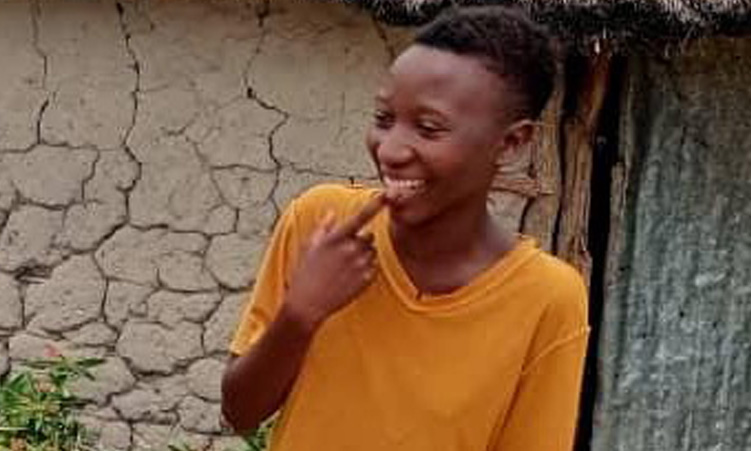
The villager from Sesheke, a border town in Zambia’s Western Province, says his brother called him on 22 March, telling him his daughter, Edna (15), died due to malaria complications.
Limoto says “things went blank after that”.
“I couldn’t breathe, it was like a very bad dream. I still think about that call and how if I didn’t answer it, then maybe it wouldn’t be true,” he says.
Limota says Edna, who stayed with her grandmother, started displaying malaria symptoms on 17 March and was taken to Sesheke Clinic.
She tested positive for malaria and received antimalarial medication.
“When we saw there were no improvement in her condition, we took her back to the clinic, and she was tested again. She still tested positive for malaria.
“They could not give her more medicine, as that treatment can only be given to her after 28 days. They gave her paracetamol and referred her to the hospital,” Limota says.
He says he can’t stop thinking about his daughter being full of life just a week before – going to school, playing in netball tournaments, and attending church choir practice.
PAINFUL REMINDER
Whenever he sees Edna’s friends at the village, it serves as a painful reminder of how she used to laugh with them.
“I still can’t believe it. I lost my daughter within a week’s time. Malaria robbed her of her hopes and dreams,” he says.
Limota says his six other children give him the strength to carry on, although the pain is sometimes unbearable.
“Not a day passes that I don’t think about her. My family tries to console me, but whenever I’m alone, everything comes rushing back. Life will never be the same,” he says.
HOTSPOT
The Sesheke area has been identified as a malaria hotspot by the Zambezi regional health directorate, as many farmers have been subject to mosquito bites while camping out at their crop fields.
One such farmer is Briliant Musiwa, who says he has been camping out day and night for the past four months to scare off elephants and hippos destroying his crops.
The farmer, who has ploughed about eight hectares of maize and two hectares of sorghum, says he has no choice if he wants to yield a good harvest.
While they are guarding their fields against giant animals, they also need to take precautionary measures against malaria.
However, many crop farmers are unable to afford mosquito nets and repellents.
Their only protection against malaria is early treatment, indoor residual spraying and mosquito nets provided to vulnerable communities by the government.
Despite Musiwa receiving a mosquito net, he says the little insects still get a taste of his blood.
He tested positive for malaria in February, and it took him about three weeks to recover from severe infection, he says.
“It could only be that I tested positive for malaria because whenever I make rounds in the field to check for the presence of wildlife, I walk through swarms of mosquitoes.
“They sneak into my net as soon as I get up to do my rounds. The whole night I toss and turn as I try to beat them off,” he says.
After he recovered, Musiwa went back to camp at his field again, and his chances of a reinfection are high.
RISKING LIVES FOR FOOD
“I know I’m risking my life. But if I do not guard my fields, my family won’t eat. There is treatment, so I will seek medicine early, like I did last time,” he says.
In the Sachona area, Joseph Maemeko says he has tested positive for malaria twice already, as he too is guarding his four hectares of mahangu.
He, however, has no net to protect himself.
“There are so many mosquitoes, even during the day they are biting me. I hear people are dying of malaria, and I also thought I was going to die, especially when I got infected for the second time.
“But staying at my field is the only way I will yield a harvest to feed my family,” he says.
Limota is not the only parent grieving a child due to malaria.
THE NUMBERS
The Ministry of Health and Social Services’ national statistics reveal that about 64 children from under the age of 19 have died due to malaria since December last year.
Health ministry spokesperson Walters Kamaya says the ministry has recorded 23 deaths of children between the ages five to nine, accounting for 17% of malaria deaths recorded countrywide.
He says about 132 malaria deaths have been reported countrywide in the 0 to 75 year age group since December.
“Last week eight new deaths were reported from Rundu, Nkurenkuru, Oshakati, and Outapi. The 5 921 new malaria cases reported countrywide were from Katima Mulilo, Nkurenkuru, Andara, Outapi, and Nyangana, respectively,” Kamaya says.
He says 76 195 cases have been reported to date, with the Zambezi region having the highest number of cases, with 21 044, and 18 deaths.
“About 58% of the cases are men, while 42% are women, out of which 3% (429) are pregnant women countrywide,” he says.
CHALLENGES
Kamaya highlights the challenges that hamper the ministry’s preventive efforts, such as inadequate vehicles to accommodate all response activities and insufficient information technology equipment and gadgets for data capturing and reporting.
He says patients also seek medical attention late and lack long-lasting treated insecticidal nets in the affected districts.
“Data backlog in some districts still not fully cleared, periodic stock out of pharmaceutical commodities in some health facilities, inadequate pharmacists in some affected regions to meet the demand, and the unavailability of resources to conduct entomological surveillance in all selected sentinel sites,” he says.
Kamaya urges communities to take continuous preventive measures such as sleeping under insecticide-treated mosquito nets at night, closing windows and doors early, clearing stagnant water around homes, cutting tall grass and bushes around households, using mosquito repellents or sprays indoors where possible, and allowing their homes to be sprayed by indoor residual spraying teams.
“Furthermore, they should seek testing and treatment early if they present with fever, chills, or body aches. Do not self-medicate or rely on traditional remedies alone – get tested and receive the right treatment from trained healthcare workers.
“Complete the full course of malaria medication even if you feel better before finishing it. Do not share the treatment given to you with another person,” he says.
In an age of information overload, Sunrise is The Namibian’s morning briefing, delivered at 6h00 from Monday to Friday. It offers a curated rundown of the most important stories from the past 24 hours – occasionally with a light, witty touch. It’s an essential way to stay informed. Subscribe and join our newsletter community.

The Namibian uses AI tools to assist with improved quality, accuracy and efficiency, while maintaining editorial oversight and journalistic integrity.
Stay informed with The Namibian – your source for credible journalism. Get in-depth reporting and opinions for
only N$85 a month. Invest in journalism, invest in democracy –
Subscribe Now!