



Namibia’s first bone marrow transplant marks a major medical breakthrough, but the service currently benefits only 15% of the population, prompting plans to expand it into the public health system, clinical haematologist Kudakwashe Simba says.
On 11 November, Namibia achieved the successful completion of its first autologous stem cell transplant, a development that significantly reduces the need for patients to seek life-saving treatment abroad.
An autologous stem cell transplant uses healthy stem cells collected from a patient’s own body and is stored before high-dose chemotherapy or radiation, which are administered to kill cancer cells.
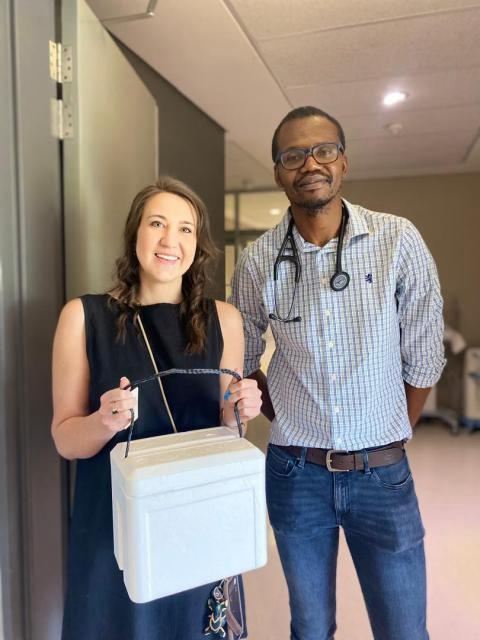
The achievement, two years in the making, was realised through the Namibia Bone Marrow Transplant Collaboration Group, consisting of Simba as the transplant physician, the Namibian Oncology Centre, the Blood Transfusion Service of Namibia, Pathcare Namibia, the Cancer Association of Namibia and the Windhoek Central Hospital Oncology team.
The procedure was performed by Simba at the Namibia Oncology Centre in Windhoek.
Simba says the transplant is primarily used for blood and bone marrow cancers such as multiple myeloma and various lymphomas.
“Currently, the service is available in the private sector, serving only about 15% of the population. Next year, we aim to extend the programme into the public sector so vulnerable groups can also benefit,” he says.
He adds that plans are underway to introduce transplants requiring donor stem cells, which will expand the range of conditions that can be treated locally.
“Once the system is fully streamlined, we plan to introduce allogeneic stem cell transplants, which require a donor and will greatly expand the conditions we can treat locally,” he says.
An allogeneic stem cell transplant uses healthy stem cells from a donor to replace diseased or damaged bone marrow.
“By performing transplants locally, we eliminate accommodation, transport, visa and foreign hospital costs. Medical aid funds also benefit, as costs are significantly lower than foreign centres,” Cancer Association of Namibia chief executive Rolf Hansen says in a statement.
– Nampa
In an age of information overload, Sunrise is The Namibian’s morning briefing, delivered at 6h00 from Monday to Friday. It offers a curated rundown of the most important stories from the past 24 hours – occasionally with a light, witty touch. It’s an essential way to stay informed. Subscribe and join our newsletter community.

The Namibian uses AI tools to assist with improved quality, accuracy and efficiency, while maintaining editorial oversight and journalistic integrity.
Stay informed with The Namibian – your source for credible journalism. Get in-depth reporting and opinions for
only N$85 a month. Invest in journalism, invest in democracy –
Subscribe Now!