






“WE’RE here to see the mayor.”
This is the most common request many people visiting the Lüderitz Town Council have asked at the office’s front desk.
Residents coming here have grievances about land or service delivery. They want answers.
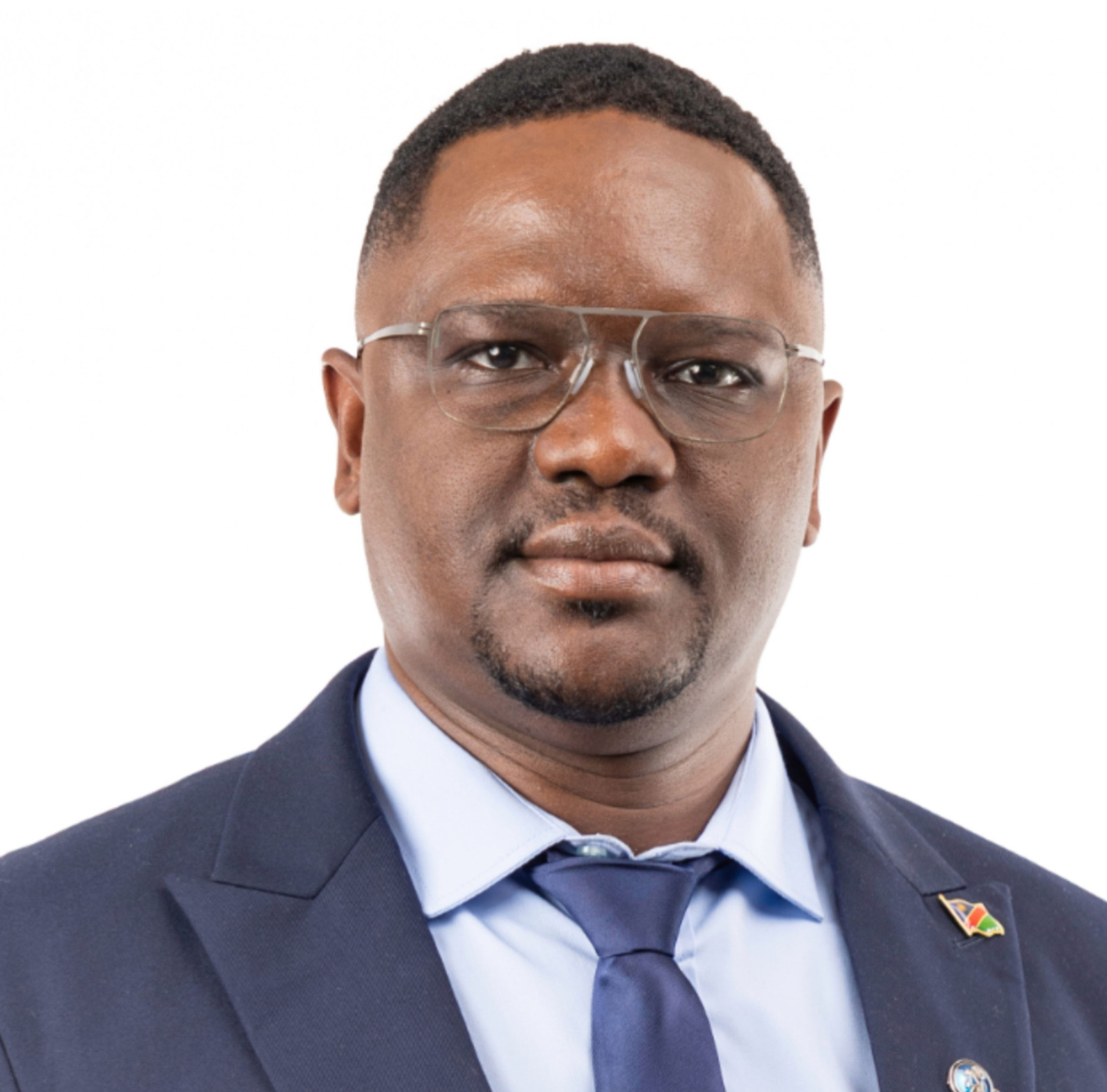
As the town’s mayor, it is Phil Balhao’s job to make the time to listen to everyone’s pressing concerns.
Sporting his favourite navy blue suit – he wears it two or three times a week – Balhao (43) is inundated with all kinds of requests.
If he is not on the phone with foreign business people and signing agreements, he is meeting with the elderly about land or their escalating water bills.
But the road to becoming the mayor of one of Namibia’s most sought-after harbour towns in the south of the country has not been easy.
Balhao was elected as mayor a few years ago, representing the Independent Patriots for Change (IPC) on the town council.
His desk features photographs of his daughter and other close family members – a reminder of the people who supported him when he hit rock bottom a few years ago.
It was a dark hole out of which he did not think he would crawl.
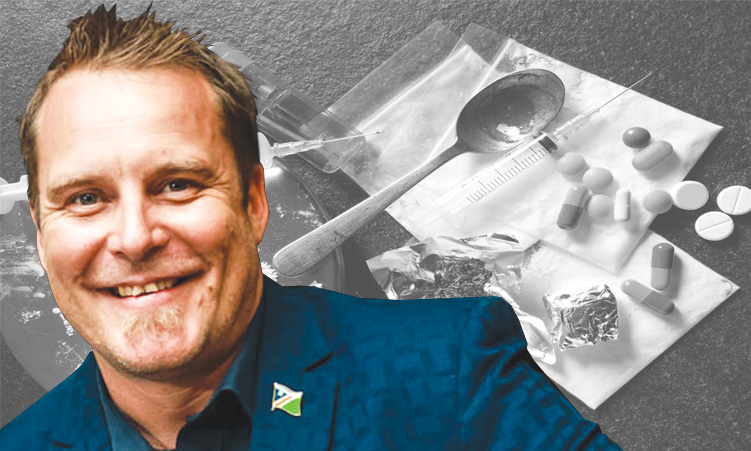
“I tried to end my life more than three times,” he says, referring to his struggle with heroin addiction.
“Thankfully, I was not successful.”
His addiction saw him wandering the streets of Windhoek looking for shelter.
ONE HIT, ONE KILL
“My first real encounter with drugs was in 2001 when I went to visit a friend in Cape Town. He managed to sneak me into his hostel. I stayed for about a week before we got busted,” he recalls.
On the evening he arrived, he had his first brush with heroin.
“If you know anything about heroin, it’s not just a mental addiction, it’s physical – it grabs hold of you fast, especially if you use it daily,” he says.
“Within two weeks of starting heroin, when I felt every joint was made of broken glass, I knew I had a problem.”

FROM DARKNESS TO JOY … Phil Balhao says he has risen from a dark place to become the mayor of one of Namibia’s most sought-after harbour towns in the south of the country. He says he enjoys sharing time with the town’s children. Photo: Contributed
Balhao does not blame peer pressure for his addiction.
“I think I felt insecure. I didn’t know where I fitted in,” he says.
“Perhaps a part of me was trying to punish myself, I don’t know. Two weeks later, I realised I’d crossed a line and things would never be the same.
“From there, it was a long, hard road filled with lies and deceit, letting down my parents and my friends as well as my employers. I’m deeply embarrassed to talk about it, but I know I need to.”
He wants to show young people that there is hope despite their addiction.
“I’m 43 now. I have two boys and a beautiful little girl. I’m blessed to have a girlfriend who has a son and a daughter – my unofficial stepkids – whom I love deeply. But because of my addiction, I lost my biological boys for about 14 years after my divorce.”
Balhao says he went through endless court cases, random drug tests, and dealing with social workers.
“I wasn’t even allowed to have their contact details.”
Coming back home to Namibia was tough, he says.
“But I still found myself cycling through different addictions, always swapping one evil for another. Being diagnosed with attention deficit hyperactivity disorder (ADHD) and being bipolar didn’t help. It was like I was self-medicating. I have no excuse. I know I could have done better. It just got easier to mess up the more I did it.
“When my daughter was born from another relationship, I was still spiralling. Eventually, I ended up homeless, living out of my bakkie under a tree in Cimbebasia. Strangely enough, that’s where God found me: at rock bottom.”
The mayor says he truly wanted the pain to end and to spare his loved ones.
“I woke up in hospital twice. I prayed a lot, cried a lot, and never thought I’d make it out. I missed out on so much, including the first six years of my daughter’s life. It was a very dark time,” he recalls.
But losing his children was not what pushed him to change. Losing his partner broke him, he says.
“It snapped me awake. I started trying to be better because of her. Going to a Christian camp, Camp David, changed my life in ways I didn’t expect.”
He said the first five years of being clean were tough, with every visit to Windhoek feeling dangerous because of a potential relapse.
AN UNEXPECTED TURN
Balhao says he never thought he would recover or end up in politics.
“Politics wasn’t part of my childhood. But when Dr Itula entered the scene in 2019, he inspired me. He made me believe leadership could be different, and I wanted to be part of that change. You may laugh at me now, but I thought you had to join a party to even vote for it. That’s how far outside of politics I was.”
Balhao says he still encounters a lot of distrust.
“Because of my past not everyone trusts me or has forgiven me. But I’m trying to serve, to do good, and I don’t see myself as a politician but as a public servant.”
The mayor of Lüdertiz says he wants other people to learn from his mistakes, and for those battling addiction to know that there is hope – even at their lowest.
“To anyone out there struggling the way I did, please know there is hope. And to the families of addicts: Don’t give up.”
His says his mom never stopped loving him no matter how dark things got.
“I’m living proof that broken people can find redemption through faith. I don’t see myself as a miracle, just someone blessed and grateful for second chances.”
Balhao’s advice is: “Don’t start – don’t throw away your potential just to fit in.”
Rather chase your dreams, no matter how many people say you can’t, he says.
“Prove them wrong. Even now, as a member of the Lüderitz Town Council, we support local efforts through centres such as Simcha Restoration Centre for family restoration, because we know how much that support can mean to people. That is me – Phil Balhao still standing – and still grateful.”
A FAMILY PROBLEM
Balhao’s mother, Anna de Waal says her son’s addiction was difficult for the family.
“But with the Lord’s grace and my husband’s help, we got him out of it. I was always there. I did not reject him. The Lord says you may not reject someone.
“We helped him again and again – we supported him emotionally. He knows we still stand behind him till this day. He has our never-ending support,” she says.
It is this support structure that has helped Balhao to stay clean for the past 10 years.
Today, he is invited for ribbon-cutting ceremonies, official events, and delivering speeches at Lüderitz’s major events.
Resident Elrich Naibeb says he is inspired by Balhao’s story.
“He reminds us that addiction can knock on anyone’s door. It does not ask for race, status, or whether you are a child, woman, or man.”
Naibeb says when he first heard about Balhao’s story, he was shocked to hear he was a recovering addict.
“I praise God for allowing him (Balhao) to share his story. We need more people, especially people of his stature, to share their stories or testimonies with our community.”
Being a recovering drug addict himself after eight long years, Naibeb, known at Lüderitz as ‘Die Visman’, says drugs never interested him until he got caught in the ‘proe-proe’ trap.
Having recovered, he says he too wants to inspire many young people with his story.