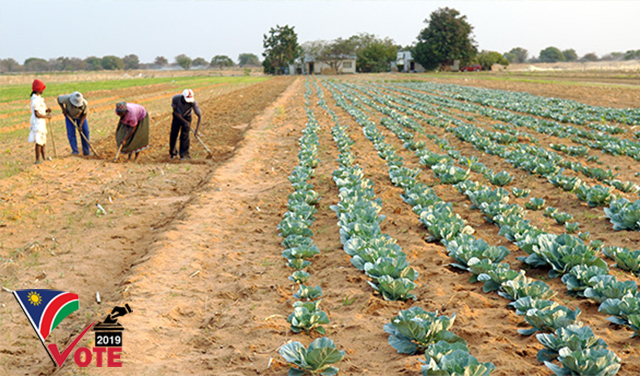
THE Landless People’s Movement has promised to implement radical agrarian reform programmes to address past racial imbalances in land ownership, once elected into power this month.
In their election manifesto, the LPM – the youngest party contesting this year’s presidential and National Assembly elections – promises to address the country’s long-standing land problem.
The party has also promised to implement a fair land allocation programme to correct “present day government’s unfair land allocation, corruption in land acquisition, processing and resettlement”.
“LPM has consistently demanded radical land and agrarian reform. LPM has constantly demanded an end to the skewed land holding patterns, with communities, which lost land through colonial enterprise still eking out life in overcrowded communal former reserves,” reads the LPM manifesto.
Apart from land redistribution, the party will also implement a land restitution programme that will be considered “on a case-per-case basis” as it relates to ancestral land claims.
Other issues of concern to LPM are the proposals to expropriate land with just compensation.
The party states that it will issue absentee landlords a 30-day notice to expropriate farmland with just compensation. Absentee landlords will be allowed to provide justifiable reasons why their land cannot be expropriated. LPM-led government will implement “one farmer, one farm policy” which may be subject to change on individual-case basis for big agri-food industry.
The party also promises to expropriate, in the public interest, the Erindi private game reserve and such other farms, which may have been acquired illegally or unregistered through political patronage in their first 30 days in office after winning elections.
Resettlement farms allocated due to close proximity to political establishment or in exchange of bribes will also be expropriated in the public’s interest by the LPM government.
The LPM government will ensure that land redistribution programmes would address the hunger for land primarily in the former Odendaal Commission reserves, but also for the benefit of farm workers and farm-dwellers as well as small-scale farmers.
The party stated that priority will be given to those individuals who have demonstrated commitment to a land-based lifestyle and are working the land, and are involved in horticulture and keeping livestock.
Women will get priority to benefit from the land redistribution programme.
On the reform of the agricultural sector, the LPM promises to implement radical programmes to improve food production and rural economic development.
According to the LPM’s manifesto, the party will fast-track industrialisation, to build a strong food production system “concomitant with a strong manufacturing sector, to ensure that our products can compete on lucrative international markets”.
Moreover, the party will not only focus on improving agricultural production but simultaneously invest in the development of post-harvest technologies, which are critical for the attainment of food security.
“LPM-led government will prioritise the development of post-harvest technology, as a strategy of enhancing food security at the household level, as well as adding value to agricultural products, in the form of provision of storage, processing and marketing facilities in all regions,” the document reads.
The party also promises to support small-scale communal farmers with improved, labour-saving technology to produce more.
All government-owned green schemes will be assessed and the Kalimbeza rice project turned into a project for other suitable crops.
“The grape industry holds immense potential. LPM-led government will permit new domestic entrants into the local grape farming industry, with commensurate skills and knowledge transfer from the existing role players and thus add value to our domestic investment drives,” the manifesto states.