






Namibia generated 58.3% of its electricity requirements in May, with domestic power stations continuing to supply more electricity than imports as total power generation and consumption increased.
This is according to the Namibia Statistics Agency (NSA).
The agency reported that local power stations generated 290 390MWh during the month, while electricity imports amounted to 207 496MWh, representing 41.7% of total supply.
Overall electricity supplied to the domestic economy increased to 497 886MWh in May from 482 201MWh in April, and 434 154 MWh in May 2025.
The Electricity Sources Composite Index rose 3.3% month on month, reversing the 5.9% decline recorded in April, and was 14.7% higher than a year earlier.
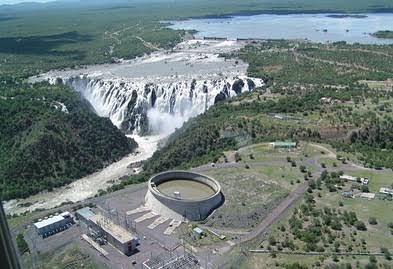
According to the NSA, the Ruacana Hydro Power Station remained Namibia’s dominant source of electricity, producing 253 985MWh, equivalent to 87.5% of total domestic generation.
Independent power producers (IPPs) generated 31 625MWh, contributing 10.9% of local electricity production, while the Omburu PV Solar Power Station supplied 4 680MWh, accounting for 1.6% of domestic generation.
Diesel-fired generation remained negligible. Anixas 1 generated 97MWh, while Anixas 2 produced just 3MWh during the month.
Van Eck Power Station did not generate any electricity.
Despite higher domestic production, electricity imports also increased.
Imports rose 1.8% from April and were 34.2% higher than in May 2025, with Zambia’s Zesco remaining Namibia’s largest external electricity supplier, accounting for 43.0% of imports.
South Africa’s Eskom Aggeneis supplied 31.3%, while the Zimbabwe Power Company accounted for 19.3% of imported electricity.
Electricity demand also strengthened during the month.
The Electricity Sales Composite Index increased 1.7% month on month and 17.0% year on year, with total electricity sales rising to 444 295MWh, compared to 436 896MWh in April and 379 603MWh in May 2025.
Domestic electricity sales edged up 0.3% to 309 437MWh, although they remained 2.6% below the level recorded a year earlier.
The NSA says local authority electricity distributors remained the country’s largest consumers of domestically generated electricity, accounting for 67.4% of sales, followed by the mining sector, which consumed 24.5%.