


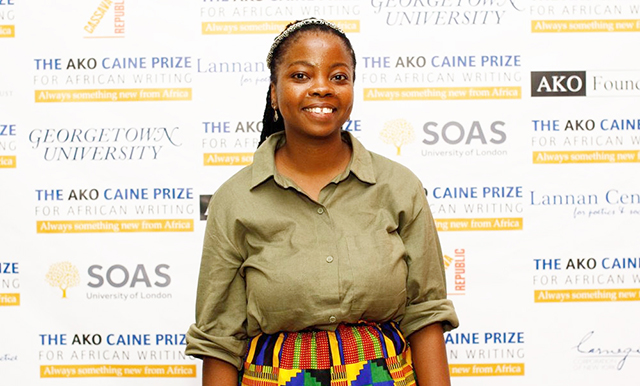
Blending traditional beliefs and elements of magic realism to distinguish herself among the 2022 AKO Caine Prize for African Writing entries, Kenyan lawyer and screenwriter Idza Luhumyo's 'Five Years Next Sunday' has been described as “incandescent” by the chair of the prize's judging panel, Okey Ndibe.
Luhumyo was shortlisted alongside Joshua Chizoma, Nana-Ama Danquah, Billie McTernan and Hannah Giorgis.
She was the inaugural recipient of the Margaret Busby New Daughters of Africa Award in 2020, and won the Short Story Day Africa prize.
Her work has been published widely and explores Kenyan coastal identities.
In 'Five Years Next Sunday', Luhumyo explores the protagonist Pili's ostracism, particularly within her own family, who have long avoided her because of fear and hatred of her hair and the supernatural power it holds to “grow the rain”.
It is not until the family's greed for the mzungu man's money sees them fatten from poverty to affluence that they begin to encourage her to remove her headscarf and expose her fluffy black locs, which “flow like water”.
Pili's yearning for the love of her mother in particular sees her allow the “empty, parched” mzungu to pursue her.
“No need for rain,” Luhumyo writes in 'Five Years Next Sunday'.
“My hair is a small god.”
“I'd been thinking about the practice of witch-hunts along the Kenyan coast for quite some time,” Luhumyo recently told The Namibian.
“I was also fascinated by how we refer to rainmakers in my mother tongue. We say rainmakers 'have the rain'.”
While Luhumyo is pleased that the story resonated with the judges and readers, she says the trajectory of 'Five Years Next Sunday' was a wonderful surprise.
READER AND WRITER
Her own journey as a writer began as an avid reader.
“That's where I locate this writing compulsion. I guess my natural introversion is also part of it. I'm not the most talkative person in the world, so I imagine I had to find a way to externalise my musings.”
It almost goes without saying that exceptional writers have a deep affection for reading, and Luhumyo believes the practise should be central to writing.
“It's not just that there are no better teachers of writing than other writers, but also that reading shows you how literature is simply a conversation, and reading widely helps you to see how you might join the conversation either with your unique voice, or your singular way of looking at the world.
“I've been drawn to literature for a while now. I was one of those kids who always had their noses in a book, the only difference is that I didn't shake off the habit.”
She describes herself as an omnivorous reader, who will “read anything, as long as it's interesting”.
“I'm currently reading 'The Melancholia of Class', by Cynthia Cruz. I picked it up in Norwich during the Caine Prize week. Its title called out to me.”
Her natural talent and skill have been sharpened by the support of many different people and institutions.: “Friends, siblings, bloggers, writing peers, the older generation of Kenyan writers, literary collectives, and many, many other writers and literary practitioners.”
Luhumyo typically spends time mulling over ideas before setting them down and generally writes in short bursts of time.
She's currently working on a longer project, which she hopes will become a novel.
She believes African literature is important because it forces “us to pay attention to the world, while expanding our realities”.
“The stories we tell have the ability to tell us about ourselves, and one of the best ways to learn about a(ny) culture is to get a sense of its stories.”
In an age of information overload, Sunrise is The Namibian’s morning briefing, delivered at 6h00 from Monday to Friday. It offers a curated rundown of the most important stories from the past 24 hours – occasionally with a light, witty touch. It’s an essential way to stay informed. Subscribe and join our newsletter community.

The Namibian uses AI tools to assist with improved quality, accuracy and efficiency, while maintaining editorial oversight and journalistic integrity.
Stay informed with The Namibian – your source for credible journalism. Get in-depth reporting and opinions for
only N$85 a month. Invest in journalism, invest in democracy –
Subscribe Now!