



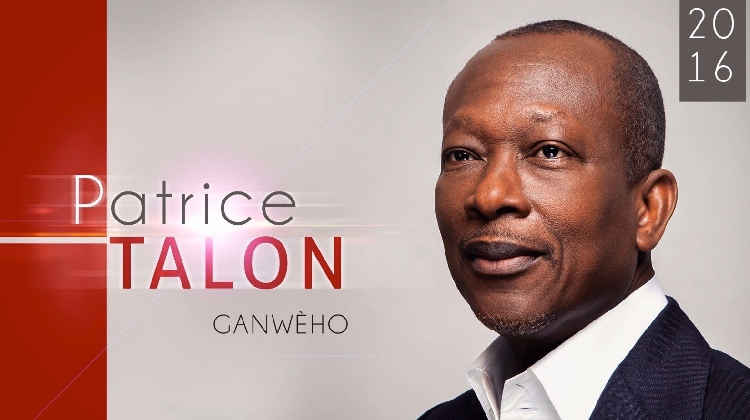
COTONOU — Prime minister Lionel Zinsou on Monday conceded defeat to Patrice Talon, handing the businessman victory in Benin’s presidential elections in a vote hailed as an example for democracy in action.
The tiny West African nation introduced multi-party politics in the 1990s after decades of dictatorship, breaking with a widespread practice of one-party rule common across the continent.
Zinsou told AFP by telephone in the early hours that Talon’s electoral victory was “certain”, adding that he had called Talon “to congratulate him on his victory, wish him good luck and put myself at his disposal to prepare for the handover.”
The head of Benin’s independent electoral commission, Emmanuel Tiando, later said that Talon had won 65,39% of the vote, with Zinsou on 34,61%.
The Constitutional Court will confirm the official result in the coming days, he added.
Talon, in a statement issued on his Facebook page, declared himself “proud of my homeland Benin which has once again shown its attachment to democracy”.
Thanking his supporters, he said “we are embarking together on a new beginning, one of fraternity, of justice and of shared effort.”
Talon also congratulated Zinsou “for his performance in the campaign and for his fair play.”
More than 4,7 million people were eligible to vote to elect a successor to Benin’s outgoing president, Thomas Boni Yayi, who is bowing out after a maximum of two five-year terms.His departure marks him out from many African leaders who have tried to change their country’s constitution to stay in power.
Another exception was Goodluck Jonathan, president of Benin’s giant neighbour Nigeria, who last year conceded defeat to Muhammadu Buhari, a move hailed for statesmanship and discouraging political violence.
The head of a coalition of civil society groups monitoring the Beninese election, Mathieu Boni, said “everything went well” on Sunday and there was “nothing serious to report”.
French president Francois Hollande said the election was a tribute to “the strength of Beninese democracy” and pledged his cooperation on development, energy, good governance and transparency “and the fight against terrorism.”
Zinsou (61) had come out top in the first round of elections held on 6 March but the prime minister, a candidate for Boni Yayi’s Cowry Forces for an Emerging Benin (FCBE), was seen as the front-runner with the support of most lawmakers in parliament.
But 57-year-old Talon, who made his money in cotton and running Cotonou’s port, had billed himself as the authentic Beninese candidate and repeatedly attacked his opponent’s dual French nationality.
Zinsou, who attended an elite French university and was a speech writer for the former French prime minister Laurent Fabius, has been called “yovo” or “the white man” during the campaign.