



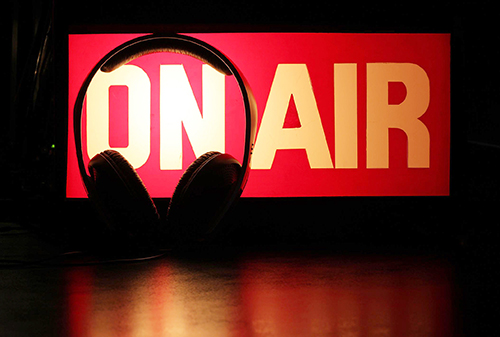
If you’ve ever faked an award acceptance speech or performed a ballad in front of an imaginary crowd into a hair brush or spray bottle, you have a tiny idea what it is like to work on radio and have your voice be the only side of a conversation that can be heard in a room.
The life of a radio personality is pretty similar, except the audience, even though you can’t see or hear them, is real. They will notice every mistake you make, they might not appreciate every joke you try out or care about your personal stories, and yet you persevere.
On the good days, which occur more than not, you’re greeted by listeners and fans who call in to show some appreciation for your work.
The studio is a small, air-conditioned room with sound proof walls and papers and coffee mugs across the table. The presenters, on the occasion that there are more than one, sit across from each other and talk and laugh like old friends into their microphones, for their audience to hear.
Radio is live. There are no second takes to fix your mistakes, no immediate audience feedback to know what you’re doing right or wrong, the hours might be gruelling and people might not always want to hear your voice. If you cannot handle that, or if you don’t have the right personality and connection with people around you, this might not be the industry for you.
So why pursue it? We spoke to Fresh FM’s ‘Massive Attack’ presenter Hiskia ‘Nani’ Petrus to fill you in on the hype.
There are countless options you can pursue, should you want to be a radio personality, but a formal degree is not necessarily always as important as the talent and hard work you put into it.
Studies in Journalism, Media Studies, English or a similar field will help, and according to Hiskia, “you have to know how to articulate, you have to have the right personality for this and you have to know how to communicate with people. You can’t just be someone who sees black and white”.
Another thing you might need is determination and persistence in an industry as competitive as this.
He added that if you can speak and read English well and if entertaining, educating and informing the public with your voice is something you really like, you should definitely go for it.
If this is something you are good at and genuinely enjoy, the first perk is just being afforded the opportunity to do what you love.
Then there’s the fact that you’re a public figure, if having your name in the media and having many people know who you are is your cup of tea, that is.
Some people on the radio enjoy the luxury of being able to let loose through this medium. Where others draw, write or design to express themselves, on the radio you can talk.
“I can let myself go when I am on radio, because in reality I’m a really shy person,” Hiskia says on his favourite thing about working in the industry.
He adds that by being in the media, he stays up-to-date with current affairs.
In the same light, as fun as a job where you get to talk to thousands of people every day is, it’s not all rainbows and sunshine.
“There is a bit of pressure in this job. The way my day goes, I’m up before the sun and then I go work on the breakfast show with my co-hosts. It sets the pace for the rest of the shows of the day, so it can’t suck. I can’t suck.
I have to sacrifice a lot and be in bed early,” Hiskia says, but it just takes discipline.
He adds that sometimes as a DJ you are under-appreciated, and the best that you produce is not always good enough for those who consume it.
There are always critics, naysayers and, in the world of entertainment, ‘haters’.
One thing that Hiskia is also mindful of is that no matter how much fun you can have on air, it is still somebody’s business. “We are the tools of that business because we work for them, and so we must compromise some of our own views or wants sometimes. It is fun, but it is still a job.”
• Remember, radio is a lifestyle and it isn’t as easy as it looks.
• Use humour. Be funny, crack jokes and have fun.
• Don’t be vulgar or offensive on air.
• Be humble, gracious and put the listeners’ needs before your own.
In an age of information overload, Sunrise is The Namibian’s morning briefing, delivered at 6h00 from Monday to Friday. It offers a curated rundown of the most important stories from the past 24 hours – occasionally with a light, witty touch. It’s an essential way to stay informed. Subscribe and join our newsletter community.

The Namibian uses AI tools to assist with improved quality, accuracy and efficiency, while maintaining editorial oversight and journalistic integrity.
Stay informed with The Namibian – your source for credible journalism. Get in-depth reporting and opinions for
only N$85 a month. Invest in journalism, invest in democracy –
Subscribe Now!