


As a public health professional with a master’s in public health and nearly a decade of experience in programming for girls and young women, I read The Namibian’s recent front-page article on BeFree Namibia’s contraceptive drive with both admiration and alarm.
Admiration for the initiative itself, which offers long-acting reversible contraceptives (Larcs) like intrauterine devices (IUDs) and implants to young women aged 16 to 35 in an informed, voluntary and client-centred way.
Alarm, however, at the dangerous misinformation platformed in the same article – particularly the statements from former health minister Richard Kamwi and activist Rosa Namises.
While I respect their contributions to public life, it is deeply irresponsible to conflate fact with personal discomfort with public health programming, or worse, to imply that young women are receiving contraceptives with the same casualness as sweets at a carnival.
To be clear, Kamwi did not use that phrase – but the tone of his comments conveyed a similar sentiment.
This is not some haphazard distribution drive. BeFree Namibia’s programme is a carefully designed, youth-informed intervention that centres the client at every step.
No one is showing up for breakfast and accidentally leaving with an IUD.
A CURIOUS ARGUMENT
Let’s talk about IUDs and young women. Kamwi objects to the availability of these methods to 16-year-olds.
But here’s what the evidence says: The World Health Organisation considers Larcs like IUDs and implants safe and appropriate for adolescents and young women, particularly those who may face challenges accessing shorter term methods.
These methods are highly effective, long-acting, reversible and require minimal upkeep making them ideal for young people in unpredictable or underserved health systems.
Then there’s the curious argument that “Khomas doesn’t have a high pregnancy rate”.
Even if this were a valid reason to withhold family planning services (it’s not), the BeFree initiative is expanding to several other regions.
Should young women in Windhoek be denied services simply because somewhere else has a bigger problem?
Namises’ reflections are clearly rooted in personal history, and it’s true that reproductive coercion has a long and shameful past – Greenland’s forced IUD scandal comes to mind.
But using that history to sow mistrust about today’s voluntary, rights-based services helps no one.
Today’s contraceptive options are delivered with informed consent, education and full reversibility.
To imply otherwise without evidence is not only misleading, it risks discouraging young women from taking control of their reproductive futures.
CLARITY AND CHOICE
We absolutely must ensure education is part of every contraceptive service.
I’ve seen firsthand how myths – like the belief that contraceptives cause infertility – still shape young women’s decisions.
That’s exactly why initiatives like BeFree’s are needed.
They’re not pushing procedures; they’re creating spaces for conversation, clarity and choice.
If we want to reduce teen pregnancies, improve educational outcomes and support generational wealth-building, we must start by trusting young women with the tools to decide when and whether to have children.
Let’s also not ignore the realities of our public health system.
In my years in the field, contraceptive stockouts have been as routine as quarterly board meetings.
Pills, injectables, even condoms – gone, for weeks or even months.
And surprise, surprise: Pregnancy rates spike soon after.
Long-acting methods help buffer against these gaps, ensuring continuity of protection when systems fall short.
LET’S ENLIGHTEN, NOT INFLAME
Lastly, a note to all media practitioners: Sensationalism isn’t journalism.
Giving a platform to unverified fears and patriarchal overreach on the front page, without equally weighting expert responses, does a disservice to readers.
Fortunately, voices like Veronica Theron, Juliet Kavetuna, and Dr Simasiku Sichimwa brought facts and perspective to the piece – if you continued to read in order to find their comments.
We need more spice in our national conversations about sexual and reproductive health – but let’s make it the kind that enlightens, not inflames.
Let’s lead with evidence, not ego.
And let’s trust Namibian girls and women to make the decisions that are best for their lives, their bodies, and their futures.
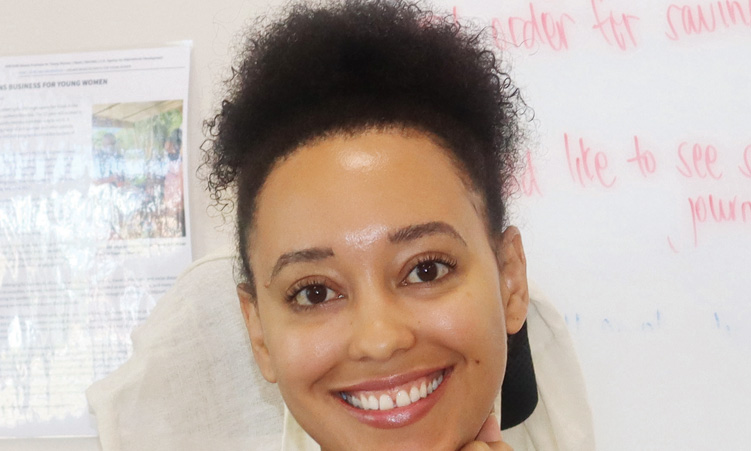
– Rosanne Kahuure is a public health specialist with a master’s in public health and nearly a decade of experience in programming for girls and young women. She is based in Windhoek, Namibia.
In an age of information overload, Sunrise is The Namibian’s morning briefing, delivered at 6h00 from Monday to Friday. It offers a curated rundown of the most important stories from the past 24 hours – occasionally with a light, witty touch. It’s an essential way to stay informed. Subscribe and join our newsletter community.

The Namibian uses AI tools to assist with improved quality, accuracy and efficiency, while maintaining editorial oversight and journalistic integrity.
Stay informed with The Namibian – your source for credible journalism. Get in-depth reporting and opinions for
only N$85 a month. Invest in journalism, invest in democracy –
Subscribe Now!