




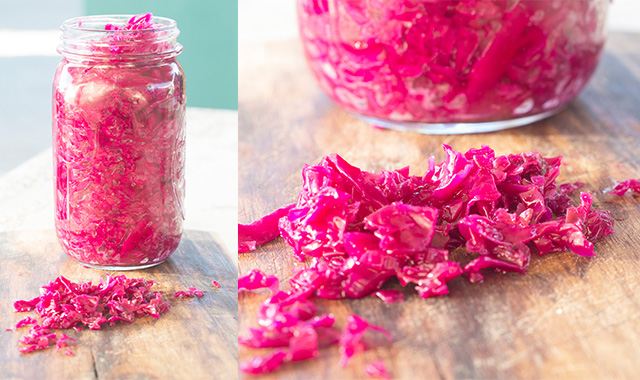
It seems as if the whole world has gone crazy over fermented foods. What once was a technique used by home cooks and homesteaders for preserving excess food, and thus employed as a tool for greater food security, is now part of high-end cooking in some of the world’s most famous up-market restaurants.
Even if you think you know nothing about fermentation, chances are that you have eaten fermented food in some form or another, and that you will continue to eat fermented food for as long as you live.
Wine, beer, sourdough bread, sauerkraut, kefir, yogurt, kombucha, pickled vegetables, kvass, miso, vinegar, cheese, chocolate, kimchi, olives and ginger beer are all examples of everyday fermented foods.
Fermentation is the transformation of food by means of various micro-organisms (bacteria, mould, yeast and fungi) and the enzymes they produce. Many of these micro-organisms live on the surface of the food (eg vegetables) and when the food is mixed with salt to form brine, these micro-organisms (usually lactobacillus) start to convert the natural sugars into lactic acid – causing the fermented product to have a tangy flavour (hence the ‘sauer’ in sauerkraut).
On the other hand, yeast is used to convert sugar into alcohol and thus called upon during the process of making wine or brewing beer. When the fermentation done by lactic acid bacteria, ie the bacteria that are all around us in the air, on our skins and on fruits and vegetables, the process is called lacto-fermentation.
Non-iodised salt is all that is added to start the process. In addition to the lactic acid, lacto-fermentation also produces carbon dioxide gas, which makes many fermented drinks fizzy.
The process of lacto-fermentation is quite simple and can easily be done at home. The following is needed:
An oxygen free environment: Oxygen causes spoilage so an airtight vessel is needed. These include special fermentation crockpots, mason jars or other glass jars; and even vacuum bags. The latter is very effective but may explode because of the carbon dioxide produced during fermentation and make a mess. Thus use a big bag and leave a lot of space. Exposure to oxygen will also cause the contents to oxidise and change colour.
Salt: The fermentation specialist at Noma restaurant recommends 2% salt to the weight of product used. Less will allow the fermentation to develop too quickly and more will spoil the taste. Use only non-iodised salt.
Shake and mix: Shake or turn your container regularly to ensure an even mix of water and salt, and to ensure an even salty environment.
Fermentation seems to require moderate temperatures; too cold and it slows down, and too hot and it may spoil. Noma recommends fermentation to be done at 25°C.
There are no fixed, standard guidelines for how long to ferment a specific product. It will depend on the type of product used, the type of fermentation used and the climatic conditions, especially the temperature. Ultimately, fermented products are ready when they taste ready – vinegars should not be sweet and sauerkraut should have the right amount of tanginess. Thus follow the recipe guidelines and then start tasting.
Over the next few weeks, I will write more about fermentation and include easy recipes to follow at home. I start this week with a very simple recipe for sauerkraut.
Oh, and just in case you wondered, the study of fermentation is called zymology.
• 2 whole heads of cabbage (purple or green)
• 1⁄4 cup non-iodised salt
• 1 tablespoon caraway seeds
• Quarter and core each of the cabbages. Cut each of the quarters into thin strips about 0,5cm to 1cm thick. Wash the shredded cabbage in cold water and drain.
• Add the cabbage and salt to a large bowl. Mix well and massage the cabbage until it starts to wilt – about five minutes. Add the caraway seeds and toss to combine. Set the cabbage aside for about 30 minutes or until the water from the cabbage has formed a liquid brine.
• Transfer the cabbage and brine to two mason jars or, if you have one, a fermentation crock pot. Add a weight to the cabbage (in the case of the mason jars, a clean flat stone, for example) to weigh the cabbage down and ensure that it remains submerged under the brine. If the cabbage is not submerged, it will begin to grow a white mold, which can be scooped off as it is not harmful. A dedicated fermentation crock has its own set of weights. Close the jars and store in a cool, dry space for between seven and 10 days, or until the cabbage is to your liking. The longer it is allowed to ferment, the more sour it will get. It can be stored for a longer period in the refrigerator. It can be eaten as is, or in any recipe that calls for the addition of sauerkraut.
In an age of information overload, Sunrise is The Namibian’s morning briefing, delivered at 6h00 from Monday to Friday. It offers a curated rundown of the most important stories from the past 24 hours – occasionally with a light, witty touch. It’s an essential way to stay informed. Subscribe and join our newsletter community.

The Namibian uses AI tools to assist with improved quality, accuracy and efficiency, while maintaining editorial oversight and journalistic integrity.
Stay informed with The Namibian – your source for credible journalism. Get in-depth reporting and opinions for
only N$85 a month. Invest in journalism, invest in democracy –
Subscribe Now!