


NGUNI cattle derive their name from the tribes of southern Africa, collectively known as the Nguni people.
The ancestors of Nguni cattle were brought by the Xhosa, Zulu, and Swazi people, during their migration to southern Africa between 600 and 1400 AD. Since then, these animals have played an important social and economic role in the development of these societies.
Nguni cattle descend from both Bos taurus and Bos indicus cattle and entered Africa around 8 000 years ago.
Nguni cattle are known for their fertility and resistance to diseases, being the favourite breed among the indigenous people of southern Africa (South Africa, Swaziland, Namibia, Zimbabwe, Botswana and Angola).
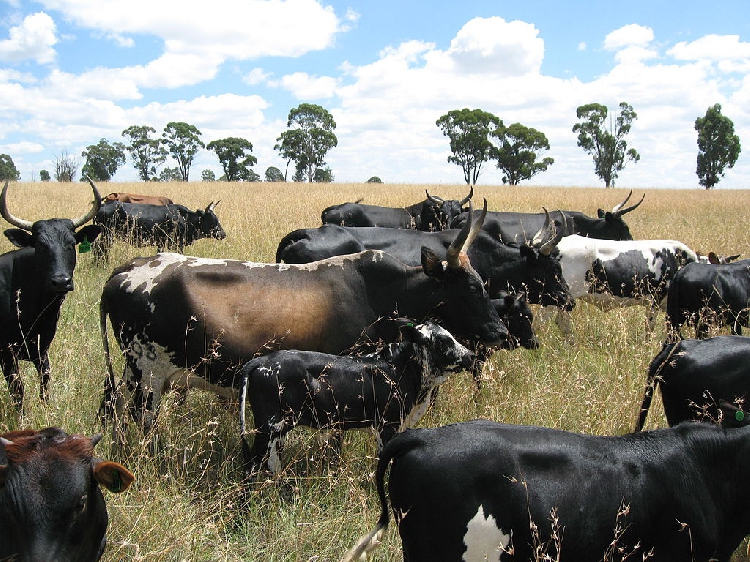
They are characterised by their multi-coloured skin, which can present many different patterns, but their noses are always black-tipped. They are a principal form of Sanga cattle, which originated as hybrids of Zebu and humpless cattle in east Africa.
The Nguni is a breed that has adapted to the African environment over many years and therefore displays functional characteristics. It is slightly smaller than the large beef breeds of other countries but this just enables it to live in the highveld regions of Africa.
Bulls are medium-sized and weigh between 500kg and 600kg. They are muscular and display typical male characteristics with well developed, muscular, cervico-thoracic humps, which means that the hump is in front of the foreleg.
The cows are small and weigh between 300kg and 400kg. They are feminine with sleek, delicate lines around the neck and forequarter and a prominent wedge shape with the weight in the stomach and hindquarter area.
The sloping rump is a distinctive characteristic of the Nguni cow and ensures ease of calving.
Horn shapes and hide patterns are varied and no two animals are alike which has its own attraction and the cause of this breed being so distinctive from other breeds.
Their hide is sleek and glossy to prevent ticks attaching themselves to the animal. The legs and hoofs are strong to enable the animal to walk and climb to find enough grazing.
Nguni cattle are heat and light tolerant and can handle extreme heat and cold alike. They are adaptable and hardy and possess excellent resistance to internal and external parasites with natural immunity to tick borne diseases. Early maturity, fertility, ease of calving and longevity ensures that cows have long and productive lives. Cows will produce 10 or more calves in a lifetime. The cows show great efficiency and often wean calves that weigh 45-50% of their body mass.
The average birth weight of calves is 22,5kg and they wean at approximately 175kg they grow at about 0,70 kg per day until weaning.
Nguni cattle are less prone to dystocia, thanks to their sloping rumps, small uterus and low birth mass.
They can be fattened on natural grazing and perform well in the feedlot, producing quality carcasses with an even distribution of fat and excellent marbling. Finished carcasses dress out at roughly 180-220 kg.
The Nguni was accepted as a developing cattle breed during August 1983 by South Africa’s Livestock Improvement Act, no 25 of 1977.
Initially the word Sanga was proposed. It was not acceptable, since the Afrikaner could also be classified as a Sanga. The name Nguni was eventually accepted and all ecotypes of the Sanga would be registered under this name.
The Namibian Stud Breeders Association (NSBA) was formally established in January 1992 and since the first meeting Nguni cattle breeders were part of the organisation.
The first Nguni Cattle Breeders Club in Namibia was established on 7 October 1991. Its main purpose was, and still is today, to take care of the interests of its members and the conservation of the breed. A few months later it was however realised that the Livestock Improvement Act only applied to Breeder Associations.
On 1 February 1994 the Nguni Breeders Association of Namibia was established. All administration and registration have since been done by the NSBA.
In an age of information overload, Sunrise is The Namibian’s morning briefing, delivered at 6h00 from Monday to Friday. It offers a curated rundown of the most important stories from the past 24 hours – occasionally with a light, witty touch. It’s an essential way to stay informed. Subscribe and join our newsletter community.

The Namibian uses AI tools to assist with improved quality, accuracy and efficiency, while maintaining editorial oversight and journalistic integrity.
Stay informed with The Namibian – your source for credible journalism. Get in-depth reporting and opinions for
only N$85 a month. Invest in journalism, invest in democracy –
Subscribe Now!